Misha Mullov-Abbado's The Travelling Violin premieres at Wigmore Hall
Jazz bassist Misha Mullov-Abbado's The Travelling Violin received its world premiere at Wigmore Hall, played by the United Strings of Europe under Julian Azkoul with Tamsin Waley-Cohen as soloist.
Programme
- The Travelling Violin by Misha Mullov-Abbado received its world premiere at Wigmore Hall, London.
- The four-movement work featured soloist Tamsin Waley-Cohen, nine supporting strings, the composer on jazz bass and Fred Thomas on percussion.
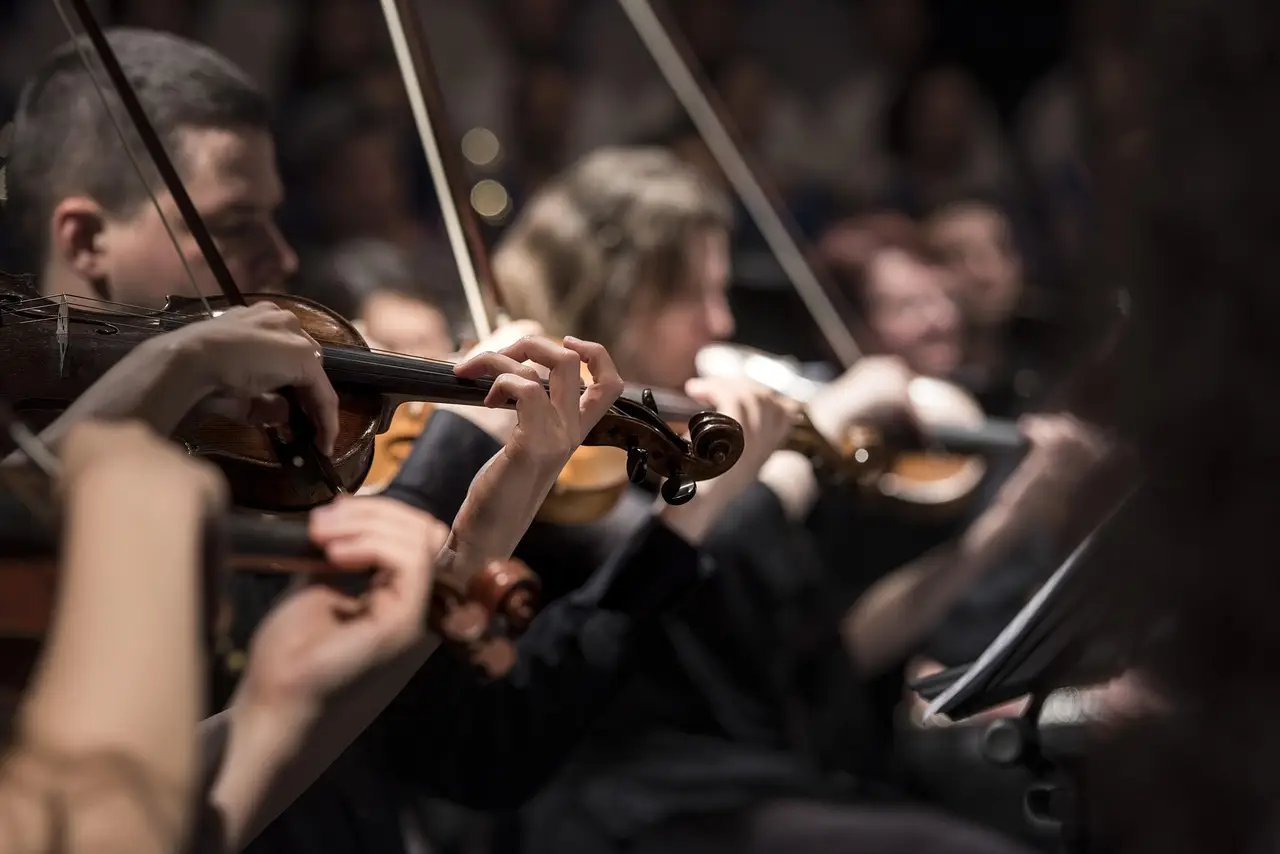
- The United Strings of Europe, led by Julian Azkoul, performed a programme of mostly 21st-century music.
- Mullov-Abbado is the son of violinist Viktoria Mullova.
The Travelling Violin, a new four-movement work by jazz bassist and composer Misha Mullov-Abbado, received its world premiere at Wigmore Hall, London, performed by the United Strings of Europe.
The programme was an eclectic one, built mostly of 21st-century music, and the ensemble — led by violinist Julian Azkoul — used it to occupy the intersection of chamber music, string orchestra and jazz. That Venn-diagram framing comes from the Guardian's review of the concert, and it fits.
What is The Travelling Violin?
Mullov-Abbado's piece is an almost-concerto on an intimate scale. The solo violin, deftly played by Tamsin Waley-Cohen, carries the narrating role. Yet the writing for the nine supporting string instruments is so intricately woven that the work feels like an ensemble piece rather than a display vehicle.
The composer wrote a part for jazz bass, which he played himself, and a percussion part played by Fred Thomas — moving from soft-edged shimmering to driving, grooving drums. The jazz sensibility of both players, in the reviewer's words, "leaches into the rest."
How did the performance land?
The ensemble sounded tight. It churned over the tricksy rhythmic figures of the faster movements and radiated warmth in the third, which the review likened to "Cole Porter reflected in a slightly warped mirror."
Mullov-Abbado's violin writing, the Guardian noted, is "as gratifying as you'd hope for from the son of Viktoria Mullova" — the violinist whose name sets a high bar in this repertoire — and his jazz-classical fusion "hits an unusually effective sweet spot.""
One curiosity of the evening: it almost seemed strange for Waley-Cohen to give a solo encore at the end, mesmerising though her playing of Nicola Matteis Jr's A minor Fantasia was. The point is structural, not critical. After a premiere that behaves like chamber music with a soloist woven in, a standalone solo turn feels like a format shift.
Why the premiere matters
The concert is a useful marker of where cross-genre string writing sits right now. A jazz bassist writing for eleven players, stepping in to perform his own bass line alongside a classical ensemble of soloist-calibre strings, is not the old model of a jazz artist guesting with an orchestra. The fusion here runs through the composition itself, down to the percussion's grooves and the warped-Porter harmonies of the slow movement.
For the United Strings of Europe, the premiere sits at the centre of a programme that ranged across classical fusion and, in the reviewer's phrase, "tango fisticuffs." The ensemble's identity — chamber group one moment, string orchestra the next, jazz-inflected collective after that — is the story. Wigmore Hall gave it a suitably intimate room in which to make the case.
Source: theguardian.com
More from Daniel Okafor
Show full bio
News editor covering companies, deals and strategy in arts in the broadest sense at Arts & Voices.
1,683 articles