Frankenstein at 95: Boris Karloff's Daughter on the Film That Refuses to Die
Boris Karloff's daughter Sara Karloff marks Frankenstein's 95th anniversary as Michael Shapiro conducts his score with the Royal Philharmonic Orchestra at Cadogan Hall.
Programme
- James Whale's 1931 Frankenstein is 95 years old and originally had dialogue but no musical score.
- Composer Michael Shapiro wrote a full-length score in 2001 and conducts it with the Royal Philharmonic Orchestra at London's Cadogan Hall next month — a London first.
- Sara Karloff, Boris Karloff's daughter, spoke to the Guardian about the film's legacy ahead of the anniversary performance.
James Whale's 1931 Frankenstein turns 95 this year, and next month it arrives in London with something it has never had before: a continuous musical soundtrack performed live. The American composer Michael Shapiro will conduct his full-length score alongside a screening of the film at Cadogan Hall with the Royal Philharmonic Orchestra — the first time the pairing has been presented in the city.
The 1931 original had dialogue but no music. That absence, according to those closest to the film's legacy, has long left a gap in an otherwise complete classic.
Sara Karloff, daughter of Boris Karloff — the actor whose lumbering, squared-headed monster remains one of cinema's most instantly recognisable figures — has spoken to the Guardian about the film's endurance and her father's role in it, as the anniversary and the London performance approach. The interview, headlined "My dad was a monster! Sara Karloff on reviving Frankenstein, 95 years on", pairs her recollections with Shapiro's account of writing music for a film that survived a quarter-century shy of a century without any score at all.
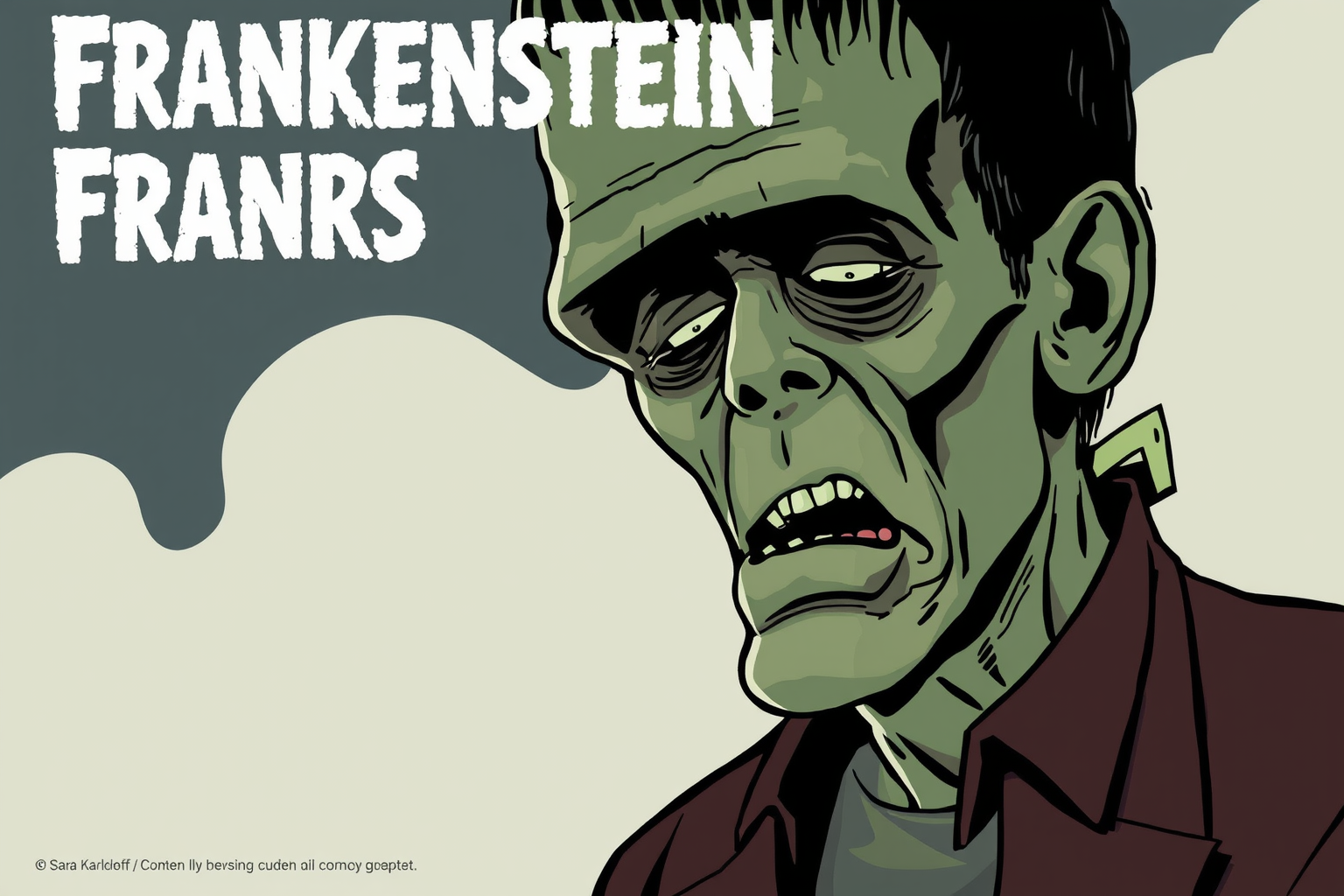
The images need no introduction. Boris Karloff's monster — the squared-off head, the neck bolts, the oversized leaden shoes — enters the frame and stays in the memory. Colin Clive's exclamation "It's alive!", delivered over a thunderclap on a stormy night in the laboratory, still raises hairs on the back of the neck nearly a century after the film's release.
Shapiro wrote his score in 2001. He describes the live-performance format as a fusion rather than an accompaniment. "It becomes one artistic expression, one artistic experience," he says. "The film and the music, together, and the audience forgets that I am there."
His approach, he says, is not to impose on the film but to amplify what is already in it. "Suddenly the film jumps out in a way it never did before," Shapiro says of the effect his music has on the 1931 picture.
The Cadogan Hall performance with the Royal Philharmonic Orchestra marks the score's London debut in this live-to-screen format. For a film that has circulated for 95 years in silence between its lines of dialogue, the addition of a symphonic score reframes how audiences encounter some of the most famous images in horror cinema — Karloff's first appearance among them.
The timing carries weight beyond the novelty of the format. The engagement places a 1931 studio film inside a concert hall with a full orchestra, continuing a practice that has brought canonical cinema into live musical settings — and it gives London audiences the first chance to hear Shapiro's 24-year-old score against the film it was written for, in the room, in real time.
Whether the monster gains new dimension with a live orchestra remains for audiences to judge. But as Sara Karloff's involvement suggests, the Karloff family sees the anniversary as a moment worth marking — and the Guardian conversation makes clear that, 95 years on, the film's power to unsettle has not dimmed.
Original: michaelshapiro.com
More from Tom Whitfield
Show full bio
Market editor covering industry trends and analytics at Arts & Voices.
114 articles