Gray Wielebinski Turns Frieze London's Toilets Into Art
Gray Wielebinski's 'Production' (2026) puts scented, caged urinal cakes in Frieze London's toilets, confronting the UK's new single-sex facilities guidance.
Programme
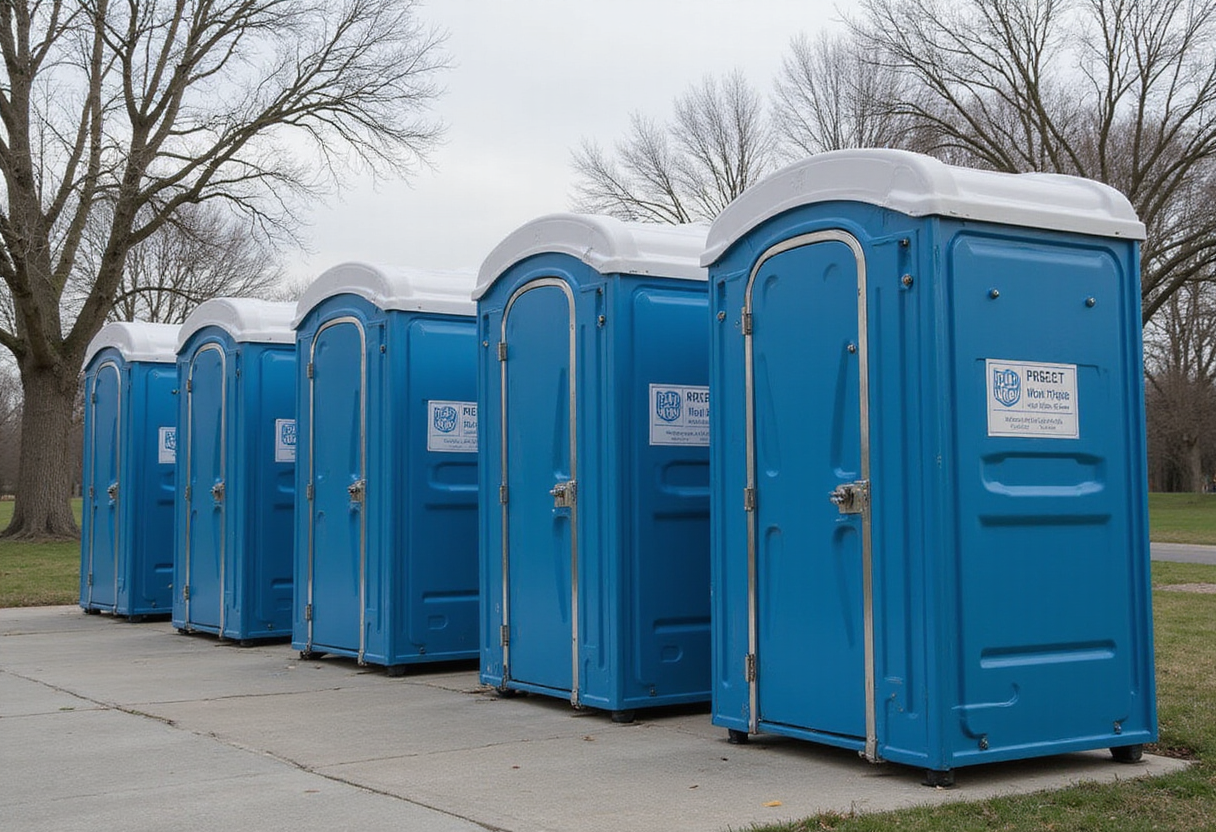
- Gray Wielebinski's 'Production' (2026) is installed in Frieze London's public toilets at Regent's Park.
- EHRC guidance on single-sex spaces, in force since August 2025, follows the UK Supreme Court's April 2025 ruling on biological sex.
- Frieze's last bathroom commission was Julie Verhoeven's 'The Toilet Attendant… Now Wash Your Hands' (2016).
- The work is made with perfumier Dean's Bottom; its components are editioned but not for sale.
Gray Wielebinski is turning the public toilets at Frieze London into an artwork. His new site-specific piece Production (2026) transforms the fair's bathrooms in Regent's Park into an olfactory environment (a scent-based installation) where, according to the artist, scent, bodily function, privacy, desire, and surveillance converge.
The work doesn't hide in the plumbing. Custom urinal cakes and toilet-rim blocks, infused with two scents and housed in sculptural cages with security tags, announce themselves as art. One is almost lipstick-red; the other is black. Their texture departs from the standard industrial urinal cake. "They almost look like cosmetics, or like an art material," Wielebinski told ARTnews ahead of the installation.
Frieze hasn't commissioned a bathroom project in a decade. The last was Julie Verhoeven's The Toilet Attendant… Now Wash Your Hands (2016), a performance featuring the artist as the attendant, with commentary on labor ethics in the art world. Like that piece, Production carries a political charge.
Why the bathroom?
For Wielebinski, the bathroom is a particularly loaded site. Gendered space has been used to police access for transgender and gender non-conforming people — a group that includes him. The cages holding the objects add another layer, evoking protection and exclusion.
The timing is sharp. This past August, guidance from the Equality and Human Rights Commission (EHRC) took effect, stating that single-sex public spaces — toilets, changing rooms, hospital wards, refuges — should be organized by biological sex, and that trans people should use gender-neutral facilities or those matching their biological sex. It follows the UK Supreme Court's April 2025 ruling that "sex" in equality law means biological sex. Trans-rights activists have pushed back hard; the Trans+ Solidarity Alliance called the guidance "unworkable."
"I think it's something that I'm obviously very—I don't want to say 'drawn to' but it impacts my life on a daily basis," Wielebinski said. "The bathroom holds a very fraught and also sacred and fun and ambivalent place in my world, in my life, in my psyche."
What does the work actually involve?
Made with perfumier Dean's Bottom, each component of Production carries Wielebinski's name and a security tag. The pieces aren't for sale, though they are technically editioned. "It's bringing up questions of value too," he said — a pointed move inside an art fair, where price tags govern nearly everything else on display.
The scents are deliberately familiar, especially to artists at the fair. Wielebinski describes them as "a take on the industrial smelling urinal cake that already exists that we're used to smelling in the bathroom coinciding with a more conceptual scent based off of the scents of my studio."
Scent isn't new to his practice. He first explored it in Exhibition (2023), an installation for the British department store Selfridges. "It started extremely organically," he said of the medium, which he treats as a way to build atmosphere and translate between forms.
How will visitors react?
Wielebinski doesn't claim to know. He expects a "wide range of feelings" — attraction to disgust, curiosity to ambivalence. His aim isn't provocation but turning a private moment into something collective: "a hushed secret thing that then also becomes communal in whatever way that might be." He hopes the piece sparks conversation, jokes, even criticism.
"Whenever you put work out in the world, it's out of your hands, but I also think that's, for me, when my work comes alive, when an audience interacts with it," he said. He wants to "draw people's attention to all these things about what a bathroom can mean, and what a body can mean." Whether fairgoers linger or just wash their hands, Production makes the most functional room at Frieze impossible to use innocently.
Source: ARTnews
More from Grace Kim
Show full bio
Correspondent covering technology and product news in arts in the broadest sense at Arts & Voices.
526 articles