Greek National Opera Makes Its Carnegie Hall Debut With Kazantzakis
The Greek National Opera debuted at Carnegie Hall on Oct. 15, 2026, with Kazantzakis-inspired works and Anita Rachvelishvili's first New York appearance since her vocal challenges.
Programme
- The Greek National Opera made its formal New York debut at Carnegie Hall on Oct. 15, 2026, seven years after initial plans from 2019.
- Anita Rachvelishvili sang selections from Theodorakis' 'Zorbas' in her first New York stage appearance since her much-publicized vocal challenges.
- Vassilis Christopoulos conducted the Orchestra of the Greek National Opera in works by Mitropoulos, Skalkottas, Koumendakis, Hadjidakis and Theodorakis.
- The program centered on the legacy of author Nikos Kazantzakis (1883–1957).
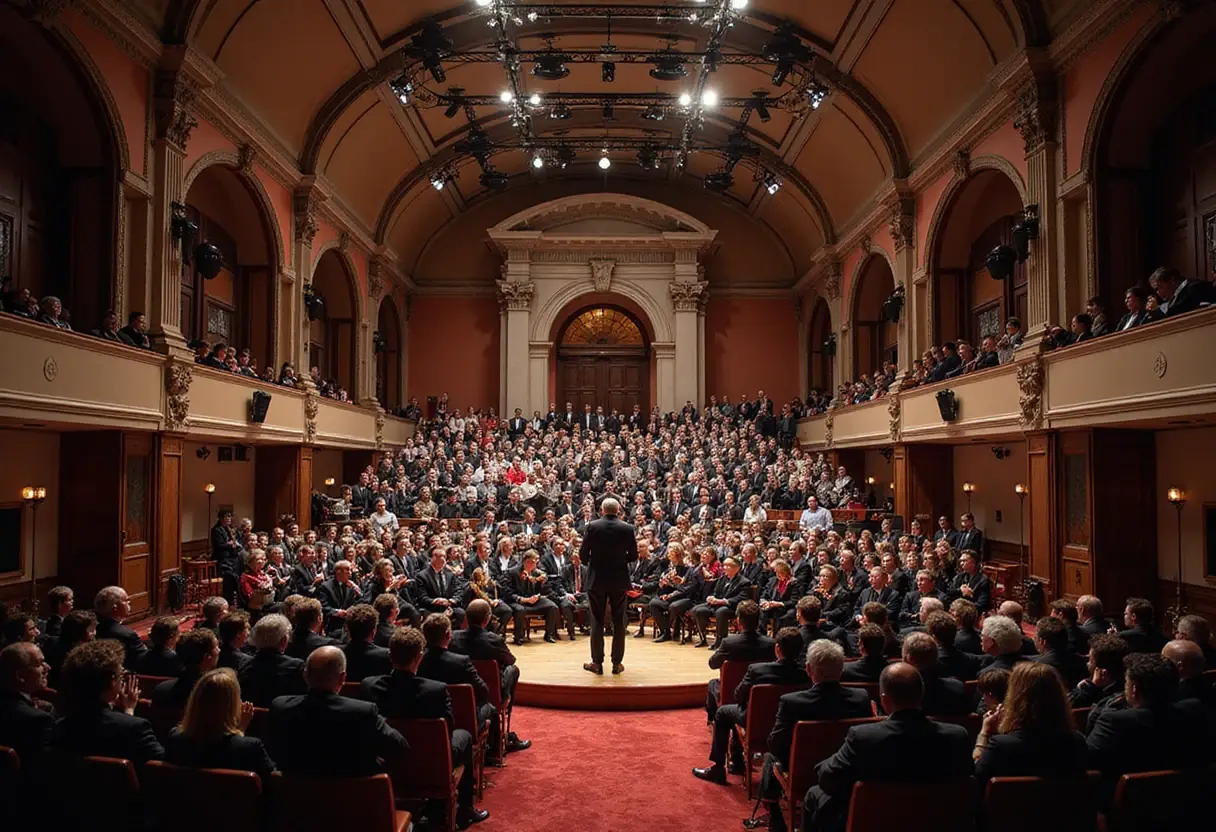
The Greek National Opera made its formal New York debut at Carnegie Hall on Oct. 15, 2026, with a program built around the writer Nikos Kazantzakis. The debut had been planned as far back as 2019; the pandemic postponed it, and the programming shifted toward Greek composers along the way.
The same night, notably, the Teatro Real returned to New York at David Geffen Hall. International companies making formal local debuts has become a pattern — the Hungarian State Opera took its turn several years prior.
What anchored the program?
Kazantzakis (1883–1957), author of Zorba the Greek, Captain Michalis and The Last Temptation of Christ, inspired generations of Greek composers. That influence structured the evening.
The Orchestra of the Greek National Opera, led by Vassilis Christopoulos, opened with Dimitri Mitropoulos' "Cretan Feast" in an orchestral arrangement by Nikos Skalkottas. The piece showed off the orchestra's muscularity, cohesion and unity. Three Skalkottas Cretan dances followed, moving from the wild contrasts of "I Enjoy No Other Dance" to the pastoral "Early at Dawn I Will Rise." Giorgos Koumendakis' "Amor Fati" closed the half — meditative, episodic, like Mediterranean waves, though its dissonant wind writing occasionally buried the violin solo and the piece felt long by the end.
Who sang after intermission?
The vocalists arrived late. Soprano Maria Kostraki joined the Manos Hadjidakis Ensemble for the suite "Captain Michalis," performed with harpsichord, strings and guitars from different periods and cultures, everyone mic'd. Kostraki delivered a gorgeous, impassioned reading — a soaring "Where is God," pristine articulation in the rhythmic numbers, accented yearning in the dramatic ones. The audience went wild.
Then came the evening's low point: a lengthy stage change that removed the harpsichord and remounted the full orchestra. Moving the Hadjidakis before intermission might have fixed it, though that would have wrecked the first half's emotional cohesion.
Mezzo-soprano Anita Rachvelishvili then made her first New York appearance since her much-publicized vocal challenges, in selections from Mikis Theodorakis' "Zorbas." Singing unamplified against a massive orchestra, she kept her phrasing gentle and low-lying; her legato held, and Christopoulos gave her space. She brought her voice down to a whisper in "With the Morning Star" and let it blossom in the raucous closing dance, "Make Your Bed for Two," cueing the audience to clap along — repeatedly, to the visible despair of the ushers policing cellphones.
How did the conductor fare?
Christopoulos proved a minimalist on the podium, at times putting down his arms entirely to let the musicians lead — the ultimate sign of trust. The ensemble responded with cohesion; a few balance wobbles in "Amor Fati" owed more to the score than the players.
The program notes, though, were slim: no texts or context for the vocal movements, supplied only afterward by the company's PR team. That slip detracted from the performance's framing.
Long, imperfectly paced and still transporting, the evening delivered what the occasion promised — Greece, in full voice, seven years later than planned.
By Daniel Okafor
Source: Opera Wire
More from Daniel Okafor
Show full bio
News editor covering companies, deals and strategy in arts in the broadest sense at Arts & Voices.
600 articles