'Here There Are Blueberries' Brings Auschwitz Archivists to Broadway
The Tectonic Theater Project's Auschwitz docudrama 'Here There Are Blueberries' opened Monday at the Barrymore Theater, tracing a rare 1946-found photo album.

Programme
- "Here There Are Blueberries" opened Monday at the Barrymore Theater on Broadway.
- The script by Moisés Kaufman and Amanda Gronich was a finalist for the 2024 Pulitzer Prize for drama.
- The album at the story's center reached the United States Holocaust Memorial Museum in 2007, after being found in Frankfurt in 1946.
- The Tectonic Theater Project, best known for "The Laramie Project," produced the show.
The docudrama "Here There Are Blueberries" opened on Monday at the Barrymore Theater on Broadway. The show, staged by the Tectonic Theater Project, follows curatorial researchers at the United States Holocaust Memorial Museum in Washington as they investigate a rare album of photographs taken at Auschwitz.
The play is not a biography of the archivists. Helen Shaw, reviewing the production, describes it as "a detailed portrait of one of the objects that they study: a rare album of photographs taken at Auschwitz."
What did the album contain?
In 2007, the historian Rebecca Erbelding received the album from a former American lieutenant colonel, who said he found it while stationed in Frankfurt in 1946. Unlike other surviving photographs of the Auschwitz complex, these images show no victims. They depict off-duty officers, visiting camp commandants and German women working in the telegraph office — each one a so-called Helferin — smiling, relaxing, or cheerfully touring the premises.
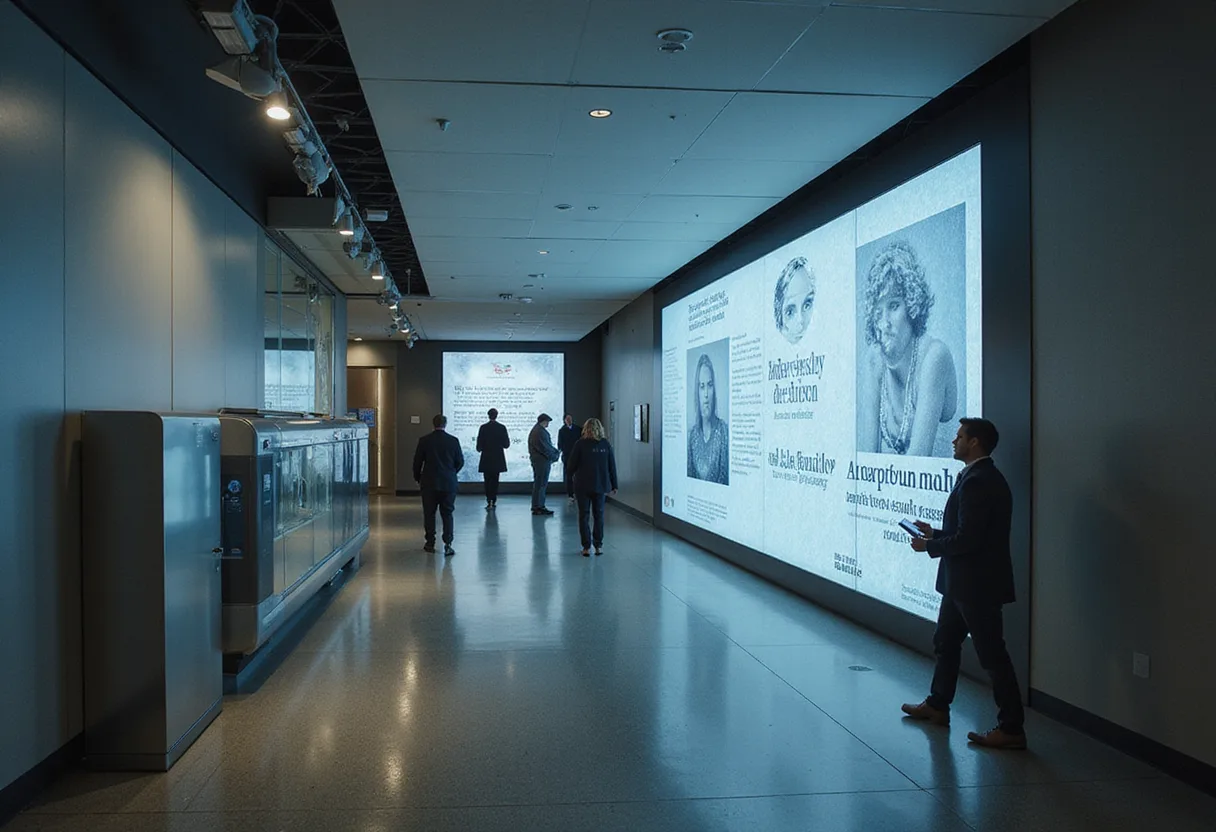
The production operates almost like a documentary film. It collages experts' speeches, explains the true story behind the album's accession, and displays its actual archival images on screens and against the stage's back wall. Ensemble members play multiple characters, most often museum workers studying documents at tables under long fluorescent lights. Shaw writes that they perform "the unglamorous work of maintaining records that the Third Reich wanted to be swept away into darkness."
How was the play built?
The playwrights Moisés Kaufman and Amanda Gronich conducted interviews and compiled research, drawing on excerpts from legal transcripts and recorded testimonials. The script — a finalist for the 2024 Pulitzer Prize for drama — states that it was "inspired by" this material and is therefore not always verbatim. Still, Shaw finds that "the play exudes a kind of sober, hard-won authenticity."
Several sequences carry the testimony of real people caught up in the camp's history. Delia Cunningham channels the Auschwitz survivor Lili Jacob, who recounts seeing her family for the last time. Michael Cerveris delivers a short monologue as Peter Wirths, son of the chief SS doctor who worked at the camp. Shaw writes that agony "pulses through them" and that the actors, trying to keep still, quiver as they testify, sending their pain "molecule by shaking molecule" into the audience.
What does this change for the viewer?
The critic identifies one structural problem: the production undercuts its strongest material by staging the archival investigation as a suspenseful forensic whodunit. Much of the show follows Erbelding, played by Cunningham as always on the edge of tears, as she decides how to pursue her inquiries. Performed with nearly the same tragic tenor as the survivor testimonies, Shaw argues, this framing makes "the project wobble."
The Tectonic Theater Project is best known for "The Laramie Project." With "Here There Are Blueberries," it brings a 2024 Pulitzer finalist to a commercial Broadway house, extending a season trend of documentary theater confronting historical records — and testing whether forensic procedure can hold a Broadway stage alongside firsthand testimony.
Source: NYT Arts
More from Marcus Bennett
Show full bio
Staff writer covering people, launches and day-to-day practice in arts in the broadest sense at Arts & Voices.
1,193 articles