Jesse Eisenberg: Razzie for 'Batman v Superman' Froze Him Out of Studios
Jesse Eisenberg says a Razzie for 2016's 'Batman v Superman' cost him studio roles and pushed him into directing: "I couldn't get into movie studio parts anymore."

Programme
- Jesse Eisenberg won a worst supporting actor Razzie for 2016's 'Batman v Superman: Dawn of Justice'.
- 'Batman v Superman' opened globally to $424.1 million and won four Razzies in total.
- Eisenberg spoke at a BFI London Film Festival screen talk on Sunday, where 'The Debut' closed the festival.
- 'A Real Pain' (2024) earned Eisenberg a best screenplay nomination and Kieran Culkin a best supporting actor Oscar.
- Eisenberg declined to reprise Mark Zuckerberg in 'The Social Reckoning' despite his 2010 Oscar nomination for the role.
By Tom Whitfield
Jesse Eisenberg says a Razzie for "Batman v Superman: Dawn of Justice" shut him out of studio film roles. He made the claim during a screen talk on Sunday at the BFI London Film Festival, where his latest film as director, "The Debut," starring Julianne Moore and Paul Giamatti, closed the festival that same night.
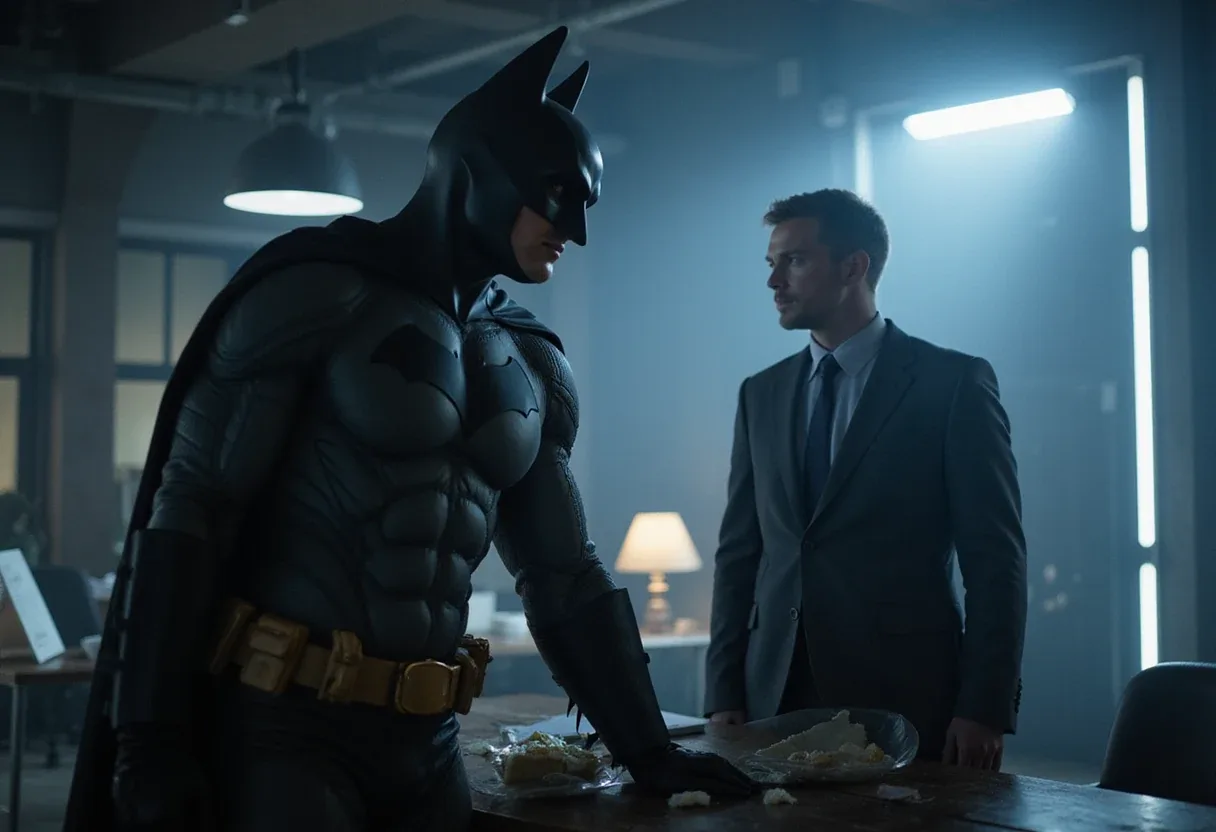
Eisenberg played Lex Luthor opposite Henry Cavill and Ben Affleck in Zack Snyder's 2016 superhero film. The Golden Raspberry Awards — the tongue-in-cheek ceremony for the year's worst films, handed out the night before the Oscars — gave him worst supporting actor. "Batman v Superman" took four Razzies in total, including worst screenplay, worst sequel and worst screen combo for Cavill and Affleck.
What does the Razzie change for a career?
According to Eisenberg, it changed everything. "Listen, a lot of it just came from fear," he said of his pivot to writing and directing. "I couldn't get into movie studio parts anymore because I had won a Raspberry Award from [being in the] 'Batman' movie … and I saw the trajectory."
He described acting as a profession with no stable middle ground. "If you're an actor, you're constantly panicked about 'Am I on an upslope or a downslope?'" he said. "Because there's no plateau. Acting is just this unstable, awful industry where you are either on the treadmill and you're doing okay and you're running up or you are yesterday's news and it's awful. And if you're a paranoid person like me, you see it way in advance."
The practical response, he said, was to move behind the camera. "So I was like, I've got to direct movies. That's why I started writing them, just to kind of keep my career afloat, really."
His conclusion from the experience is blunt: no more superhero films. "The industry tells you what they want from you," Eisenberg said. "The industry did not want me to be in a superhero movie, and if you're smart and self-aware, you learn that quickly. And you know, it's the unsuccessful actor that goes 'No, I want to be in more of those.'"
He added: "They wouldn't have given you a Raspberry Award if they wanted you there. That's an award for bad acting."
A caveat belongs here. Eisenberg's account of studio exile is his own framing, delivered on a festival stage promoting his own film. The "failed" superhero film opened globally to $424.1 million — one of the biggest openings on record — and he had already said in earlier interviews that the film's reception hurt his career. What he has never specified is which studio roles he lost.
The Zuckerberg role he refused
One part the industry did want him back for was Mark Zuckerberg. Eisenberg earned a best actor Oscar nomination for playing the Facebook founder in 2010's "The Social Network," written by Aaron Sorkin and directed by David Fincher. He declined to return for the recently released follow-up, "The Social Reckoning," which Sorkin wrote and directed.
He offered little on that decision at the LFF talk, saying only that the "companion movie," as it has been dubbed, "is quite different."
Kieran Culkin, Emma Stone and a flight to Poland
Eisenberg was more expansive about "A Real Pain," his 2024 sophomore directorial effort. The film earned him a best screenplay nomination and won Kieran Culkin the best supporting actor Oscar. It nearly did not happen as planned.
"We didn't know if Kieran was ever going to show up to Poland," Eisenberg said. "Emma Stone is producing the movie. She personally took him on the plane to Poland [where it was shooting] because we didn't know if he was going to show up. She sent me a video of him going through customs, saying 'We are here!' and then he still was late."
Culkin, fresh off HBO's "Succession," insisted on a "spontaneous" shooting style that was not part of Eisenberg's plan. "We're like, what's best for the movie?" Eisenberg recalled. "And I guess what's best for the movie is probably following this live wire around because that's the engine of the movie anyway."
"If he had a small part, you'd be like, 'We just have to tell this guy to shut up,' you know? But he's the lead… So it was a real learning curve."
The record suggests the improvisation paid off: Culkin's Oscar and the screenplay nomination made "A Real Pain" the strongest credit of Eisenberg's directing career to date. Whether "The Debut" can extend that run will depend on the reception it earns now that it has closed the London festival.
Source: Variety Film
More from Tom Whitfield
Show full bio
Market editor covering people, launches and day-to-day practice in arts in the broadest sense at Arts & Voices.
644 articles