Jillian Edelstein's 'Among People' extended at Stills Edinburgh
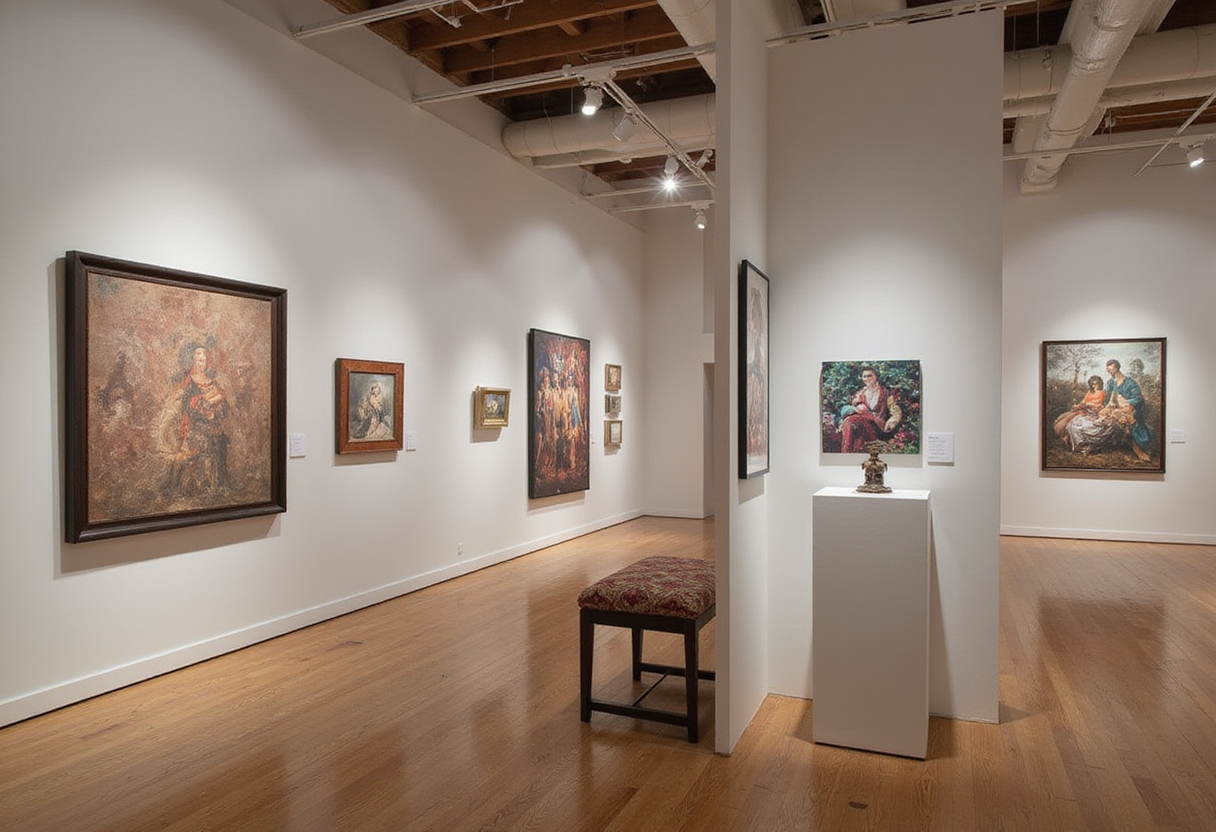
Curated by Tracey Marshall-Grant, Jillian Edelstein's 'Among People' has been extended through 31 October at Stills Gallery, Edinburgh, spanning five decades from Apartheid-era press work to Hampstead Heath's cold-water swimmers.
Programme
- Retrospective 'Among People' extended through 31 October at Stills Gallery, Edinburgh
- Curated by Tracey Marshall-Grant, the show surveys five decades of work, from 1980 to 2022
- Truth and Reconciliation project ran 1996–2001; book 'Truth and Lies' published in 2002
- Born 1958 in Cape Town; worked for The Rand Daily Mail (1982–83) and The Star (1984) before leaving South Africa in 1985
- The National Portrait Gallery in London holds more than 100 of Edelstein's prints
Jillian Edelstein's retrospective "Among People" has been extended through 31 October at Stills Gallery, Edinburgh, offering a five-decade survey of the Cape Town-born photographer. The show, curated by Tracey Marshall-Grant, includes the 1996–2001 Truth and Reconciliation series alongside projects from as early as 1980.
What does the exhibition cover?
The Edinburgh show stretches from Edelstein's earliest images of the fishing community at Kalk Bay harbour, Cape Town, made between 1980 and 1983, to her 2020–22 portraits of the year-round cold-water swimmers at Hampstead Heath's ponds in London.
The exhibition also draws on Edelstein's portrait series "Affinities," which explores creative partnerships and includes her 1992 photograph of artists Heather Ackroyd and Daniel Harvey. A long-term project on the Sangoma, traditional healers on the Lesotho–South African border, is represented, alongside images from "Here and There: An Expedition of Sorts," published by GOST in 2024, made in Ukraine.
Why does Truth and Lies still define her career?
Edelstein, born in 1958, spent four years photographing perpetrators, victims and other participants in South Africa's Truth and Reconciliation Commission, the public hearings that examined the country's Apartheid history from 1996 to 2002.
When she published "Truth and Lies" as a book in 2002, it carried endorsements from Archbishop Desmond Tutu, novelist Gillian Slovo, and Pumla Gobodo-Madikizela, Research Chair in Studies in Historical Trauma and Transformation at Stellenbosch University.
The series includes her commissioned portrait of President Nelson Mandela at Tuynhuys, the presidential residence, and quieter images such as her 1997 portrait of Father Lapsley in Cape Town, the ANC chaplain who lost his hands to a letter bomb sent by a state death squad.
"In South Africa I remember thinking how fascinating it was that the perpetrators put themselves forward to be captured, in a vain kind of way," Edelstein said. "That was very striking."
How did she arrive at photography?
Edelstein originally studied social work, not photography. Her first job was at the National Institute for the Crime and Rehabilitation of Offenders in Cape Town, where she worked mainly with men in prison or recently released.
She took up photography at university and by 1982 was a press photographer for The Rand Daily Mail, moving to The Star newspaper in 1984. She left South Africa in 1985 to study documentary photography at the London College of Printing, now the London College of Communication.
Her time there lasted six months. Michael Cranmer, then picture editor of The Sunday Times, saw her work during a guest lecture, and Andrew Neil, the paper's editor, offered her a contract after seeing one of her portraits.
"He said 'What are you doing here?!'" Edelstein recalled. "He gave me a commission and then Andrew Neil saw the portrait and said 'Offer her a contract'. It was sort of extraordinary even then."
What drives the work today?
Edelstein has shot for The New York Times Magazine, the FT Weekend Magazine, Vogue, GQ and Esquire. The National Portrait Gallery in London holds more than 100 of her prints. Many personal projects include commissioned elements, such as the Mandela portrait and her image of the comedians French and Saunders in "Affinities," and that crossover, she said, gives her access to hard-to-reach subjects.
She frames her practice as a form of social work. "It's a privilege, because people are people and you can learn from everyone," Edelstein said. "I try to treat everyone with equality, I think that can show something really powerful."
In the gallery's press material, she wrote: "Looking back across these photographs, I'm struck by how much my work has been shaped by my early engagements or interactions with inequality and subjugation, one asserting an unjust superiority over another."
Edelstein is also working on a commission photographing women who have survived sexual violence and abuse. Asked what drives her, she said: "It's the challenge of photographing someone, the dance that you have to do. What you give is what you get back."
The extension through 31 October gives Edinburgh audiences an unusually broad chance to weigh a career that has moved from Apartheid-era press desks through post-apartheid reckoning to the cold ponds of north London.
Original: stills.org
More from Marcus Bennett
Show full bio
Staff writer covering industry trends and analytics at Arts & Voices.
358 articles