Judge Halts Trump's 250-Foot Arch at Arlington, 14-Day Order
Judge Tanya Chutkan's 14-day restraining order halts the 250-foot arch near Arlington Cemetery, days after a Trump-leaning commission approved it over veterans' objections.
Programme
- Judge Tanya Chutkan issued a 14-day restraining order Friday halting the 250-foot arch; compliance deadline is November 9
- The National Capital Planning Commission approved the project Thursday after a nine-hour hearing with more than 100 witnesses
- A Washington Post 3D shadow model found the arch would shade more than 75,000 graves at Arlington plus the JFK, MLK, Vietnam Veterans and Korean War memorials
- D.C., Virginia, and Vietnam War veterans have filed separate lawsuits alleging bypassed congressional approval
- The administration projects construction would take two to three years of near-round-the-clock work
By Tom Whitfield
U.S. District Judge Tanya Chutkan issued a restraining order Friday morning halting construction of President Donald Trump's proposed 250-foot triumphal arch — just hours after a hastily convened planning commission granted the project final approval.
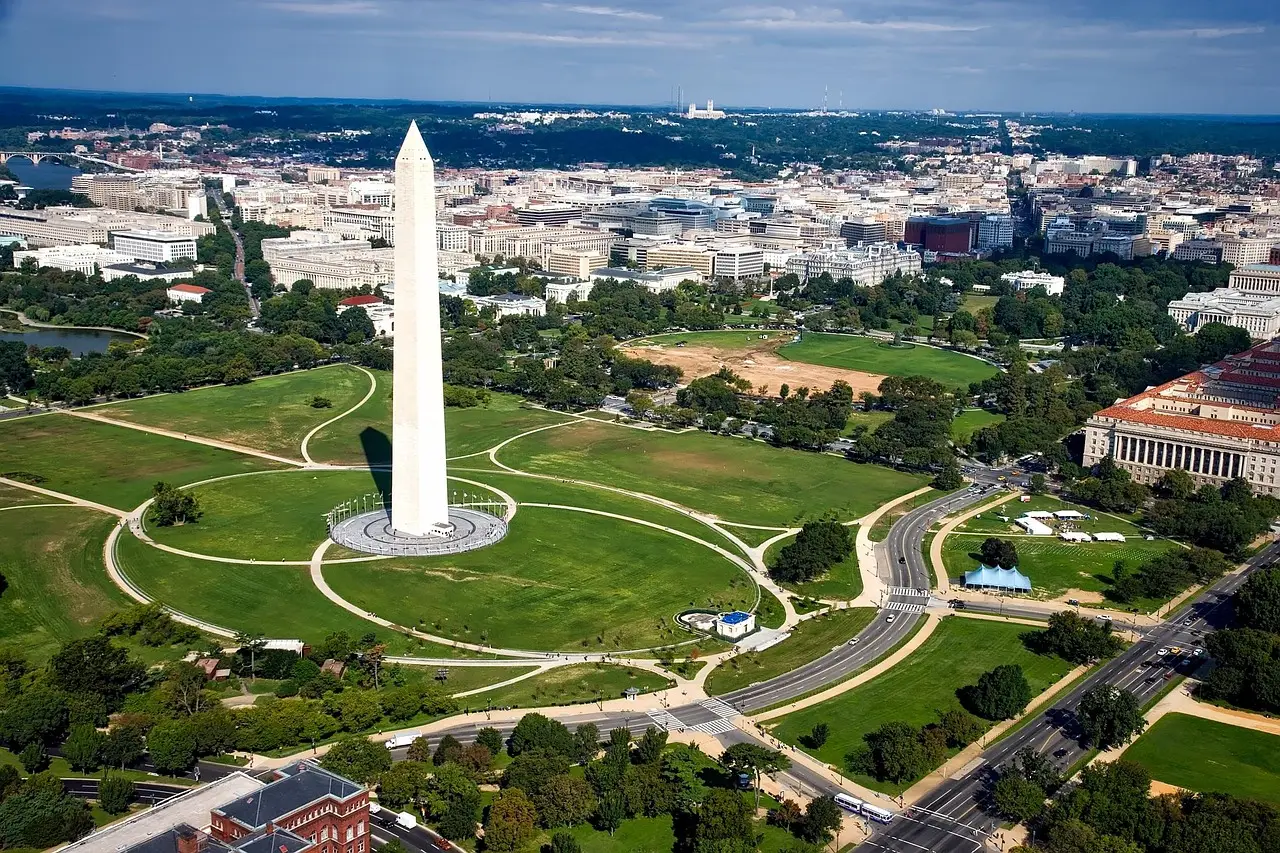
The order freezes all activity for 14 days, giving the court time to weigh several lawsuits challenging the arch's legality. It bans excavation, utility installation, and road closures around the proposed site at Memorial Circle near Arlington Cemetery. The administration faces a Monday, November 9 deadline to guarantee compliance.
The National Capital Planning Commission approved the project Thursday after a nine-hour virtual hearing. More than 100 people testified, among them military veterans, D.C. preservationists, and family members of those buried at Arlington. The vote's outcome was widely expected, and opponents had already moved to seek federal court intervention before the review process concluded. That preemptive strategy worked: Judge Chutkan will now consider several independent legal challenges, including one brought jointly by the governments of D.C. and Virginia and another filed by Vietnam War veterans.
What do the lawsuits argue?
The plaintiffs contend the Trump administration bypassed required congressional approval and failed to adequately assess the project's impact on the surrounding landscape. Their filings raise concrete objections:
- Air and noise pollution from a structure of its height and location
- Traffic disruptions around Memorial Circle
- Interference with flightpaths from Ronald Reagan Washington National Airport (DCA)
- Disruption of the deliberately cultivated visual axis between the Lincoln Memorial and Arlington National Cemetery
The last point is the most contested. The Lincoln Memorial–Arlington relationship is one of Washington's most carefully protected sightlines, and critics say a 250-foot arch would sever it.
How large is the shadow problem?
A Washington Post investigation published in October offers the sharpest numbers in the dispute. Using a to-scale 3D model to map the arch's shadows across the year, the paper found the structure would cast shadows over more than 75,000 graves at Arlington. It would also shade several major memorials: those dedicated to John F. Kennedy and Martin Luther King Jr., along with the Vietnam Veterans and Korean War Veterans memorials.
The administration has not publicly answered the shadow study. What it has offered instead is a shifting rationale.
What does the administration say?
The White House argues the arch would commemorate the nation's 250th anniversary of independence and enhance security in Washington, D.C. In recent weeks, Trump proposed the structure could double as a "military complex" equipped for snipers and drones. The final plan submitted to the commission, however, reportedly omitted those details — a gap that went unexplained in the source materials.
Mark Paoletta, a White House official who chairs the commission, defended the project in blunt terms on Thursday. He called the empty space at Memorial Circle a "national disgrace" and praised the president's "historic vision."
The description is worth noting, because Memorial Circle is not vacant land awaiting a monument; it is a designed landscape within one of the most symbolically loaded corridors in the American capital. Paoletta's framing does not engage with that fact, and neither, according to the lawsuits, did the administration's review process.
The commission's composition also invites scrutiny. It is made up mostly of Trump loyalists, which explains why Thursday's nine-hour hearing — with its more than 100 witnesses — ended in approval despite sustained opposition from veterans and Arlington families.
What happens next?
Construction, if it proceeds, is projected to take two to three years, with crews working nearly around the clock, according to the Trump administration. That timeline now depends entirely on Judge Chutkan's courtroom, not the commission's hearing room.
The 14-day restraining order buys time, nothing more. Judge Chutkan must still rule on multiple independent challenges — from two state-level governments and from Vietnam War veterans — each arguing that congressional approval was skipped and environmental and visual impacts were never properly assessed. The administration's November 9 compliance deadline is the first test: if it contests the order or proceeds with preliminary work, the legal fight escalates. If it complies, the question becomes whether the arch survives judicial scrutiny of a process its critics say was fixed from the start.
Either way, the project that cleared its final hurdle Thursday morning was stopped by Friday. What that changes for the 250th anniversary timeline is the practical question: a two-to-three-year construction schedule cannot begin while the courts decide, and every week of delay pushes completion further past the anniversary the arch is meant to celebrate.
Original: axios.com
More from Tom Whitfield
Show full bio
Market editor covering people, launches and day-to-day practice in arts in the broadest sense at Arts & Voices.
1,067 articles