Judy Garland's 1961 Carnegie Hall Night: Can One Concert Claim It All?
Judy Garland's 1961 Carnegie Hall concert has sometimes been hailed as "the greatest night in showbiz history" — a claim with no named author and remarkable staying power.
Programme
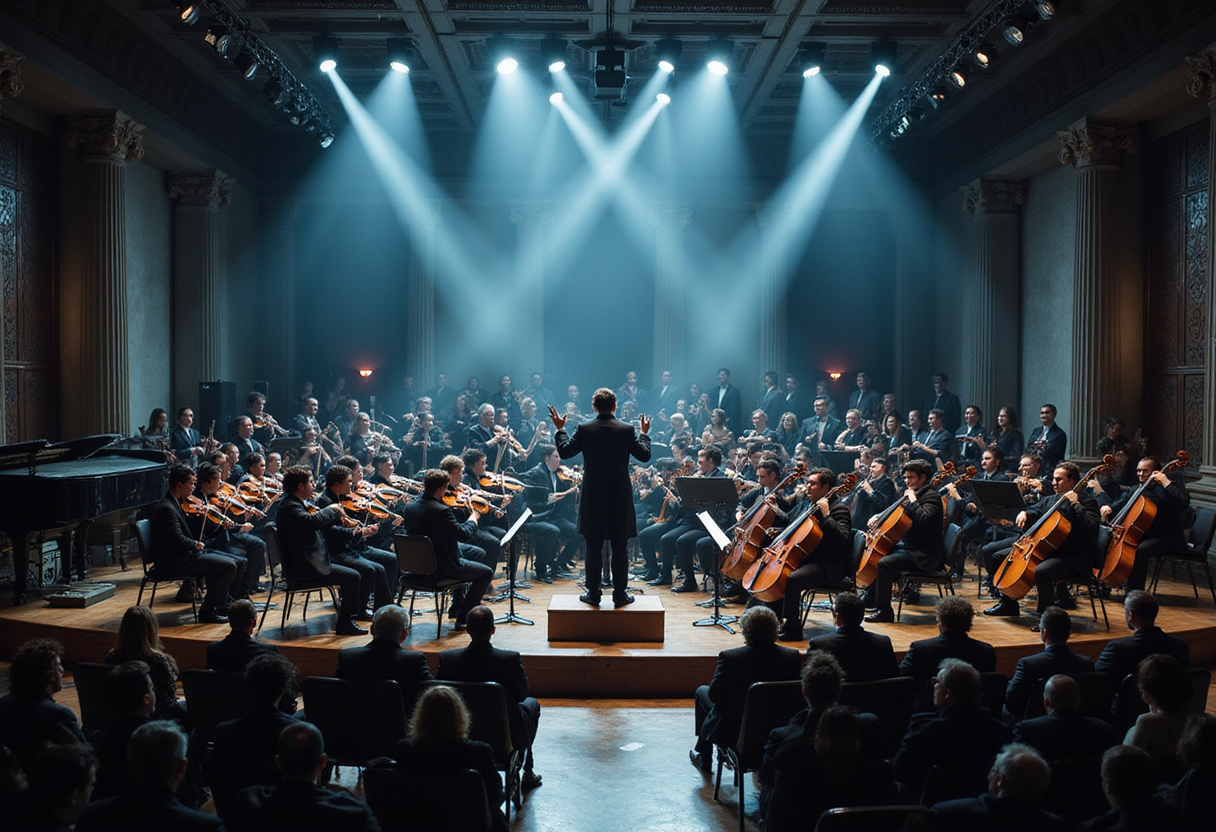
- Judy Garland performed at Carnegie Hall in 1961.
- The performance has been described as "triumphant" and preserved as a live album.
- The concert has sometimes been hailed as "the greatest night in showbiz history."
- The superlative claim carries no named critic or source in the record as given.
- The recording's reputation, not its sales or reviews, is what the claim rests on.
Judy Garland's 1961 performance at Carnegie Hall has sometimes been hailed as "the greatest night in showbiz history." That is the whole of the documented claim. Everything else — the recording's reach, the night's reception, its afterlife — depends on who is doing the hailing, and how hard anyone has checked it.
The sentence is short. The reputation is long. A live album taped at Carnegie Hall in 1961, carrying Garland's name and that venue's, has accumulated a superlative that few recordings in any genre can match: an absolute claim, stated as history, repeated without qualification.
What does the claim actually rest on?
Here is what the record, as given, supports:
- One artist: Judy Garland.
- One venue: Carnegie Hall.
- One year: 1961.
- One performance, described as "triumphant."
- One label, applied by unnamed parties "sometimes": "the greatest night in showbiz history."
Note what is absent. No reviewer is named. No audience figure is cited. No chart position, sales total or contemporaneous critique accompanies the phrase. The verb is conditional — "has sometimes been hailed" — which is a hedge, not a verdict.
Why the hedged phrasing matters
Superlatives in arts criticism usually arrive with an author attached. This one arrives pre-anonymized, the kind of phrase that circulates because it is quotable rather than because anyone signed it. "The greatest night in showbiz history" covers, in principle, every performance in every venue since the industry existed. That is a large field for one concert to win without a named judge.
Still, the claim persists. Repetition is its own evidence in arts folklore; a phrase repeated often enough acquires the weight of documented fact, whether or not it started that way.
What does this change for the listener?
Practically, little and much. Little, because a superlative cannot be verified by argument — you either accept the folk verdict or you do not. Much, because the billing does real work: it funnels new listeners toward one specific recording from one specific night, ahead of hundreds of Garland performances that no one labels at all. The claim functions as curation.
The skeptical reading is not that the night was ordinary. Garland in 1961, at Carnegie Hall, on a night her audience and her label chose to preserve — the selection itself says something. The point is narrower: the superlative is testimony, not measurement.
The question worth taking home
If the 1961 Carnegie Hall recording is sometimes called the greatest night in show business history, the useful next question is not whether that is true. It is who first said it, and why the phrase survived when so many rival superlatives did not. Until that origin is named, the sentence stands as folklore with excellent distribution — and Garland's name attached to it, which is, on the evidence available, the only part beyond dispute.
Source: NYT Arts
More from Tom Whitfield
Show full bio
Market editor covering people, launches and day-to-day practice in arts in the broadest sense at Arts & Voices.
507 articles