Programme
- 12 madrigals feature in the November 15 concert at Lobero Theatre.
- Les Arts Florissants was founded by William Christie in 1979.
- Paul Agnew organizes and directs the all-Monteverdi program.
- The ensemble’s recording catalogue begins in 1982 and includes this year’s Bach: Kothen, a life in music vol. 3.
- Christie created the ensemble’s Thiré garden environment in 1985; it is listed in the Inventory of Historic Monuments.
By Grace Kim
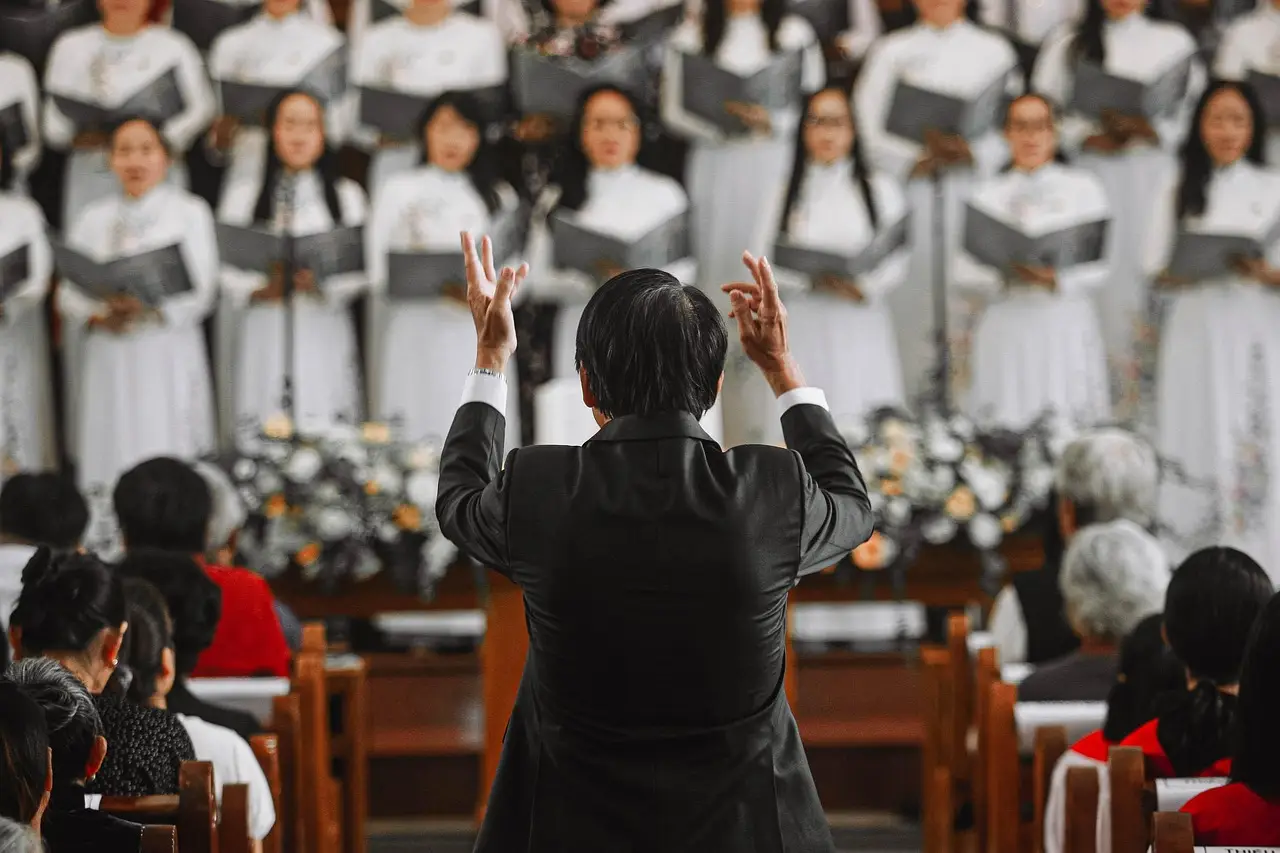
On Sunday, November 15, Les Arts Florissants will perform 12 madrigals by Italian composer Claudio Monteverdi at Lobero Theatre, according to UCSB Arts & Lectures’ season listing. The all-Monteverdi concert, organized and directed by British tenor Paul Agnew, forms the classical component of UCSB Arts & Lectures’ season.
The UCSB Arts & Lectures concert description credits Monteverdi (1567–1643) with virtually inventing opera in its modern form. It also positions him as a vital link between the Renaissance and the Baroque period of the 17th century.
Although much of his music has been lost, his surviving scores include many madrigals, or multi-voice vocal compositions. These form the basis of the ensemble’s current tour and Lobero stop.
The description also identifies Monteverdi’s epic sacred collection Vespro della Beata Vergine (Vespers for the Blessed Virgin) and three operas: the popular L’Orfeo, followed by Il ritorno d’Ulisse in patria and L’incoronazione di Poppea. Instrumental and choral forces will converge at Lobero across a dozen madrigals.
Santa Barbara’s 805 ear-space is getting a concentrated Baroque season this fall. Two weeks ago, the Santa Barbara Master Chorale devoted its program to Henry Purcell in the concert “Purcell-a-palooza.” The concert preview presents Purcell as one of Britain’s towering but currently too-rarely performed composers, then moves to Monteverdi as the next Baroque focus.
What does the harpsichord change?
Agnew located the hinge about halfway through Monteverdi’s book five of madrigals. There, the continuo—an instrumental foundation beneath the vocal writing—introduces the harpsichord and changes how many voices the music can sustain.
He then explained the consequence: “Once you get the harpsichord, you can have just one singer singing. And once you have one singer singing, then you can have one singer replying to another singer. And that’s really the birth of dramatic music.”
The thinner texture lets one singer answer another, turning the ensemble’s material into a sequence of exchanges. Agnew’s practical proposition is specific: drama emerges from a changed relationship between voices and instruments.
Les Arts Florissants’ history dates to 1979, when conductor William Christie founded the ensemble. Its recording catalogue (discography) starts in 1982 and extends through this year’s Bach: Kothen, a life in music vol. 3. The French early music group has become one of classical music’s most renowned champions of Baroque performance.
Christie remains the group’s artistic director and shares leadership duties with Agnew. The ensemble is centered in the Philharmonie de Paris and takes its name from Marc-Antoine Charpentier’s opera Les Arts Florissants, written in 1685.
Les Arts Florissants also maintains a performance setting on an estate in Thiré, in the Vendée: an English garden. According to the ensemble’s history, Christie became obsessed with the site and created its garden environment in 1985. It now holds “Remarkable Garden” status and a place in the Inventory of Historic Monuments.
Topiary, manicured modules and mazes form part of the ensemble’s performance routine. In late October, Santa Barbara Botanic Garden hosted “Musique au Jardin,” with Baroque music supplied by Les Plaisirs Champêtres. The garden party extended the local connection to the group’s own performance-garden practice.
Agnew also offered the larger claim: “all the secrets are there. If you’re going to interpret Bach or Handel, you can apply all of those rules which start at the beginning of the 17th century to everything you do afterwards. All the secrets are already there in Monteverdi.”
That is the program’s most consequential proposition: Monteverdi becomes a working rulebook for composers who followed him, rather than merely a historical bridge. Agnew describes him as a pivotal source of inspiration four centuries later, even as the program treats the madrigals as a way into a compositional language extending into the later 17th century.
A proposed title for the Lobero show, “Monteverdi-a-palooza,” extends the Master Chorale’s earlier joke. On November 15, concertgoers will hear whether the harpsichord, a reduced texture and exchanged vocal lines make Agnew’s account of dramatic birth audible.
Source: independent.com
More from Grace Kim
Show full bio
Correspondent covering technology and product news in arts in the broadest sense at Arts & Voices.
1,190 articles