Mothers of Kherson Premieres in Warsaw: A Strong Opera That Flinches
Teatr Wielki Warsaw opened its 2026-27 season with Kolomiiets' sold-out "The Mothers of Kherson," a Met co-production due in April 2028 — strong music, flawed libretto.

Programme
- Teatr Wielki Warsaw opened its 2026-27 season with the world premiere of "The Mothers of Kherson" by Maxim Kolomiiets.
- The opera is a co-production with the Metropolitan Opera, scheduled there for April 2028.
- An estimated 80 percent of the abducted Ukrainian children have not been returned to their families four years on.
- Opening night sold out and was attended by the Polish Minister of Culture; the journey at the opera's center spans 3,000 km.
Warsaw's Teatr Wielki opened its 2026-27 season with the sold-out world premiere of Maxim Kolomiiets' opera "The Mothers of Kherson," a co-production with the Metropolitan Opera, which has scheduled performances for April 2028. The work responds directly to the abduction of Ukrainian children by Russian authorities in 2022. Four years on, an estimated 80 percent of the children have not been returned to their families. The Polish Minister of Culture attended opening night alongside the international press; heightened security produced long queues and a delayed start.
The subject is raw. The Met's General Manager, Peter Gelb, said the libretto by American playwright George Brant would provide "a permanent artistic testimony to the story of the indomitable women who risked their own lives to save the lives of their children." Testimony is one thing. Art is another. The line between the two is thin, and Brant crosses it once or twice — but not fatally.
What does the opera actually deliver?
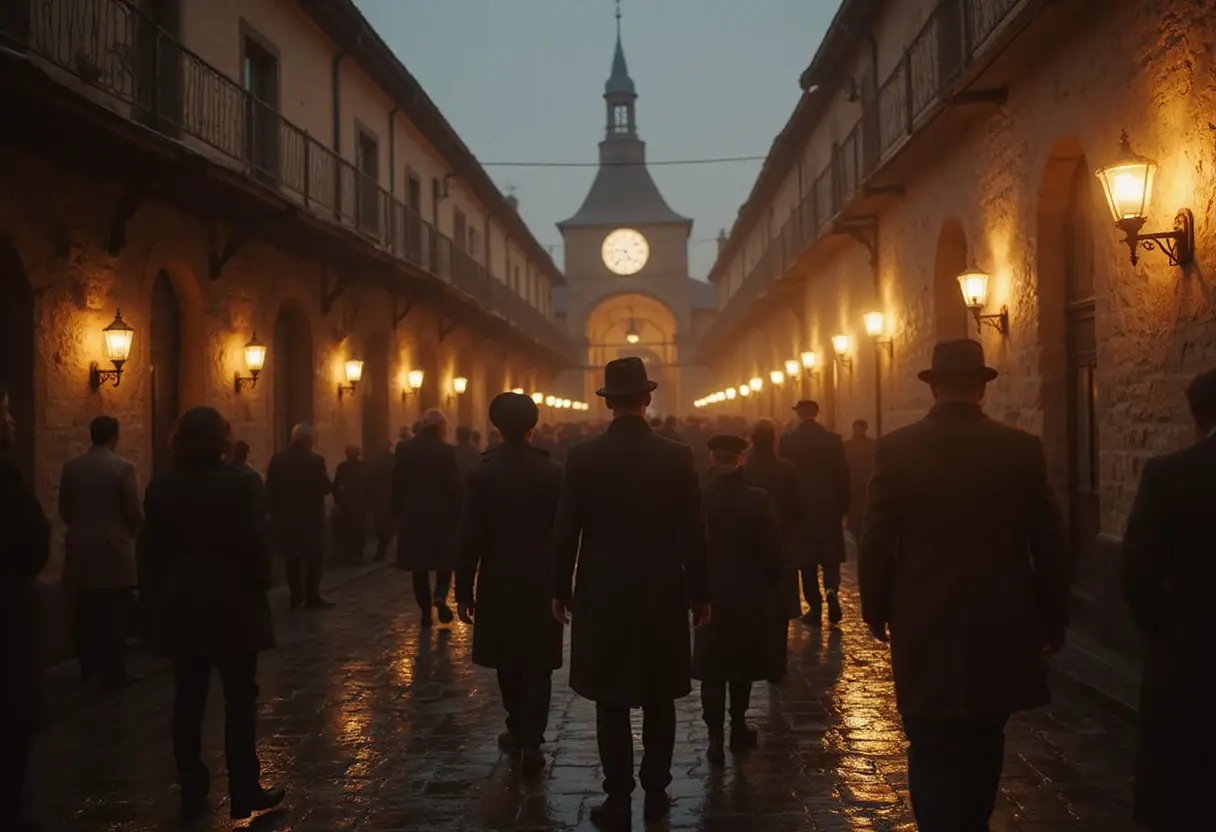
The narrative begins in August 2022 in occupied Kherson. The men are at the front; the women manage alone. When Russian authorities offer a two-week holiday camp in Crimea, many accept. Months later the children have not returned, the Russian army has been driven from the city, and the children are trapped behind the front line. Maria Lvova-Belova — the Russian Children's Rights Commissioner who has denied the abductions, calling them a temporary safety measure — then tells the world's press that families may collect the children. The journey requires 3,000 km to avoid the battlefields. A group of women sets out. Act One ends.
Brant builds the act cleanly. Kateryna, who opposed her daughter Lilia's trip, drives the search. Dasha and her daughter Olena are gentler figures. Ohla, a wheelchair-bound grandmother caring for her granddaughter Inna while her daughter battles cancer, completes the trio.
Act Two follows their journey by dilapidated coach through Ukraine, Poland and Belarus, then by plane to Moscow and by road to Crimea. The toll is brutal:
- Ohla dies on the journey; Inna disappears into Russia.
- Kateryna, after interrogation at "Camp Friendship," reclaims Lilia.
- Dasha fails: one digit of Olena's identification number was altered, and the paperwork no longer matches.
The final scene — mothers reunited with children while others stand alone, still searching — lands as a moving conclusion.
Where does the libretto falter?
Occasional passages slide into what reads as crude propaganda. The coach driver's greeting as the bus crosses into Poland — "Here, kind souls greet us with open arms, / Just as they've welcomed millions of our countrymen, / Bless their generous hearts, / And their hatred of the Muscovites" — sounds contrived, inserted to advertise the author's allegiance rather than to serve the drama. Kateryna's line, "Our last safe haven, vicious Belarus is next," has the same problem.
The deeper flaw is the treatment of everything Russian and Belarusian as uniformly vicious. Border guards steal, demand bribes and show not one sympathetic glance. The interrogation scene collapses near farce: when Kateryna livestreams it on her phone, the Camp Principal grovels instantly, surrendering all authority. Portraying Russians negatively is understandable. Stripping them of nuance strips the work of emotional depth.
These failings are irritating, not fatal. The libretto remains well structured and engaging, with neatly drawn secondary characters such as the teacher Tetyana Borisova and Vitaly, Kateryna's husband.
How do the score and staging hold up?
Kolomiiets' eclectic score moves between tonal and atonal passages, generic in places but never to its detriment. Electronics mixed with the orchestra — brass prominent, drums suggesting explosions — build an atmosphere of rising anxiety. The large choruses, infused with folk melodies, sit at the heart of the score and define the communal life of Kherson. Ohla's first-act monologue, blending defiance and hope with images of nightingales and sunflowers, is a high point, as is the girls' lullaby duet "Sleep, my little rabbit."
Director Barbara Wysocha tells the story straight, without subplots. Barbara Hanicka's two-level set confines the women below while projections of bombed buildings — and close-ups of faces — play above. The blue coach that trundles across the stage, splitting open at the Belarusian border so guards can patrol the aisle, is exceptionally well done. Julia Kornacka's deliberately unmemorable costumes succeed by their realism.
The cast commits fully. Izabela Matula's Kateryna is forceful yet layered, nagging her traumatized husband without sympathy. Kamila Dutkowska's Dasha phrases with tender, aching lines. Hanna Sisnowska-Bill and Weronika Wojkowska give the teenage girls youthful vibrancy. Malgorzata Walewska's Ohla — who throws sunflower seeds daily at the Russian soldier beneath her willow tree, hoping sunflowers will grow where he rots — is splendid. Tadeusz Szlenkier's camp principal turns vicious until his sudden, dramatically unconvincing collapse. Katarzyna Wietrzny makes a brief, excellent appearance as Lvova-Belova, the falsity of her pleading carried in the voice. Keri-Lynn Wilson draws an emotionally compelling performance from the Orchestra of the Teatr Wielki without ever drowning the soloists; the Chorus of Teatr Wielki, prepared by Lukasz Hermanowicz, rouses the house.
Will it last?
Probably not. Few new operas survive beyond their initial run, and works both musically and dramatically stronger than this one have never been revived. The excerpts may fare better: the choral numbers could live on in concert, and an orchestral suite could too — if Kolomiiets chooses to write one.
Source: Opera Wire
More from Tom Whitfield
Show full bio
Market editor covering people, launches and day-to-day practice in arts in the broadest sense at Arts & Voices.
972 articles