One Hour Before Curtain: Radvanovsky Saves Teatro Real's Manon
Announced one hour before curtain: Sondra Radvanovsky replaced Saioa Hernández at Teatro Real and, with Jorge de León, turned Cast B of Puccini's Manon Lescaut into a triumph.
Programme
- Teatro Real announced the cast change one hour before curtain: Sondra Radvanovsky replaced the ill Saioa Hernández in the second cast.
- Jorge de León sang Des Grieux, a role singers call 'a vocal killer', opposite Radvanovsky; Carolina López Moreno covered Radvanovsky's vacated dates.
- The production is a co-production between Teatro Real and Oper Köln, directed by Carlos Wagner.
- Nicola Luisotti conducted; the Teatro Real Chorus sang under chorusmaster José Luis Basso.
- The run belongs to Teatro Real's 2026-27 season.
Teatro Real announced its cast change for Puccini's Manon Lescaut one hour before curtain. Saioa Hernández had fallen ill and cancelled several performances. Sondra Radvanovsky, originally scheduled in her own cast opposite Michael Fabiano, moved into Hernández's slot alongside Jorge de León. Young soprano Carolina López Moreno covered the dates Radvanovsky vacated.
Force majeure, as it turns out, can be a dramaturg. The substitutions made this Madrid run more interesting than any standard casting plan. That is the reviewer's verdict, and the evening earned it.
What does director Carlos Wagner do with Puccini's plot?
Manon Lescaut is, on paper, the story of a young woman sold by her own brother, passed between men, and destroyed by a system that offers her no real choices. Puccini, the source review argues, is a markedly feminist composer: he reveals his heroines musically through pain inflicted, knowingly or not, by every man around them. Manon is a commodity while she is convenient and a victim the moment she is not.
Wagner, directing this co-production between Teatro Real and Oper Köln, stated his concept plainly. He wanted a contemporary, feminist perspective on the story, and he was frank about the opera's structural problems:
"The production was quite difficult to stage, because the plot is full of ruptures, missing narrative connections, ellipses… It is far from an organic dramatic form. To be honest, in places it is simply unclear: the structure consists of four vignettes from Prévost's novel, between which the logical bridges have been lost."
His fix was theatrical. A short pantomime at the end of Act One bridges the leap into Act Two — the moment Manon moves from loving Des Grieux to living with Geronte. The temptation is staged as a magnificent gown with diamonds from Geronte, and the audience watches Manon hesitate: stay with love and passion, or choose safety and luxury. Wagner's stated aim is that every spectator makes that choice alongside the heroine.
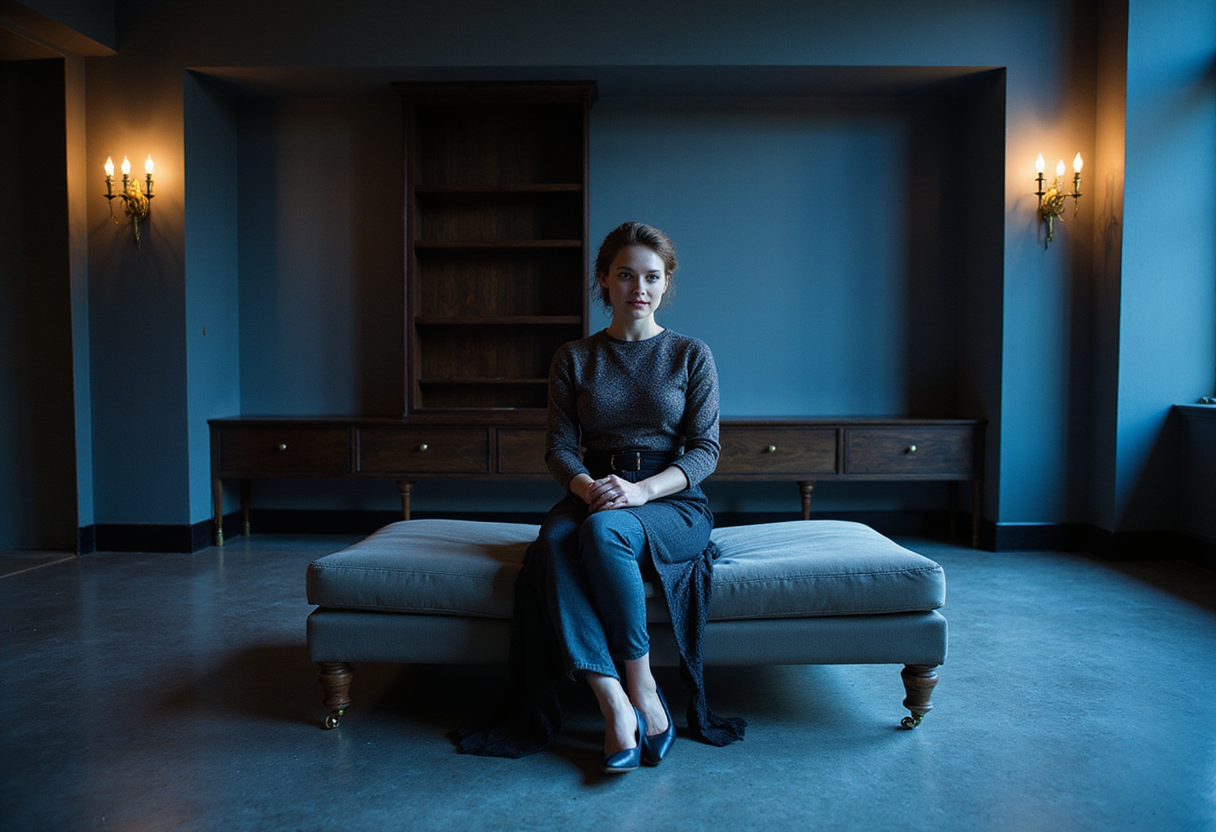
Visually, the first two acts offer a festive, half-Soviet, half-Hollywood cinematic world in dark grays, with Manon alone in bright color. Acts Three and Four collapse that celebration into a prison basement sealed by a grille that serves at once as cage, carousel, and wheel of justice — the wheel that hurls the condemned across the ocean toward Louisiana and death. The allegory accrues references to Moulin Rouge, Dante's Inferno, and, sardonically, contemporary fashion shows, until the stage empties into a barren space of shadows and glints of light. The image of women falling from the "catwalk" lands hard. So does the sudden scale of the American desert, an abyss where the party visibly ends.
How do the singers survive a "vocal killer"?
The tenor role of Des Grieux is nicknamed by singers "a vocal killer" — one of the most punishing parts in the repertoire. Jorge de León not only survived it; he triumphed, vocally and dramatically. His Des Grieux carries boyish obsession convincingly, and his voice cuts through the dense orchestration at the climaxes without effort: bright, metallic, expressive, with unexpected luminous upper notes.
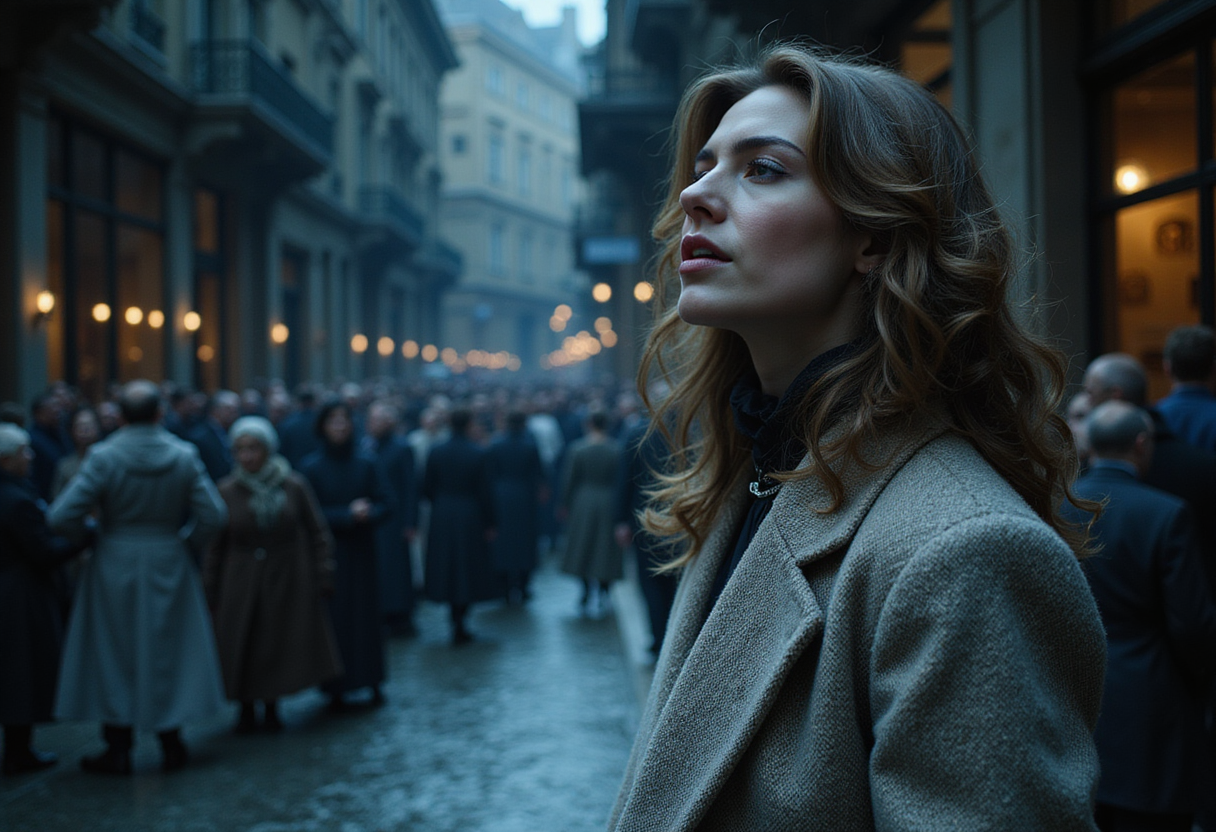
Radvanovsky, an established star, inhabited the role as though she herself were seventeen. Her voice was initially not entirely settled — a plausible consequence of stepping into the replacement after several consecutive performances of her own — but from there she delivered power and contrast that filled the hall, with command of every shade of piano.
Szymon Mechliński's Lescaut was resonant and authoritative, a dark, warm, even timbre with solid technique. Pietro Spagnoli's Geronte brought buffo instincts (comic baritone timing) matched to a genuine dramatic gift.
What did Luisotti do with the orchestra?
Conductor and music director Nicola Luisotti described the score's peculiar demands himself:
"The orchestral language of 'Manon Lescaut' differs greatly from his previous operas – one could say this opera is almost Wagnerian. It requires Wagnerian singers with very powerful voices… Yes, I try to make it more tender and soft, but Puccini writes for practically every instrument at once. And to achieve a pianissimo with an orchestra of this density, I will tell you, is extraordinarily difficult."
Before Act Four he achieved exactly that: a thin, filigree sound that pulsed through the hall and left a sense of radiance under the vocal lines. The Teatro Real Chorus under José Luis Basso matched it with complete precision.
The lesson for the rest of the run is simple. Madrid's audiences now know what a supposedly second cast can deliver when illness shuffles the deck — and Carolina López Moreno still awaits her turn in the dates Radvanovsky left behind.
Source: Opera Wire
More from Daniel Okafor
Show full bio
News editor covering companies, deals and strategy in arts in the broadest sense at Arts & Voices.
470 articles