Philharmonia Baroque Gives American Premiere of Handel's 1742 Dublin 'Alexander's Feast'
Philharmonia Baroque performed the American premiere of Handel's reconstituted 1742 Dublin version of Alexander's Feast on Nov. 15 in Berkeley under Peter Whelan.
Programme
- Philharmonia Baroque performed the American premiere of the reconstituted 1742 Dublin version of Handel's Alexander's Feast on Nov. 15 in Berkeley.
- Music Director Peter Whelan led the orchestra and chorale at First Congregational Church.
- Handel composed the oratorio in 1736; Jonathan Swift blocked cathedral singers from the 1742 Dublin revival.
- Soloists included soprano Sherezade Panthaki, mezzo-soprano Rachael Wilson and tenor James Way.
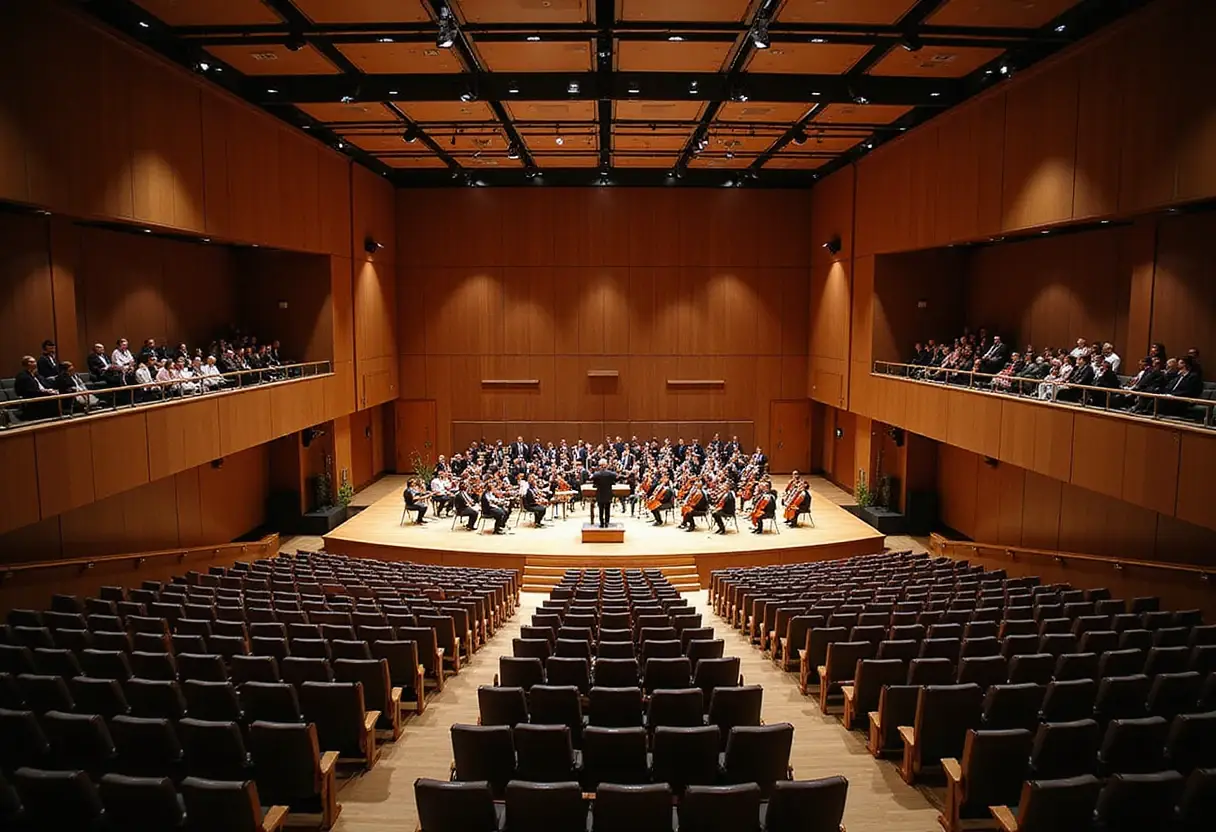
Philharmonia Baroque Orchestra and Chorale performed the American premiere of Handel's newly reconstituted 1742 Dublin version of Alexander's Feast on Sunday, Nov. 15, at First Congregational Church in Berkeley. Music Director Peter Whelan led the performance, which the orchestra presented as the centerpiece of a program that also included two orchestral works by Handel and excerpts from the Water Music.
The concert signaled that Philharmonia Baroque is, in the reviewer's judgment, back on track after some years of uncertain leadership. The performance matched the excitement of the orchestra's semistaged production of Handel's Tolomeo, which opened the season in July, and may have surpassed it in concentrated emotional effect.
Handel composed Alexander's Feast in 1736, toward the end of his operatic career. Like Messiah, the oratorio argues that music can and should take on the most serious issues of its age. Six years after its London premiere, Handel revived the work during a 1742 stay in Dublin, revising it to fit a scarcity of available soloists. Jonathan Swift, Dean of Dublin's St. Patrick's Cathedral and author of Gulliver's Travels, refused to let his cathedral singers perform in a secular oratorio.
What does the oratorio actually say?
The libretto, adapted from an ode by John Dryden, England's first Poet Laureate, depicts Alexander the Great with his lover Thais at a banquet in Persepolis, ostensibly celebrating his defeat of the Persian armies under King Darius. At the feast, the bard Timotheus manipulates Alexander's emotions, sending him from pride to inebriation, regret, lasciviousness and finally revenge.
Alexander, though the center of attention, gets no voice of his own. His swift mood changes are observed rather than enacted. The work's implication, as the reviewer reads it: regal power is a fiction, and even a powerful ruler can be manipulated into dangerous moments of narcissism and petulance.
Dryden's poem drew on the political crises of 17th-century England, when the Stuart kings asserted a right to unchecked power — a claim later discarded in favor of constitutional monarchy. For Handel and his audiences, the dangers of one-man rule remained vivid.
Who sang, and how did it sound?
Whelan took a "less is more" approach, trusting the ensemble's musicians with the intricate, virtuosic detail of Handel's writing. He conducted with a light hand at podium and harpsichord but cued the ensemble forcefully when it mattered. Tempos ran sprightly and exciting, pushing the limits of playability, with contrasting journeys into melancholy.
The vocal soloists drew particular praise:
- Soprano Sherezade Panthaki sang an early aria in which the bard inflates Alexander's ego, comparing his love to Jove's amorous shenanigans — with her characteristic clarity of tone, diction and stage presence.
- Mezzo-soprano Rachael Wilson delivered the aria in which Alexander weeps for his defeated foe Darius, her rich low register bringing what the reviewer called Wagnerian darkness to Handel's luminescent splendor.
- Tenor James Way forcefully declaimed the war aria, its text declaring honor "but an empty bubble," with a reedy, piercing tone evoking battlefield trumpets.
The Philharmonia Baroque Chorus, prepared by Chorale Director Valérie Sainte-Agathe, joined Alexander in mourning his fallen enemy, leading into a grand Handelian fugue.
The instrumental works gave further soloists their due: violinists Manami Mizumoto and Isabelle Seula Lee and cellist William Skeen featured in a concerto grosso, oboist Gonzalo Ruiz played a gorgeous Largo, and horn players Todd Williams and Nathanael Udell led the wind section through two movements of the Water Music.
As similar struggles over concentrated power play out today, the performance reasserted the conviction that music can address both the nature of power and the power of art.
Source: sfcv.org
More from Marcus Bennett
Show full bio
Staff writer covering people, launches and day-to-day practice in arts in the broadest sense at Arts & Voices.
1,548 articles