Prokofiev's 'The Gambler' Returns to Wexford in Black and White
Popovsky's monochrome staging of Prokofiev's 'The Gambler' marks Wexford's 75th anniversary with ballet dancers in red tutus and strong vocal performances throughout.
Programme
- Prokofiev's 'The Gambler' premiered at La Monnaie, Brussels, in 1929.
- Wexford Festival Opera first staged the work in 1973; it returns for the company's 75th anniversary.
- Dostoyevsky's source novel was published in 1866 and written to pay off gambling debts.
- Ivan Popovsky directed, with sets and costumes by Maria Tregubova, in a black-and-white staging.
- Valentin Uryupin conducted the Wexford Festival Opera Orchestra.
Prokofiev's "The Gambler" opened at Wexford Festival Opera as one of three operas marking the company's 75th anniversary — a work first performed at the festival back in 1973 and still clinging to a toe-hold on the international stage.
The opera, premiered by Prokofiev at Brussels's La Monnaie in 1929, adapts Dostoyevsky's 1866 short novel. The source material has a fine irony: Dostoyevsky wrote it to pay off his own gambling debts. It is a study of addiction to the roulette wheel, the exhilaration of winning, and the ruin that follows when luck turns, which it always does.
What did the staging look like?
Stage director Ivan Popovsky and designer Maria Tregubova built a claustrophobic world of two white façades, labeled "hotel" and "casino," angled toward each other. Nothing else existed. As the opera ended, the façades moved together, trapping Alexei and Polina in a confrontation made entirely by roulette.
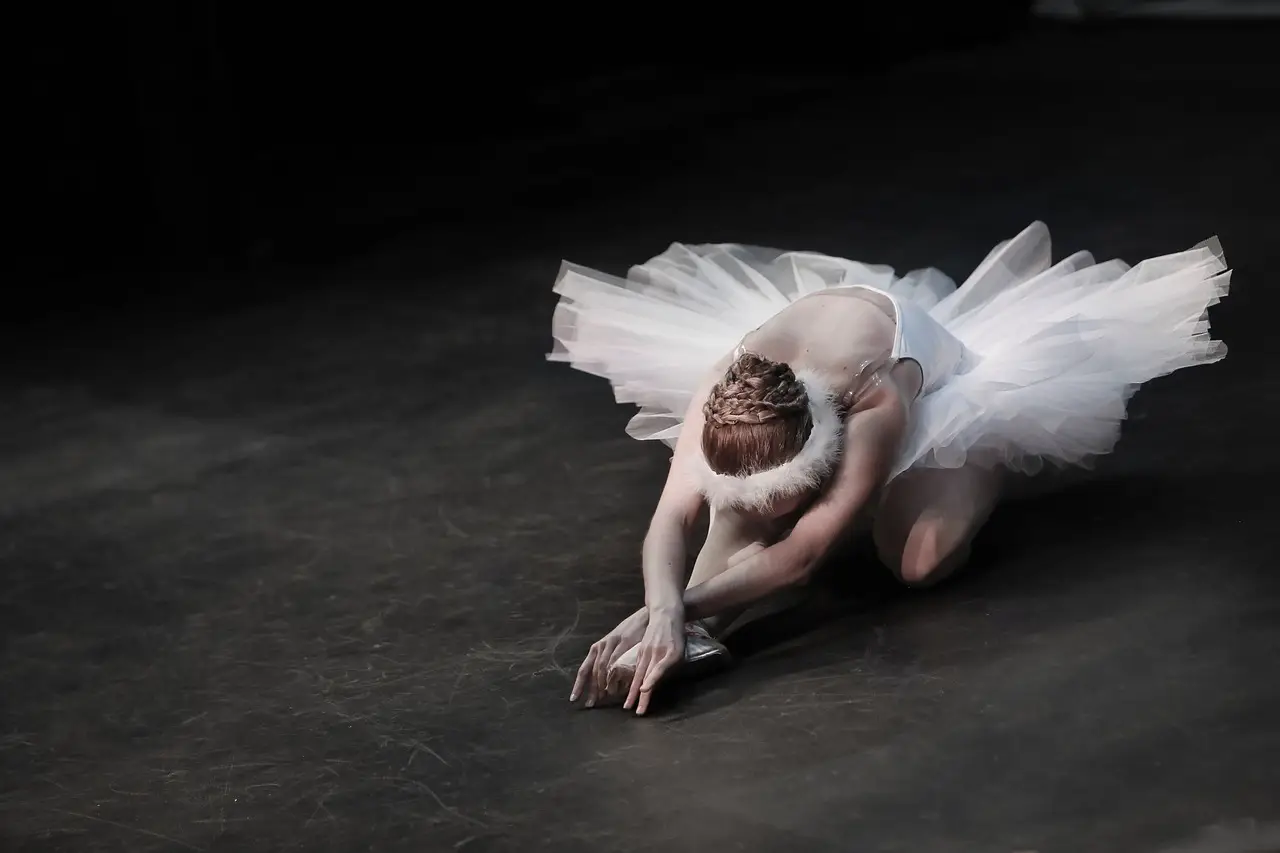
Everything on stage — costumes, props, scenery — was black and white. The insipid monochrome was the point: to the gambler, the world outside the casino is dull. The only color arrived in Act four, when the stage flooded with young ballet dancers in red or black tutus, spinning like numbers on a roulette wheel. A red carpet also appeared at the end of Act three, used to pull the General into the abyss.
Who carried the drama?
Baritenor Igor Onishchenko gave a persuasive account of Alexei, the obsessive risk-taker whose voice raced through emotional states as he broke the bank in Act four. Soprano Sophie Gordeladze caught Polina's mixture of manipulation and passion, ending with a searing vocal attack as she threw the money into Alexei's face.
Bass Alexei Botnarciuc played the General as a stupid, entitled wastrel who dissolved into an emotional mess once Grandma lost his inheritance at the tables. Clarry Bartha's aging voice suited the wily Grandma Babulenka, whose refusal to die and determination to gamble catapults the narrative forward. Tenor Gavan Ring lent the Marquis a pleasing swagger; mezzo-soprano Hilary Ginther played Blanche as purely mercenary, moving on to Prince Nilsky without much thought.
Seán Tester sang the ridiculous Prince Nilsky, Rory Musgrave the sympathetic Englishman Mr. Astley — the one character spared ruin. Joshua Baxter and Wonsick Oh took the minor roles of Popatych and The Baron; Olga Conway convinced as the Baron's wife.
How did the orchestra fare?
The Wexford Festival Opera Orchestra, under Valentin Uryupin, captured the changing tensions and heavy ambience of a score with almost nothing light in it. The balance was neatly managed; the singers were never drowned out.
The verdict: a musically and theatrically strong production, notable for the depth of its characterizations, that captured the darkness beneath the casino's sparkle without ever pushing an agenda. For a work this rarely staged, Wexford has made the case for it twice now.
Source: Opera Wire
More from Daniel Okafor
Show full bio
News editor covering companies, deals and strategy in arts in the broadest sense at Arts & Voices.
1,510 articles