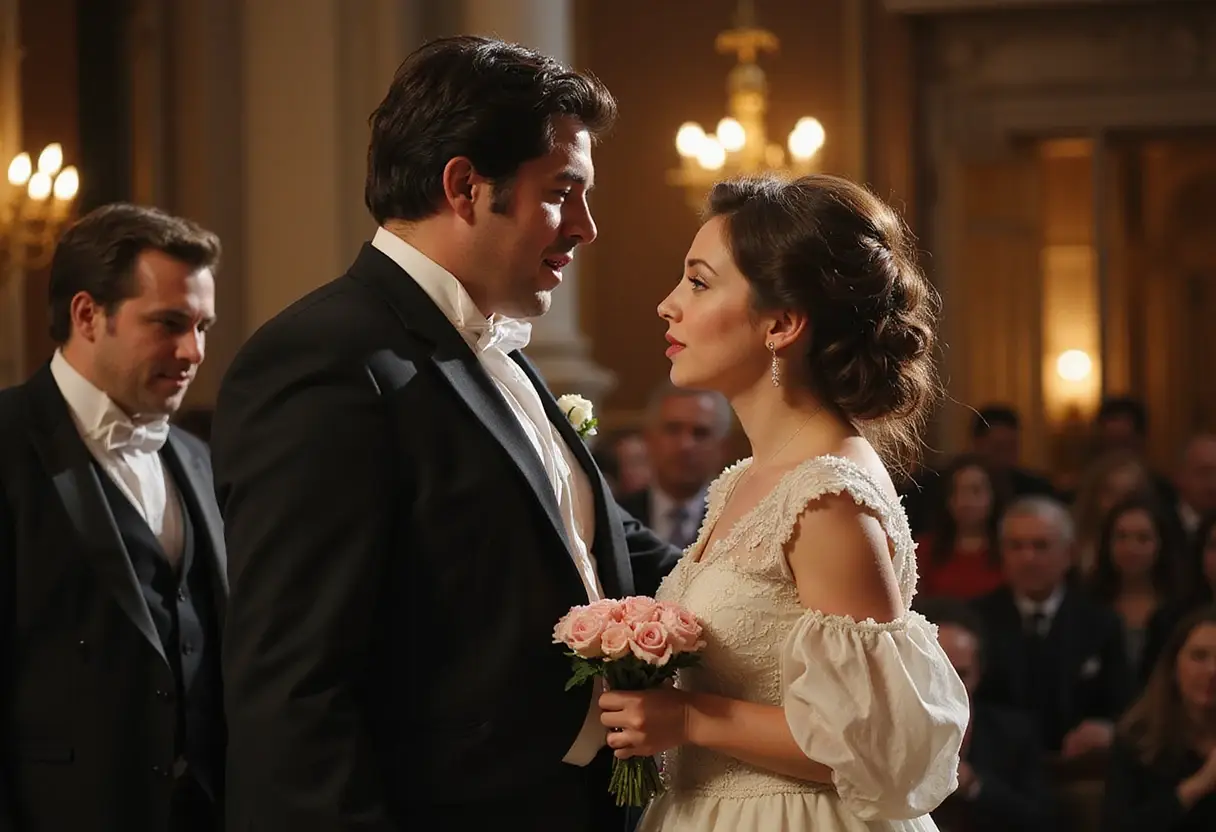
Regula Mühlemann Leads a Visual Feast in Zürich's New Magic Flute
Regula Mühlemann's Pamina leads Daniele Finzi Pasca's circus-infused, visually rich new Magic Flute at Opernhaus Zürich, with Tarmo Peltokoski conducting.

Programme
- Daniele Finzi Pasca directed a new production of Mozart's Die Zauberflöte at Opernhaus Zürich in the 2026-27 season.
- Tarmo Peltokoski conducted the Zürich Opera Orchestra with brisk, historically informed tempi.
- Regula Mühlemann sang Pamina; Jasmin Delfs sang the Queen of the Night; Tobias Kehrer sang Sarastro.
- The three boys came from the Tölzer Knabenchor.
- The staging featured acrobats, giant bird props, and video projections.
Regula Mühlemann's Pamina anchored a new production of Mozart's "Die Zauberflöte" at the Opernhaus Zürich in the 2026-27 season, staged by director Daniele Finzi Pasca with acrobats, giant birds, and a deliberately light touch.
Mozart's 1791 opera remains one of the world's most frequently performed works. Its surface is a fast-paced fairy tale of bird catchers, slumbering dragons, and trials by fire and water. Beneath that, according to the source review, lies a dense weave of Enlightenment philosophy shaped by the Freemasonry of Mozart and librettist Emanuel Schikaneder. Finzi Pasca's production places philosophy on the back burner and embraces the dream instead.
What does the staging look like?
Hugo Gargiulo's sets and Giovanna Buzzi's costumes dominate the visual field. The Queen of the Night and her three ladies wear celestial headdresses studded with stars, moons, and planets. Sarastro and his followers wear elaborately crafted headwear. Birds recur as a constant motif: many costumes carry literal or suggested wings, and Papageno and the three boys ride giant birds, Papageno's parakeet being especially vibrant.
Acrobats in bird costumes share the stage with the singers, working ropes and trapezes. Finzi Pasca, whose background includes circus arts and the Sochi and Turin Olympic ceremonies, brings an energetic vision that the review finds at least partly complementary to the libretto. Humor abounds with varying success. Sarastro gliding across the stage on his throne like a joystick-operated bumper car drew laughs. Intelligent video projections run throughout, though the use of "doubles" for Pamina and Tamino during the trials felt avoidable to the reviewer. The verdict: visually enchanting, unpretentious, refreshingly non-preachy, perhaps slightly shallow, but very entertaining.
How did the orchestra sound?
Conductor Tarmo Peltokoski led the Zürich Opera Orchestra with a historically informed approach on modern instruments. The result recalled period performance, not always pleasantly: at times the strings turned edgy and loud, the brass over-metallic. Orchestra and singers leaned heavily on appoggiaturas, fitting Mozart's style but occasionally lending a Baroque flavor. Peltokoski's brisk tempi drove the performance with spirit while consistently supporting the singers.
Who stood out in the cast?
Mühlemann was the evening's star. Her lyrical soprano offered a sweet, fresh quality and splendid, effortless high notes. "Ach, ich fühl's" came with seamless legato, a composed sorrow the reviewer found more touching than melodrama. Her "Tamino mein" was heart-melting.
- Magnus Dietrich (Tamino): moments of sublime beauty, including his response to "Tamino mein"; "Dies Bildnis ist bezaubernd schön" carried a heroic yet gentle tone with secure high notes.
- Jasmin Delfs (Queen of the Night): brilliant, precise super-high notes; her sweet, mellow timbre aided the triplet legato in "Der Hölle Rache" and made the Queen more sympathetic. Her one misstep: ending her major aria on a high A rather than the written low A.
- Tobias Kehrer (Sarastro): a booming bass with velvety lows made "O Isis und Osiris" splendid. In Act two's "In diesen heil'gen Hallen" he visibly struggled, coughing between phrases, though his interpretation remained a strong success overall.
- Yannick Debus (Papageno): charismatic and witty, his singing stayed pristine and elegantly phrased even in the silliest scenarios.
Nathan Haller's Monostatos, dressed in a bell-shaped, hoop-supported skirt covered in light bulbs that a crow-like figure controlled remotely, spun into humorous frenzy whenever the lights brightened. His light tenor projected exceptionally well. The three ladies — Hannah McCay, Karima El Demerdasch, and Dominika Stefańska — delivered precise, emotionally resonant ensembles. The three boys of the Tölzer Knabenchor (Jakob Distler, Christopher McInnis, and Benedikt Eberl), dressed as garden gnomes riding little birds, sang with immaculate intonation and superb phrasing.
What does this change for Zürich audiences? The production offers an entry point for viewers of all ages — wonder first, profundity later — and a cast strong enough to carry a house staple through the season.
Original: yannickdebus.de
More from Marcus Bennett
Show full bio
Staff writer covering people, launches and day-to-day practice in arts in the broadest sense at Arts & Voices.
672 articles