Review: Collegium 1704 Delivers a Radiant 'Susanna' in Dresden
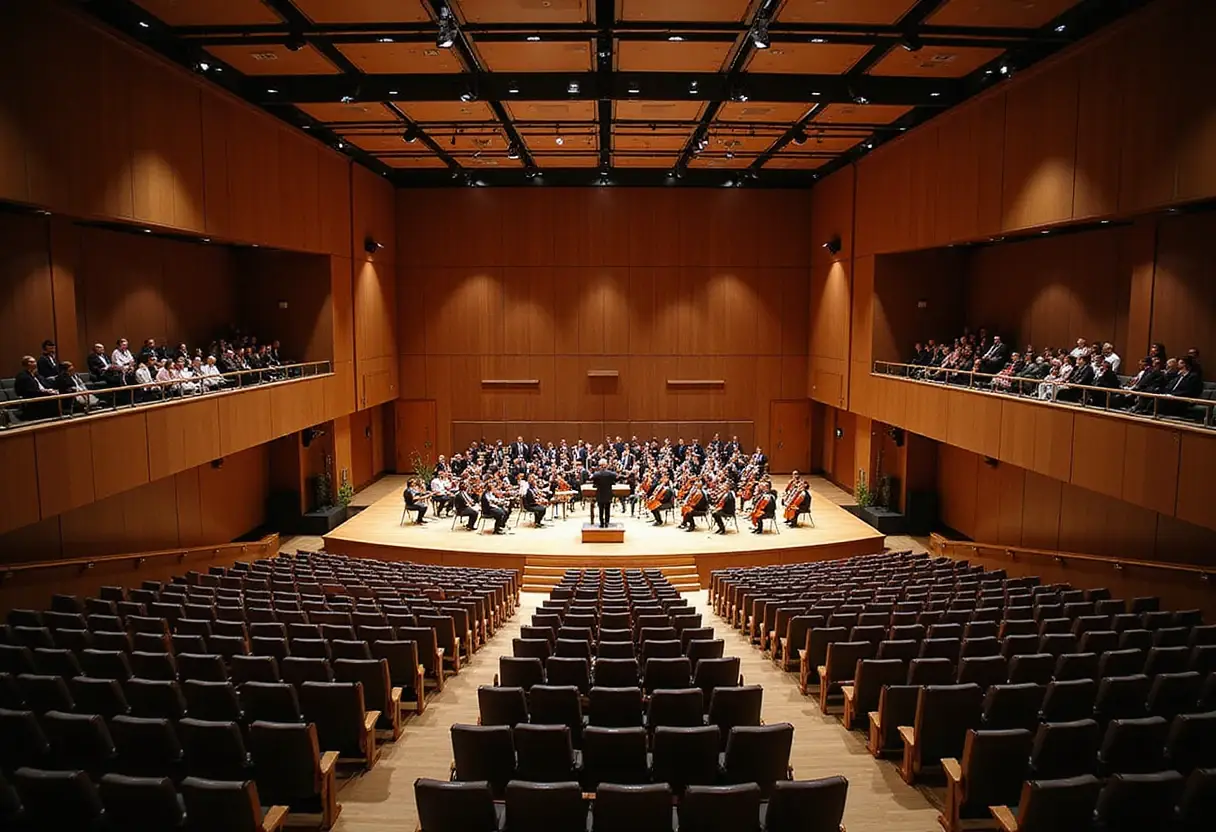
Collegium 1704 under Václav Luks performed Händel's 'Susanna' at Dresden's Annenkirche, with Kateryna Kasper giving a celebrated account of the final aria 'Guilt trembling.'

Programme
- Collegium 1704 performed Händel's oratorio 'Susanna' at the Annenkirche in Dresden, conducted by Václav Luks.
- The performance ran two hours and fifteen minutes without an interval.
- Soprano Kateryna Kasper sang the title role; her final aria 'Guilt trembling' was hailed as a vocal miracle.
- The concert was part of the Prague–Dresden Music Bridge, launched by Collegium 1704 in 2008.
Collegium 1704 performed Händel's oratorio "Susanna" at Dresden's Annenkirche on Tuesday, in a two-hour-and-fifteen-minute concert given without an interval.
Václav Luks conducted. The Prague-based ensemble, playing on period instruments, gave the score a spacious atmosphere through broad phrasing. The lower strings pulsed with tireless energy, and the string section painted scenes with what the review on OperaWire described as "remarkable vividness." The basso continuo moved through organic transitions, and a restrained use of the chest organ lent the work its essential aura.
Collegium Vocale 1704 delivered a refined structural performance. The opening chorus, "How long, oh Lord! Shall Israel groan," mastered a sevenfold lamento bass over a passacaglia structure. The unison cry of "Jehova!" cut abruptly through the bass line. At the end of Act One, "Righteous Heav'n" built drama through double fugues and chromatic shifts. In Act Three, the chorus turned into mocking Babylonians, gloating over Susanna's dark fate.
What made the cast stand out?
Soprano Kateryna Kasper sang the title role. Her "Crystal streams" in Act Two captivated, her voice remaining supple through extensive low passages over fluid strings. In the trio "Away, away!," she captured Susanna's helpless vulnerability before the two elders. After the wrongful judgment, she conveyed inner piety and dignity. Her final aria, "Guilt trembling," provided what OperaWire's reviewer called "an unforgettable moment of transcendent joy" — "a rare vocal miracle."
Countertenor Gabriel Díaz brought a magnetic tone to Joacim, Susanna's husband. His parallel thirds and sixths with Kasper in the duet "When thou art nigh" created a profound bond. Soprano Helena Hozová, as the attendant, paired her pastoral aria "Ask if yon damask rose be sweet" with Díaz's aria of longing to evoke an Arcadian calm soon shattered.
The two Elders offered a contrast in timbre. Tenor Ondřej Holub gave the First Elder winding, hypocritical phrasing and unrestrained force in "Tyrannic love!". Tomáš Šelc, as the Second Elder, used a coarse bass and large leaps — with bassoon — in "The oak for thousand years" to turn arrogance into grotesqueness.
Soprano Tereza Zimková, as Daniel, entered near the end. Her luminous soprano drove the resolution with brilliant clarity through lively rhythmic shifts in her recitatives. Baritone Pavol Kubáň sang Susanna's father Chelsias with convincing warmth, notably in "Who fears the Lord," though his recitative diction was slightly muddy. Bass Jiří Miroslav Procházka handled the Judge with direct precision.
What does this change for Dresden's concert life?
The concert formed part of the Prague–Dresden Music Bridge, which Collegium 1704 launched in 2008. The project continues to bind the two cities through Händel repertory performed at historical pitch in period style.
The performance stood in a city where the soprano Faustina Bordoni, Händel's colleague in London, once lived — her portrait still hangs in Dresden's Old Masters Picture Gallery. With casts of this balance and a chorus of this discipline, Collegium 1704's 2026-27 season looks set to keep Händel's dramatic oratorios at the center of Dresden's musical calendar.
Source: Opera Wire
More from Marcus Bennett
Show full bio
Staff writer covering people, launches and day-to-day practice in arts in the broadest sense at Arts & Voices.
1,200 articles