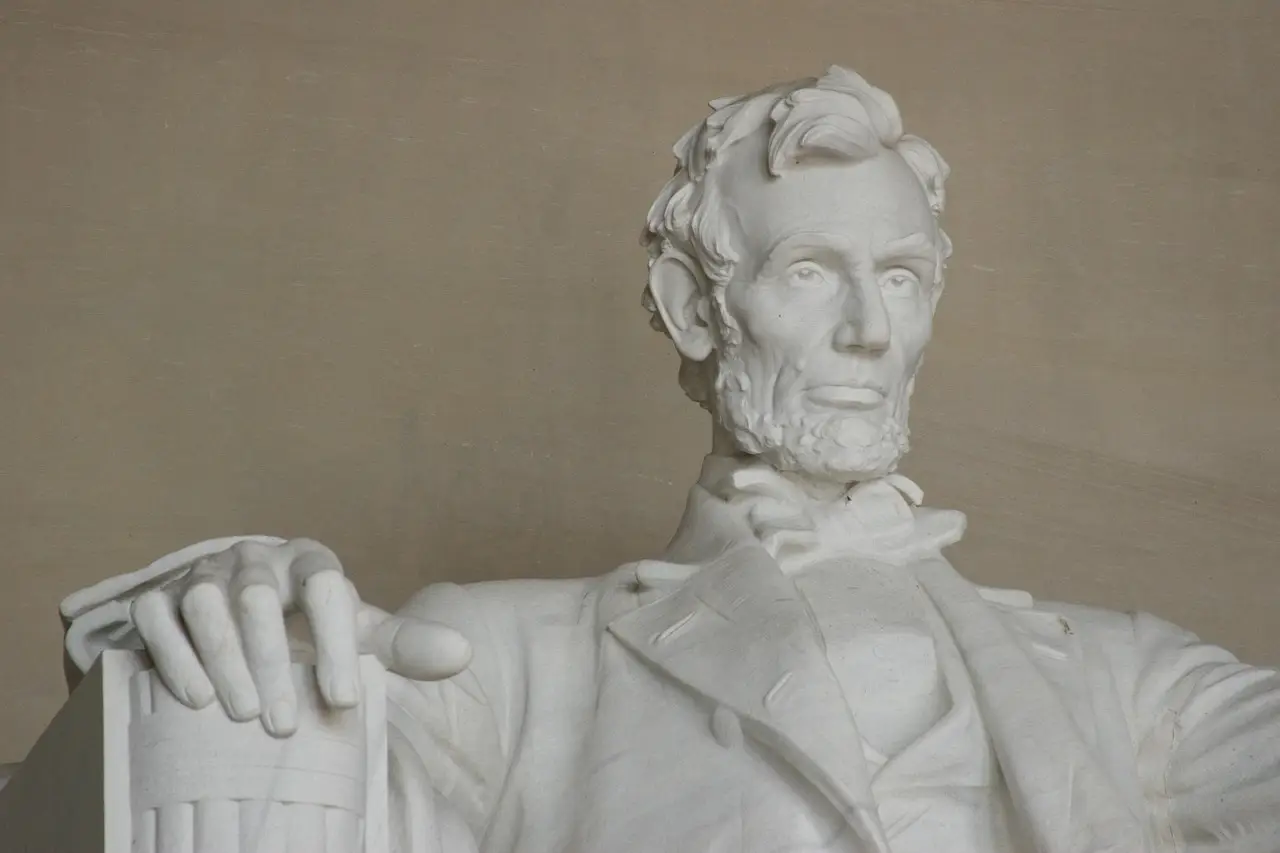
Review: Missy Mazzoli's 'Lincoln in the Bardo' Proves New Opera's Worth at the Met
Mazzoli's score and Mattei's Lincoln carry the Met's new 'Lincoln in the Bardo.' The review praises the production and cast while faulting Vavrek's libretto for language without personality.
Programme
- The Met's new production adapts George Saunders' novel, whose 166 ghost characters were trimmed to about a dozen in Royce Vavrek's libretto.
- The opera runs just over two hours in a single span, opening with a solo violin in both acts.
- Peter Mattei sings Lincoln; his falsetto 'Willie is dead' was called the most affecting moment of the night.
- Christine Goerke delivered her most impressive Met performance to date as the Reverend.
- The production is directed by Lileana Blain-Cruz with sets by Adam Rigg, lighting by Yi Zhao and Stacey Derosier.
By Grace Kim
Missy Mazzoli's score does the heavy lifting that Royce Vavrek's libretto declines to attempt, and the Metropolitan Opera's new production of "Lincoln in the Bardo" is stronger for it. The opera, based on George Saunders' award-winning novel, runs just over two hours and, per the review's verdict, "definitely" proves the worth of new opera in an age of budget cuts.
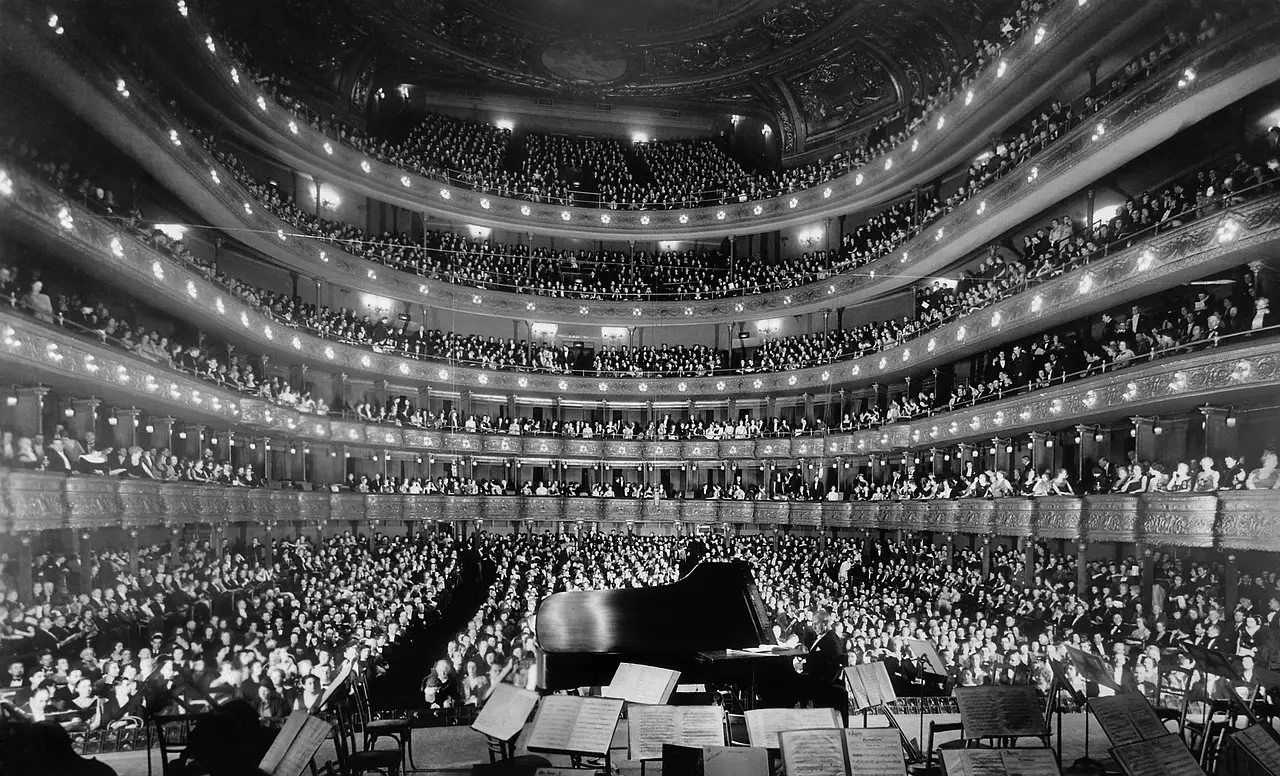
The experience starts before the curtain rises. A blue curtain — "the color of sadness. The color of the sky. The color of water" — drapes the Met's stage, and electronic sounds fill the hall as audiences enter. The house lights dim, the orchestra tunes, and once darkness falls, "you could hear a pin drop." The opera then begins without ceremony, trading typical operatic formality for something more spiritual. The reviewer calls it the opera production best to integrate that approach with its themes.
What's the story, and how is it built?
Willie, the recently deceased son of President Abraham Lincoln, inhabits the Bardo — a liminal space (the Tibetan Buddhist transitional state between death and rebirth) populated by ghosts in denial about their own deaths. Vavrek's structure introduces characters gradually, revealing the world's rules piece by piece and trusting the audience to assemble them. Concepts like "matterlightblooming" are introduced through Miss Traynor before her scene reinforces them.
The novel famously contains 166 ghost characters; Vavrek trimmed that to roughly a dozen. The chosen few include Vollman and Bevins (the former the center of an extended phallic joke, the latter a victim of homophobia), the Reverend as moral center, the shape-shifting Miss Elise Traynor tied down by tendrils, and three Black characters — the seemingly at-peace Thomas Havens, the vengeful Mrs. Francis Hodge, furious over children stolen from her, and the silent, traumatized Litzie — plus a boisterous, seemingly racist couple.
Where does the libretto fall short?
Vavrek structures precisely, but his language follows contemporary American opera's drift toward the most basic English. Lyricism is "nowhere to be found" outside a few evocative late moments. The sharpest criticism lands on Lincoln himself: a man known for eloquence gets none, even when narrating memories of Willie. The Reverend's Act Two soliloquy shows nothing in vocabulary that distinguishes him from the others — "he never comes off as a reverend."
What lifts it instead?
Mazzoli's score supplies what the text lacks. Her vocal writing for Lincoln carried the characterization in the first half where words didn't. Thomas Havens gets a gorgeous solo shifting from rapid-fire repetition of "Tom" — one of Vavrek's best uses of repetition — to intimate reflection. Mrs. Hodge receives accented lines with well-placed high notes; Mazzoli deploys high notes calculatedly and intermittently, so that Lincoln's final "Willie is dead," written at his upper extreme, lands with full force the first time we hear him sing there. A solo violin opens both acts, narrator-like, reminiscent of Rimsky-Korsakov's "Scheherazade."
Director Lileana Blain-Cruz and set designer Adam Rigg use every bit of stage space: characters enter vertically on a swinging branch; Willie's crypt enters from stage left in Act Two. Lighting by Yi Zhao and Stacey Derosier keeps the Bardo foreboding; projections stay sparing; pyrotechnics signal departures. The lone blemish: the staged Vollman penis joke, which drew laughs but felt disconnected — "in retrospect it felt like a cheap laugh" — because nothing else in the production used that kind of visual storytelling.
Who stands out in the cast?
Young Everett Sobers nearly carries the opera as Willie, delivering clarity and assurance through two prominent solos, mic'd but solid "surrounded by titans of the opera world." Christine Goerke, nearly unrecognizable as the Reverend thanks to Montana Levi Blanco's costumes and her own physicality, gives "her most impressive performance at the Met to date." Joshua Blue is revelatory as Thomas Havens; Janai Brugger dominates her two appearances with voluminous intensity, the perfect counterpoint to Blue's gentle tenor before settling into delicacy in the final communion with Lincoln.
Peter Mattei's Lincoln is peripheral in scene count but looming in presence — physically right for the famously tall president, composed, "nothing short of Presidential." His falsetto evocations of "Willie is dead" at the close were "the most affecting moment of the entire night."
Ryan McKinny and Jonah Hoskins blend well as Vollman and Bevins; Stephanie Blythe and Craig Colclough add textural bite as the bickering couple. Anthony Roth Costanzo's Miss Traynor filled the hall, though his oscillation between straight tone and wide vibrato read as unclear in intention. Viviana Goodwin gets only a few phrases — lush, silk-smooth — and leaves you wanting more, fittingly for a character who laments having just found her voice.
With solid structure, brilliant stagecraft, a glorious score and a cast that delivers, "Lincoln in the Bardo" makes the case that new opera at the Met remains a gamble worth taking.
Source: Opera Wire
More from Grace Kim
Show full bio
Correspondent covering technology and product news in arts in the broadest sense at Arts & Voices.
709 articles