Rush high school concert video captures band before Neil Peart
April 1, 1974 video shows Geddy Lee, Alex Lifeson and John Rutsey playing early Rush songs at Laura Secord Secondary School before Neil Peart joined the Canadian trio.
Programme
- Rush played Laura Secord Secondary School on April 1, 1974.
- The lineup comprised Geddy Lee, Alex Lifeson and original drummer John Rutsey.
- Neil Peart had not yet joined Rush.
- The set included “Need Some Love,” “Before and After,” “Working Man” and “In the Mood.”
- Rush’s debut album had only recently arrived.
By Marcus Bennett
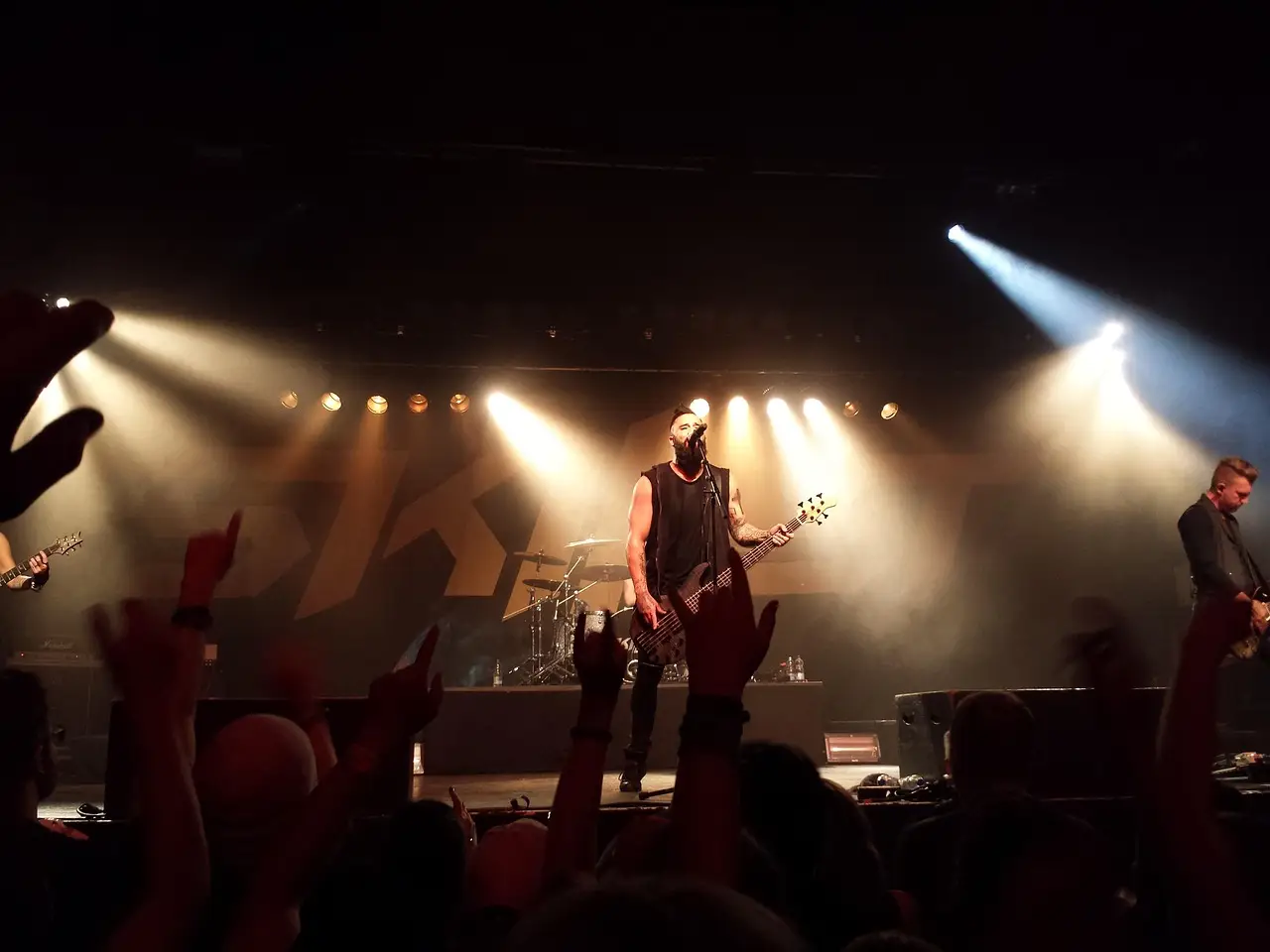
On April 1, 1974, Rush played Laura Secord Secondary School in St. Catharines, Ontario. The video records Geddy Lee, Alex Lifeson and original drummer John Rutsey on a high school stage, before Neil Peart joined the Canadian trio.
The accompanying account calls the playing “loud, loose” and reads the musicians’ chemistry as what would propel the trio toward greatness. The performance includes “Need Some Love,” “Before and After,” “Working Man” and “In the Mood.” It offers a glimpse of Canadian rock history: a dated school concert, three named musicians and an identifiable set.
That timing gives the footage more than the status of a rare clip. Rush’s debut album had only recently arrived, and Peart had yet to join. The performance therefore sits between an early record and the lineup associated with the band’s later progressive-rock phase. The report places the event before Rush’s “progressive rock transformation” and treats the recording as a time capsule.
Date, venue and personnel are fixed. The viewer does not have to infer which version of Rush appears on screen: Lee and Lifeson are joined by John Rutsey, not Neil Peart.
The word “including” matters. The account presents the four songs as selections rather than an exhaustive running order, so the footage supports a partial account of the program, not a claim that the concert contained only those titles.
The four songs place the concert within Rush’s early live repertoire. The report calls the later shift a “progressive rock transformation.” The video does not show that transformation. It shows what came before it, with enough performance detail to make the phrase more than a retrospective label.
Someone captured the show, although the source does not identify who was behind the recording or explain how it came to be made. That thin account of how it happened does not make the images interchangeable with a later concert. The date and location remain specific, and the school stage supplies the concrete scene behind the time-capsule description.
What does this footage change for understanding Rush?
It documents Rush as three musicians working together onstage: Lee, Lifeson and Rutsey, playing in the high-school setting captured on April 1, 1974, in St. Catharines, Ontario. It also fixes what “early Rush” means here.
This is a three-piece performance on a school stage, not a stand-in for the later progressive-rock band described in the report. The practical change is that the transition now has a baseline.
Listeners can hear the loud, loose playing that the footage preserves and locate the chemistry the report identifies. They can also hear what the video does not contain: a Peart-era performance.
Peart’s absence defines the clip’s historical boundary. Without him, the lineup cannot be mistaken for the band associated with the report’s later progressive-rock transformation. John Rutsey’s presence gives the date a more exact counterpoint.
The account gives the performance energy and roughness at once. Its description does not separate looseness from chemistry; the two explain why the source treats this as formative. That tension is why the footage matters. It does not erase the early version; it makes that version audible.
Any fuller archival account of the date should begin with what is established: April 1, 1974, Laura Secord Secondary School in St. Catharines, and Rush with Geddy Lee, Alex Lifeson and John Rutsey before Neil Peart joined. The footage gives that later history a fixed point to return to.
Source: thatericalper.com
More from Marcus Bennett
Show full bio
Staff writer covering people, launches and day-to-day practice in arts in the broadest sense at Arts & Voices.
1,703 articles