Sasha Waltz Stages Bach's St. John Passion for Dutch National Opera
Sasha Waltz stages Bach's Johannes-Passion at Dutch National Opera with eleven dancers, sewing machines and Grünewald's Isenheim Altarpiece as her guide; Leonardo García-Alarcón conducts.
Programme
- Sasha Waltz's staged production of Bach's Johannes-Passion premiered at Dutch National Opera in the 2026-27 season, commissioned in 2021.
- Leonardo García-Alarcón conducted the Dutch National Opera Chorus and the Netherlands Bach Society while playing the organ.
- Bach became Thomaskantor in Leipzig in 1723 under a contract barring opera-like music.
- Waltz's scenography draws on Grünewald's Isenheim Altarpiece at the Unterlinden Museum in Colmar.
- Lighting by David Finn and costumes by Bernd Skodzig completed the production.
Sasha Waltz has staged Bach's "Johannes-Passion" as theater at Dutch National Opera, with Leonardo García-Alarcón conducting the Dutch National Opera Chorus and the chorus and musicians of the Netherlands Bach Society. The commission dates from 2021, when Waltz was asked to combine dance and theater in the oratorio.
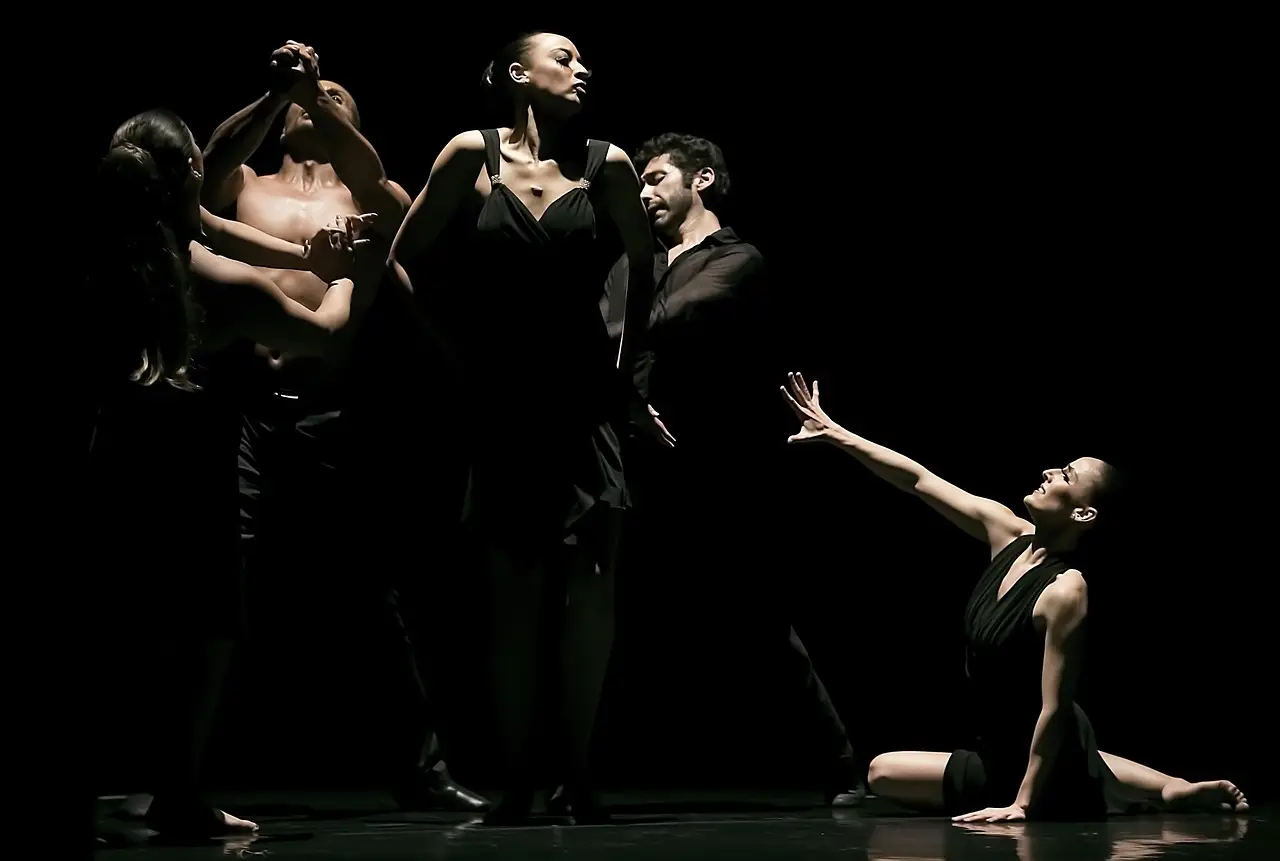
The result opened with an unusual image. Eleven nude female dancers took places behind a long row of sewing machines on a slightly elevated black stage and sewed white shirts. The machines' harsh noise faded into swelling mechanical sounds resembling electronic soundscapes. When silence fell, the opening chorus "Herr, unser Herrscher" began. Twelve choir members in white flanked the stage, with musicians split between the two sides — strings, organ and conductor on one; strings, harpsichord, Baroque cello, double bass, oboe and flute on the other. Further choir members in white shirts sat among the audience, handling white cloths.
What does Waltz want from the Passion?
Illustrating the biblical story is not her primary objective. She aims to make the work accessible to audiences without a religious background. Her declared source of inspiration is Matthias Grünewald's Isenheim Altarpiece, housed at the Unterlinden Museum in Colmar, Alsace — an altarpiece of opening and closing panels depicting Christ's suffering in physical detail: blood from the crown of thorns, pierced skin, blue veins, purple lips. In the oratorio's second part, Waltz translates those panels into wooden-stick structures that open and close, within which the dying and dead Jesus appears in various forms.
The production also carries a historical charge. When Bach was appointed Thomaskantor in Leipzig in 1723, his contract required music that "did not last too long, did not come across as opera-like, but incited the listeners to devotion." Even an unstaged modern performance of the "Johannes-Passion" would have struck many as daring in the 18th century.
Who carried the cast?
- Andreas Wolf sang Jesus as an almost timid figure, his powerful bass-baritone contrasting with the Evangelist's ethereal tenor; his bronze-colored timbre and clarity under Pilate's pressure stood out. He has collaborated frequently with García-Alarcón.
- Florian Boesch, in a purple cloak, was a convincing Pilate, using warm, earthy tones and expressive power — notably as he ran across the stage while the crowd chose Barabbas over Jesus.
- David Fischer delivered the Evangelist's recitatives with articulate, pure, warm singing.
- Swiss soprano Chelsea Zurflüh conveyed joyful desire to follow Jesus in "Ich folge dir gleichfalls mit freudigen Schritten," sustaining long melodic lines with poise.
- Matthew Newlin gave "Ach, mein Sinn" considerable emotional weight as Peter's remorse, extended in a powerful dance scene.
- Countertenor Paul-Antoine Bénos-Djian delivered a moving "Es ist vollbracht" with emotional depth.
The two choirs performed in small and large groups, sometimes spread through the auditorium, maintaining warmth and a unified voice despite the physical division.
What do conductor and choreographer achieve?
The review credits the greatest achievements to Waltz and García-Alarcón. The conductor coordinated two small orchestras, soloists and dispersed choirs while playing the organ himself. Waltz's staging — purple and white robes, white cloths, wooden sticks, planks, blocks and carpentry structures, with lighting by David Finn and costumes by Bernd Skodzig — left, in the reviewer's judgment, nothing to chance.
The placement of choirs on both sides of the stage and throughout the auditorium forced spectators to turn their heads as the crowd chose between Barabbas and Jesus. That physical involvement, the review argues, confronted the audience with the oratorio's central questions: whom to watch, whom to support, where to stand. The closing chorus "Ruht wohl, ihr heiligen Gebeine" offered consolation, resignation and hope — leaving Waltz's humanized oratorio as proof that a 1723 devotional work can hold a secular house.
Source: Opera Wire
More from Marcus Bennett
Show full bio
Staff writer covering people, launches and day-to-day practice in arts in the broadest sense at Arts & Voices.
1,364 articles