Zeffirelli's Miniature 'Aida' Triumphs at Busseto's 300-Seat Teatro Verdi
Festival Verdi 2026 staged 'Aida' in Busseto's 300-seat Teatro Verdi on October 16 — and the intimacy worked. Hae Kang's Amonasro led a young, largely unfamiliar cast.

Programme
- Festival Verdi 2026 presented a revival of Franco Zeffirelli's staging of 'Aida' at Busseto's 300-seat Teatro Verdi on October 16.
- Mezzo-soprano Teresa Iervolino's Act 4 Amneris drew thunderous audience applause.
- South Korean baritone Hae Kang's Amonasro was the critic's revelation of the evening.
- Giuseppe Mengoli conducted the Filarmonica Arturo Toscanini and the Coro del Teatro Regio di Parma, prepared by Martino Faggiani.
- The production omitted the Act 2 triumphal scene's dances and reimagined the Triumphal March.
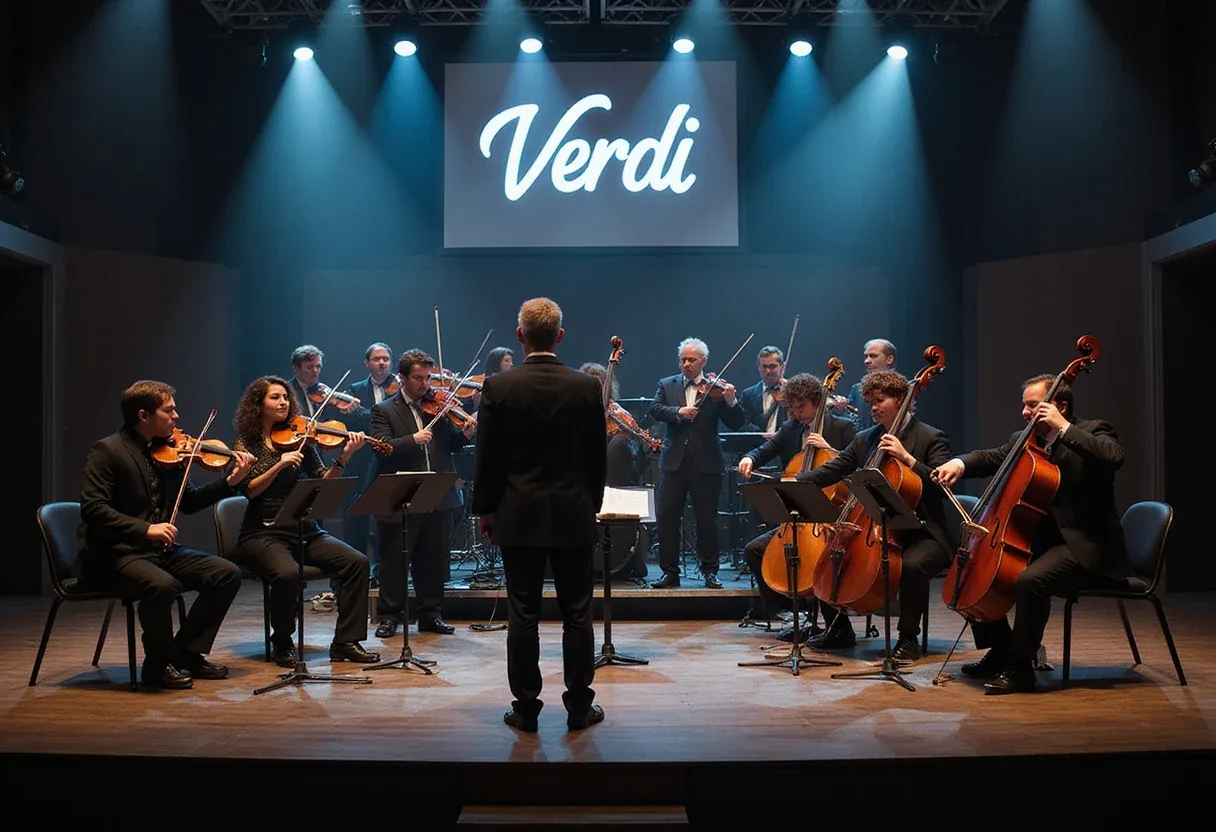
Verdi's "Aida," an opera built for monumental spectacle, played Busseto's 300-seat Teatro Verdi on October 16 — and the intimacy worked. Festival Verdi 2026 revived Franco Zeffirelli's miniature staging of the work in the composer's birthplace, and the reviewer found several aspects of it preferable to Zeffirelli's imposing productions at La Scala and the Arena di Verona.
Festival Verdi has wisely extended its activities beyond Parma's Teatro Regio, bringing opera and concerts to venues throughout the city and its environs, including a seldom-used opera house in nearby Fidenza that previously hosted "Il trovatore." The Busseto theater, named after the town's most illustrious son, seats 300 — a scale that raises an obvious question: how could Grand Opera's most pageant-driven conventions possibly fit such a modest stage?
What does the small stage change?
Quite a lot, it turns out. The reviewer noted that in larger theaters, extravagant pageantry had sometimes threatened to overwhelm the opera's dramatic substance. At Busseto, the reduced scale restored the centrality of the fraught relationships among Aida, Amneris, Radamès and Amonasro. Their conflicts gained immediacy, and the intimate scenes acquired a psychological conviction that grander productions had not invariably achieved.
The compromise carried costs: the second Act triumphal scene's dances were omitted, and the celebrated Triumphal March became less a spectacle of massed splendor than a parade witnessed through the excitement of the assembled crowd. Even so, the ingenuity of the conception more than compensated for these sacrifices.
Who stood out in the cast?
The comparatively young cast was largely unfamiliar, with the welcome exception of mezzo-soprano Teresa Iervolino — and the overall vocal standard exceeded expectations.
- Federica Vitali (Aida) made an appealing heroine through finely controlled pianissimi and convincing acting, though her lyric soprano lacked the spinto (dramatically heavier) heft often associated with the role — a disadvantage scarcely insurmountable in Busseto's dimensions. Dramatically, her third Act faltered: she appeared too much the accomplished, manipulative seductress rather than a woman torn between patriotism, filial loyalty and love for the commander who defeated her nation.
- Teresa Iervolino (Amneris) proved a gratifying surprise. Previously associated principally with Handel and bel canto during the past decade — the reviewer had heard her as Enrico in Donizetti's "Enrico di Borgogna" in Venice in June and as Suzuki opposite Saioa Hernández's Cio-Cio-San in Barcelona two seasons ago — she delivered a fourth Act of such intensity, against the priests judging Radamès as a traitor, that the audience erupted in deserved thunderous applause.
- Vincenzo Costanzo (Radamès) was the least persuasive principal, a relative judgment given his colleagues' exceptional level. He sang securely with impressive squillo (ringing vocal brilliance), but his phrasing lacked elegance and nuance, and his acting was stiff — though restraint served him well in the concluding tomb scene.
- Hae Kang (Amonasro) was the revelation. The South Korean baritone ranked among the most compelling Amonasros the reviewer had encountered, with a virile timbre, authoritative stage presence and phrasing that gave the Ethiopian king's paternal anguish and political resolve equal weight. His Italian diction was the clearest among the principals — striking in a cast whose other leads were native Italian speakers.
How did the orchestra fare?
Conductor Giuseppe Mengoli showed a keen understanding of the score's elaborate orchestral palette, with the impressionistic third Act opening especially successful. The theater's limited dimensions exposed individual orchestral and choral details, occasionally at the expense of a fully homogeneous ensemble. The Filarmonica Arturo Toscanini responded with flexibility and expressive range, again demonstrating its natural affinity for Verdi, while the Coro del Teatro Regio di Parma, prepared by Martino Faggiani, was equally commendable.
The audience's enthusiastic response confirmed the success of an undertaking that might initially have seemed ill-advised. The takeaway: Zeffirelli's theatrical imagination didn't depend on sheer scale, and the reduction of grandeur brought the opera closer to its emotional core — a persuasive argument for keeping Verdi's drama in the town where he was born.
Source: Opera Wire
More from Grace Kim
Show full bio
Correspondent covering technology and product news in arts in the broadest sense at Arts & Voices.
723 articles