Film & Screen
A24's 'V/H/S: SCP Foundation' Hits Licensing Dispute
A24's planned 'V/H/S' film inspired by the SCP Foundation has drawn a challenge from the wiki's volunteer admins, who say its Creative Commons license bars exclusive commercial rights to the material.
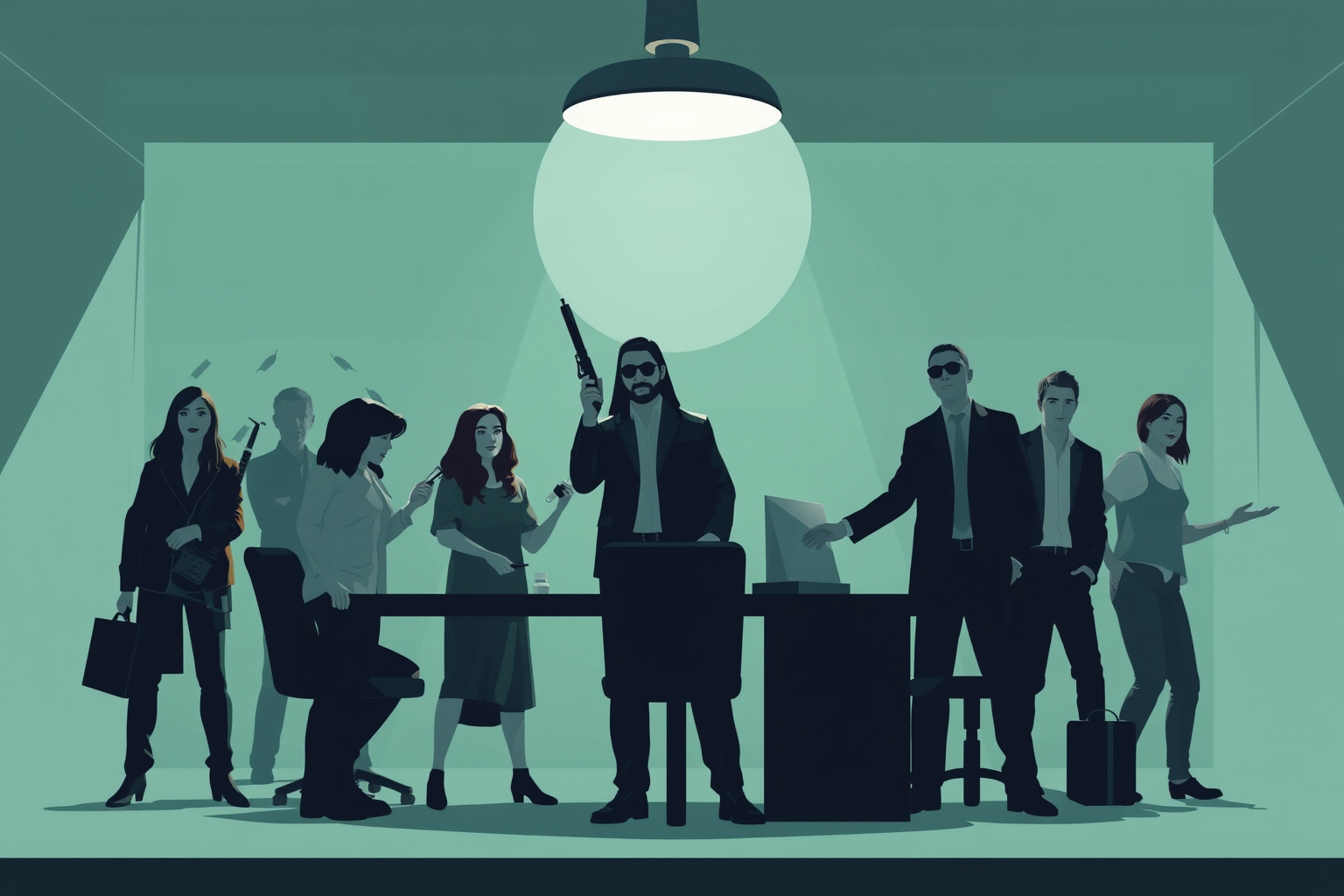
A24's planned "V/H/S" film inspired by the online horror universe known as the SCP Foundation has run into pushback from the volunteer administrators of the very wiki that hosts two decades of collaborative horror writing.
Last week, the SCP Foundation's Wiki posted a statement declaring that A24, Spooky Pictures and Image Nation — the producers of the project, announced in a July 2026 Variety article — "does not and cannot have any exclusive rights to anything related to the SCP Foundation." The wiki's writing is protected under a Creative Commons Attribution-ShareAlike license, which permits derivative works only with attribution, only under the same terms, and only if the resulting content remains freely shareable — a condition that sits uneasily beside a commercial horror franchise.
The admins say no one from A24 or the two production companies has contacted them. They still hope to open a dialogue.
The producers view the affair as a misunderstanding. Sources told IndieWire that the "worldwide rights" referenced in the Variety announcement cover only "V/H/S," the existing found-footage omnibus franchise, and that the producers make no claim to own SCP Foundation material. The film, they say, would be inspired by the ideas and concepts of the SCP Foundation rather than adapted from any specific work. No writers or directors are attached yet.
The wiki's admins read the project differently. Both announcements titled the film "V/H/S: SCP Foundation," and that branding, in their view, changes its legal character.
"Because the original announcement and the subsequent announcement each say 'V/H/S: SCP Foundation,' I feel a reasonable presumption that this is not an inspired by work, this is a derivative work," Josie Rollins, an admin who posts under the tag AriadnesThread, told IndieWire. "We also have 20 years of enforcing the license in situations that have come up, some I have actually learned about quite recently, ensuring that the works that are posted on our website are compliant with the license as well as other places on the internet that have tried to use the likeness."
The SCP Foundation — the initials stand for "Secure, Contain, Protect" — imagines an organization that contains everyday objects imbued with paranormal properties, some classified as "Keter" and considered dangerous to contain. Hundreds of authors have written tens of thousands of articles on the wiki. The canon is effectively infinite; the premise is constant.
Unlike the Backrooms creepypasta, which spread across the internet without a single home or license, SCP Foundation writing has always been centralized on one website under Creative Commons terms. A24's "Backrooms" film, by contrast, derives from the copyright held by creator Kane Parsons' own YouTube channel — and reportedly earned $400 million. That success is precisely what sent producers hunting for the next piece of unconventional online IP.
The admins stress that Creative Commons does not mean public domain. Individual writers hold copyright to their own articles, but the admins act as stewards of the license and have issued DMCA takedowns, including of YouTube videos, when terms were violated. Licensing admin Kufat drew a pointed comparison to established horror brands.
"Just like 'V/H/S' couldn't arbitrarily make, to choose some famous horror examples, 'V/H/S: Scream' or 'V/H/S: Friday the 13th,' or other popular horror properties without permission, they can't make a 'V/H/S: SCP' based on our website and our works without following the requirements of our license," Kufat said.
The admins have been through this before. Hollywood producers have approached them over the years, and the conversations follow a pattern. "They say, 'Hey, we're interested in making a movie.' We say, 'Have you read our license?' They say yes. So we have the call, and then we talk a little, and then they ask, 'Can you set aside the license?' And we say no, and then they say, 'OK, we'll get back to you,' and then we never hear from them again," Kufat said. "We do not have the authority to set aside the license or say, OK, this studio gets an exception."
Rollins emphasizes the community's amateur standing. "We are all volunteers. We all have full-time jobs that have nothing to do with this. Nobody's getting paid to do this," she said. "This is a labor of love, and so there is a degree of fish out of water as well. So opening a dialogue [with A24] is our number one priority."
Full compliance with the license would demand unusual concessions from a studio: releasing the film without traditional DRM and making it available on YouTube simultaneously with its theatrical release — a non-starter for most distributors. The admins point to precedents of a different kind. Remedy's 2019 video game "Control," about a Federal Bureau of Control battling paranormal phenomena, borrows SCP Foundation's concepts without its name, terminology or logo — an SCP story, as the admins put it, with "the serial numbers filed off." If the "V/H/S" film took that route, the wiki might have little legal standing. And this summer's "The Amazing Digital Circus: The Last Act," a theatrical release of an internet-native story distributed by Fathom Entertainment, grossed $23.4 million domestically in a single week before moving online.
The admins say they would welcome an SCP Foundation film that honors the license and showcases their community's writers. Their concern is precedent. "It's an exciting moment, and I think it's a good thing for young, rising artists to be recognized, and this new avenue of art to be seen for what it is, which is art," said an admin who goes by pr0m37h3um. "At the same time, we don't want that to become a thing of corporations thinking they have the access to anything they want, because these things do matter. The creators do matter. And it's important that it can't just be swallowed up."
With no filmmakers attached and no contact yet between the studio and the wiki, the shape of the project — and whether it survives its licensing collision — remains an open question.
Original: pmc.com
Marcus Bennett
Show full bio
Staff writer covering industry trends and analytics at Arts & Voices.