Art Market
Greek PM Invokes Bayeux Tapestry in Push to Reunite Parthenon Marbles
Kyriakos Mitsotakis says a Parthenon marbles deal is within reach if Greece's ownership is recognized, rejecting loan deals. Plus: six Peter Gehring bronzes stolen near Munich.

Greek Prime Minister Kyriakos Mitsotakis has told Britain that a deal to return the Parthenon marbles from the British Museum remains within reach — as long as Greek ownership is recognized.
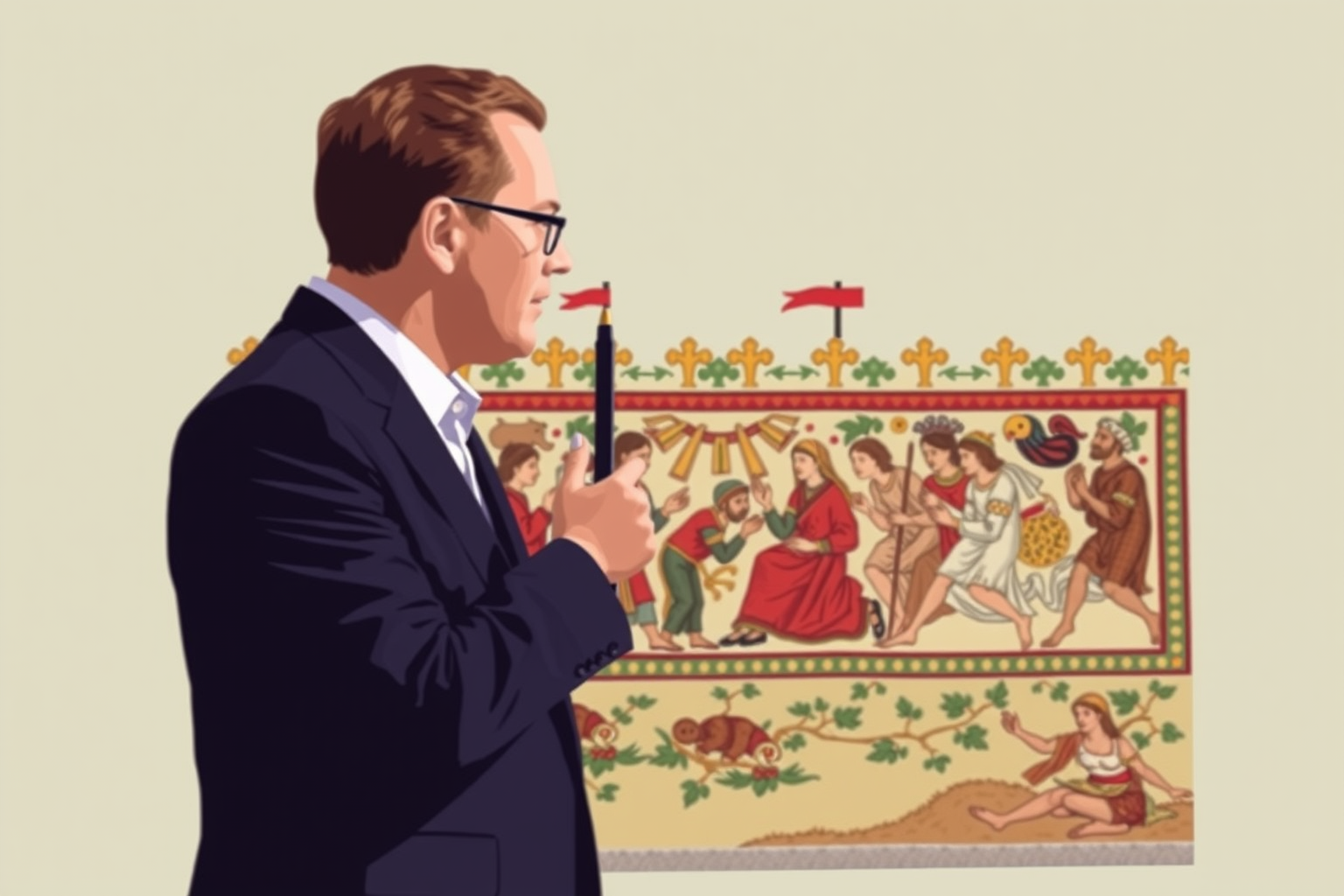
In an opinion piece for The Guardian, provocatively titled "Britain would not cut up the Bayeux tapestry. So seize this moment and reunite the Parthenon sculptures in Greece," Mitsotakis urged British lawmakers to show "political will and courage."
He also said he had been "surprised" by recent comments to the Financial Times from British Museum director Nicholas Cullinan, who suggested the planned Bayeux Tapestry loan could serve as a model for a similar arrangement with the Parthenon marbles. Mitsotakis rejected that idea outright, along with any kind of loan agreement, arguing it would ultimately entail "a scheme that would mean we 'borrow' parts of our own monument."
The prime minister turned Cullinan's comparison of the two monuments to his own advantage. "Both were conceived as single works, intended to be seen and understood as a whole… Nobody would seriously contemplate cutting what survives of the tapestry in two and displaying half in London and half in Bayeux, and claiming this was an adequate way to understand it," Mitsotakis wrote. "Yet that is exactly what happened to the Parthenon sculptures."
Six Bronzes Stolen Near Munich
Thieves made off with six bronze sculptures by Peter Gehring valued at over €100,000 ($114,000) from the garden of the artist's former home, now a museum, near Munich, according to Monopol and Evangelische Zeitung.
Police announced that suspects entered the museum garden following a recent national "Open Monument" event, which grants special public access to museums and government buildings. The next morning, on September 13 at around 10 am, the sculptures were reportedly loaded into a car and driven away. Police are actively investigating.
The Digest
-
Heidi, the young Berlin gallery, has relocated to London. "Less and less experimental art is being shown" in the German capital, which is also attracting less "buyer footfall," according to the gallery's founder, Pauline Seguin. [The Art Newspaper]
-
Adam Pendleton will paint the grand 19th-century stairway of the Stedelijk Museum in Amsterdam black for his forthcoming exhibition there. [The New York Times]
-
Diego Rivera's 1950s stone relief on the Olympic stadium at Mexico City's Universidad Nacional Autónoma de México (UNAM) is one of three monumental, three-dimensional murals on the campus being restored with support from the World Monuments Fund (WMF), alongside works by David Alfaro Siqueiros and Juan O'Gorman. [The Art Newspaper]
-
The United States has returned 36 looted antiquities worth $5 million to Syria, including a "monumental stone relief" stolen from Palmyra while under ISIS control, plus 13 items that had been seized from the Metropolitan Museum of Art. [The New Region]
-
London Design Festival and the overlapping London Fashion Week, where art and design reach toward "softness and calm," are underway ahead of Frieze Week in October. [ARTnews]
The Kicker: Weaponized Archaeology
Benjamin Netanyahu's far-right government in Israel is using ancient archaeological heritage to justify the seizure of Palestinian land in the West Bank, the Financial Times reports.
The area in and around Sebastia illustrates the pattern. Israeli authorities have issued an expropriation order for over 494 acres near the town, claiming the right to take the land in order to protect and develop archaeological sites there. Israel's top court has frozen the effort so far, but roughly 560 Palestinian families directly affected remain in fragile uncertainty over their future.
"The order is not justified: not legally, not professionally, not ethically," said Alon Arad, leader of Emek Shaveh, an Israeli organization that protects heritage sites. "This expropriation shows more than anything the weaponization of heritage and archaeology, and the way they are being manifested into an annexation program that has nothing to do with archaeology or heritage," he added.
With Mitsotakis now framing reunification as a question of Britain's own standards for the Bayeux Tapestry, pressure on the British Museum's leadership — and on lawmakers in Westminster — will only intensify.
Original: cloud.email.artnews.com
Daniel Okafor
Show full bio
News editor covering consumer brands and retail at Arts & Voices.