Museums & Exhibitions
Greek PM Rejects British Museum's Parthenon-Bayeux Comparison
Mitsotakis writes that Greece will not "borrow" parts of its own monument, rejecting the British Museum's Bayeux Tapestry deal as a template for the Parthenon Marbles dispute.

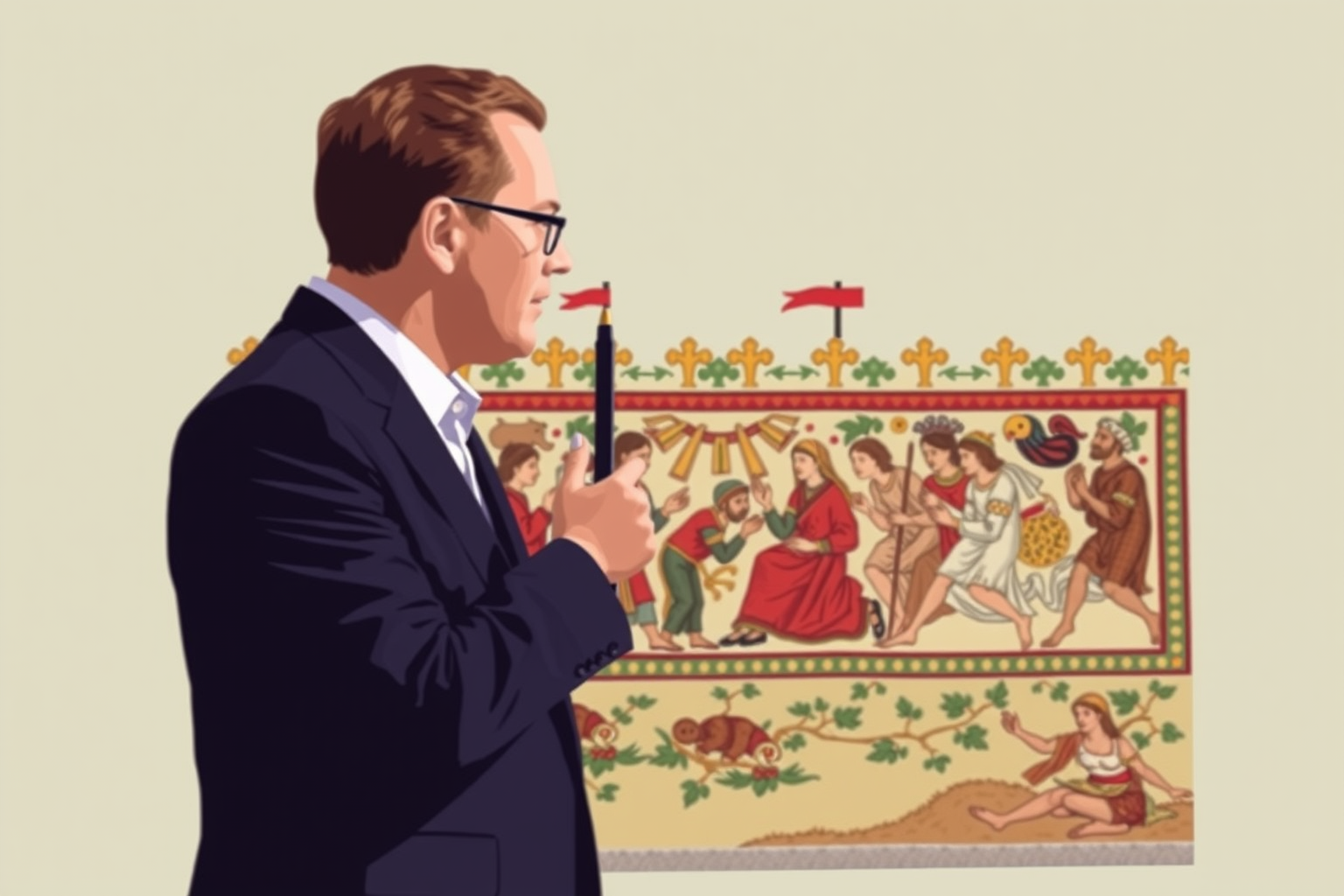
Greek Prime Minister Kyriakos Mitsotakis has publicly rejected the British Museum's suggestion that its Bayeux Tapestry loan from France could serve as a template for a Parthenon Marbles agreement.
In an opinion piece published in today's The Guardian, Mitsotakis dismissed the comparison that British Museum Director Nicholas Cullinan drew in an August interview with the Financial Times. There, Cullinan called the Bayeux Tapestry loan "a very compelling example of international partnership" and a successful "reciprocal exchange," suggesting the deal, which took years to form, might even pave the way for a Parthenon Marbles loan.
Mitsotakis seized on the analogy to appeal directly to British readers, who now face the experience of seeing a cherished artifact return to where it was made, intact.
"There are striking similarities between the two pieces," Mitsotakis writes. "Both were conceived as single works, intended to be seen and understood as a whole. In the case of the Parthenon sculptures, that relationship is also architectural: they were created as inseparable elements of the monument itself."
His sharpest point follows. "Nobody would seriously contemplate cutting what survives of the tapestry in two and displaying half in London and half in Bayeux, and claiming this was an adequate way to understand it," he writes. "Yet that is exactly what happened to the Parthenon sculptures."
The Bayeux Tapestry loan drew controversy before the textile arrived in London, with opponents warning that the fragile 1,000-year-old work should not make the journey at all. Mitsotakis pointed to what he sees as an institutional double standard: the care and attention afforded the tapestry was never extended to the Parthenon Marbles.
He rejected outright any arrangement that would loan portions of the marbles to Greece, which claims to already own them. He admitted surprise "at the recent suggestion from the [British] Museum that the Bayeux Tapestry loan might provide a template for an agreement over the Parthenon sculptures." Any temporary exchange, he argued, would reaffirm British ownership of the antiquities — ownership Greece has contested for decades.
"Greece cannot accept any arrangement that would require it to recognize the British Museum's ownership of the sculptures, or a scheme that would mean we 'borrow' parts of our own monument," he writes.
The political backdrop is shifting. Polls show the British public leaning toward the Greek claim. Yet UK Prime Minister Andy Burnham recently backpedaled on his own previous calls for the marbles to return to Greece, saying the decision now rests with the British Museum.
The marbles themselves were made between 447 and 432 B.C.E. They depict gods and processions of people in marble relief panels, figures, and friezes, and represent, in Mitsotakis's words, "a powerful celebration of Athenian democracy." They are also known as the Elgin Marbles, after the Scottish nobleman Lord Elgin, who removed them from the Acropolis in Athens in 1801 and sold them to the British government. The British Museum has housed them for nearly two centuries. British officials continue to cite the British Museum Act 1963, which prohibits deaccessioning items from the collection, as justification for retaining the ancient works.
Mitsotakis answered that legal defense too. The Parthenon, he argued, is an exception, and its "reunification is not an argument for emptying the world's museums." He said a permanent return remains within reach given sufficient political will, and he urged British lawmakers to show "political will and courage" and work in partnership toward the marbles' "permanent reunification."
"Together we could create a new model of cultural cooperation between two democratic nations and allies with deeply shared values and ideals," he writes. "That is the prize."
Original: ft.com
Marcus Bennett
Show full bio
Staff writer covering industry trends and analytics at Arts & Voices.