Arts & Culture
New DNA Analysis Adds Evidence Jefferson Fathered Hemings Children
A 15-year Smithsonian investigation found Hemings descendants carry more Thomas Jefferson DNA than known Jefferson descendants, using hair cut the day he died.
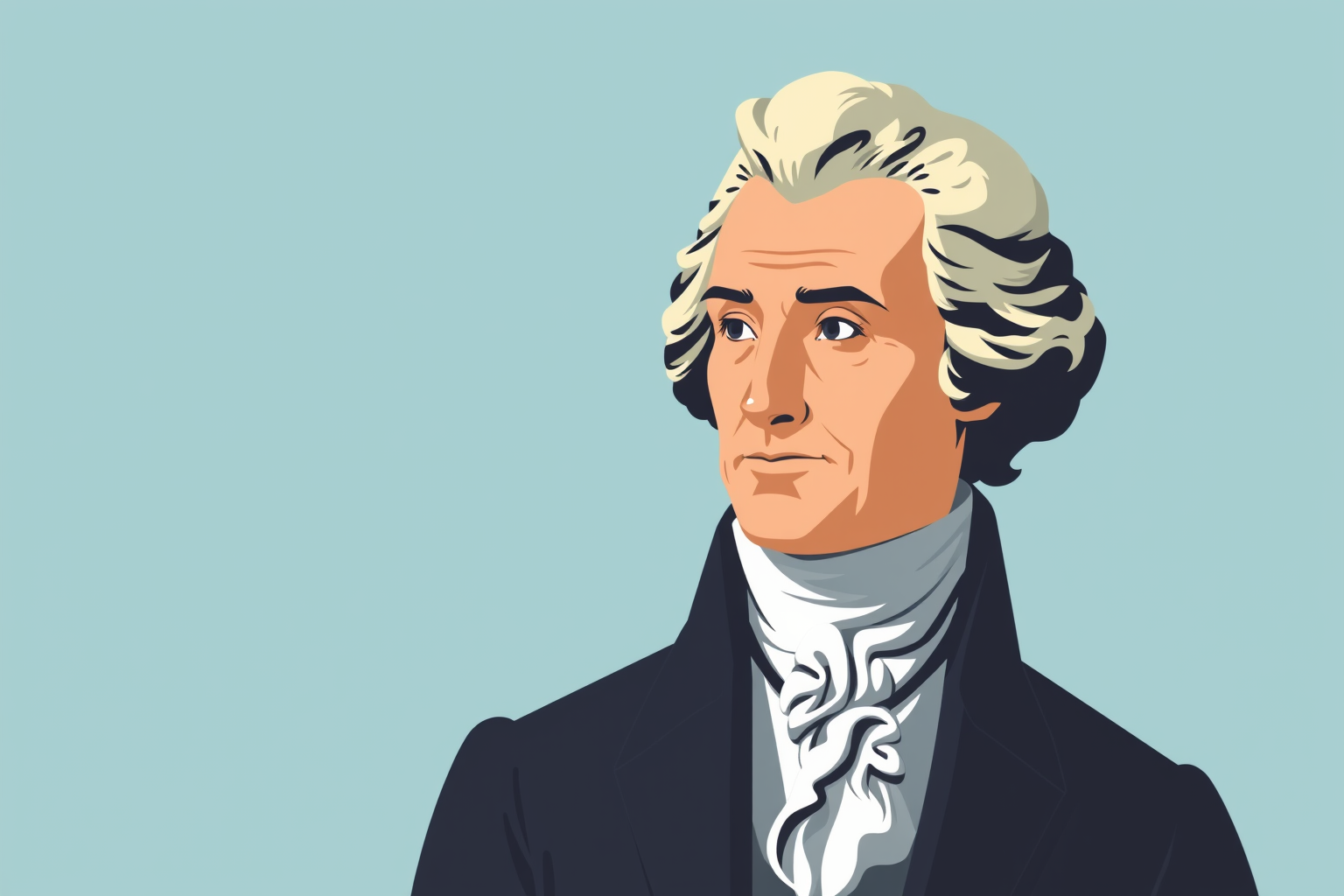
A new DNA analysis has added compelling evidence that Thomas Jefferson, the nation's third president and principal author of the Declaration of Independence, fathered children with Sally Hemings, a woman he enslaved.
The findings cap a 15-year investigation led by Richard Kurin, a distinguished scholar and ambassador-at-large for the Smithsonian Institution, whose search for Jefferson's DNA began with strands of hair found in the president's personal Bible. The investigation's twists and the science behind it are detailed in Kurin's new book, History by a Hair. A scientific paper on the findings is currently under review for publication.
"We know that there are descendants of Madison Hemings and Eston Hemings that have a whole lot of Thomas Jefferson DNA," Kurin told NPR's Michel Martin for Morning Edition, referring to Sally Hemings' two youngest surviving sons. "You actually had Hemings descendants that had more Thomas Jefferson DNA than the known Jefferson descendants."
He added: "I wouldn't make it a rule that the Hemings necessarily have more, but the Hemings certainly had more than was expected."
Asked directly whether the findings answer the paternity question, Kurin said yes: "The DNA speaks for itself."
Two centuries of questions
The allegations date to the late 1700s and early 1800s and have been debated ever since by family members, biographers and historians. The question cuts to the core of Jefferson's legacy and the contradictions at the heart of the founding era.
"Thomas Jefferson wrote the most famous phrase in American history — 'All men are created equal' — and yet, if he bore children with Sally Hemings who were born into slavery, it seemed like a paradox and a contradiction," Kurin said.
Kurin and his team were not the first to turn to DNA. In the late 1990s, pathologist Eugene Foster and colleagues analyzed Y chromosome markers from Jefferson family descendants and a descendant of Eston Hemings, Sally Hemings' youngest son.
"He found contemporary descendants who had the Jefferson Y chromosome, and then he found the descendant of Eston Hemings," Kurin said. "Coupling the historical evidence with that DNA evidence, it convinced, I think, most historians and a lot of people that Thomas Jefferson was indeed the father of Sally Hemings' children."
But skeptics objected that the Y chromosome results could point to any Jefferson male — a cousin, brother or nephew. Kurin's project aimed to settle the matter with broader genetic evidence.
A lock of hair
About five years into the investigation, the team discovered that the strands of hair in Jefferson's Bible did not belong to Jefferson. Kurin kept looking. He returned to Monticello, Jefferson's plantation near Charlottesville, Virginia, and pulled a packet of hair that was not in the initial inventory.
"A rich lock of hair," Kurin said. "You open up the packet, and here is Thomas Jefferson's hair, like a nice lock of hair staring in the face — looked very rich and that hair yielded DNA."
The packet was labeled as Jefferson's hair, cut the day he died, July 4, 1826.
To conduct the analysis, Kurin enlisted Beth Shapiro, a MacArthur fellow who works with ancient DNA from extinct species, and Richard "Ed" Green, an expert in paleogenomics and forensic genomics. Both are at the University of California, Santa Cruz. Kurin said the project focused on scientific evidence, without "moralizing or judging Jefferson."
The historical context remains stark. In his lifetime, Jefferson kept more than 600 enslaved people who cultivated tobacco and mixed crops and ran Monticello.
Questions beyond science
The DNA cannot resolve every dimension of the relationship. "Some have said, 'Well, you know, she was enslaved. It had to be coercive. It by definition had to be rape because she can't consent,'" Kurin said. "Other people have said, 'Well, here was a young woman 30 years younger than Jefferson who had tremendous agency.'"
Hemings was 30 years Jefferson's junior.
The researchers identified descendants of Madison Hemings and Eston Hemings, but not of Sally Hemings' other surviving children, Harriet and Beverly Hemings. "Her two other children, Harriet and Beverly, a boy and a girl, basically ran off from Monticello," Kurin said. "Jefferson let them run off in 1822. They went to Washington, D.C. They passed as white, and they had families, and so nobody knows about their descendants."
Kurin hopes to make Jefferson's genome publicly available, which could help others trace connections to his family. "They may end up rediscovering a heritage that was obscured," he said. "This story is not over yet."
Source: NPR Arts
Marcus Bennett
Show full bio
Staff writer covering industry trends and analytics at Arts & Voices.