Literature
Ousted Disney CEO Bob Chapek Breaks His Silence in Memoir
Chapek's memoir "Behind the Castle Walls," out Sept. 29, accuses Bob Iger of sabotaging his tenure and claims his 2022 ouster left "the answer, again, is nothing."

Bob Chapek, the Disney chief executive whom the board ousted in November 2022, accuses his predecessor Bob Iger of engineering his downfall in a forthcoming memoir, "Behind the Castle Walls: My Thirty Years at the Happiest Place on Earth." The book, co-written with author Don Yaeger and published by Simon & Schuster's Gallery Books imprint, runs 272 pages and goes on sale September 29. Variety obtained an advance copy.
"This is the story of how I fought and scraped and bled and worked my way into the top position of the Magic Kingdom, the places I shaped, and the forces I encountered along the journey," Chapek writes in the book's introduction.
Chapek assumed the CEO job in February 2020 as Iger's hand-picked successor, weeks before the COVID-19 pandemic hit the United States. After a series of missteps, the Disney board dismissed him in November 2022 and recalled Iger. Iger stepped down as CEO this March, replaced by former parks head Josh D'Amaro.
Iger "the modern reincarnation of Walt Disney"
Chapek, who mentions Iger 121 times in the book, recounts a conversation years before the CEO changeover about the role of Disney's chief executive. Chapek remarked, "No one is bigger than the company." Iger replied, "You know, that may be true of other CEOs, but I like to think that I'm a little different."
"He went on to say, it seemed to me in that moment, that he considered himself the modern reincarnation of Walt Disney," Chapek writes. "As a result, he wasn't just the next CEO to come along. He thought he was somewhat unique and special in the history of Disney CEOs. I was surprised, because it did not match up to the façade."
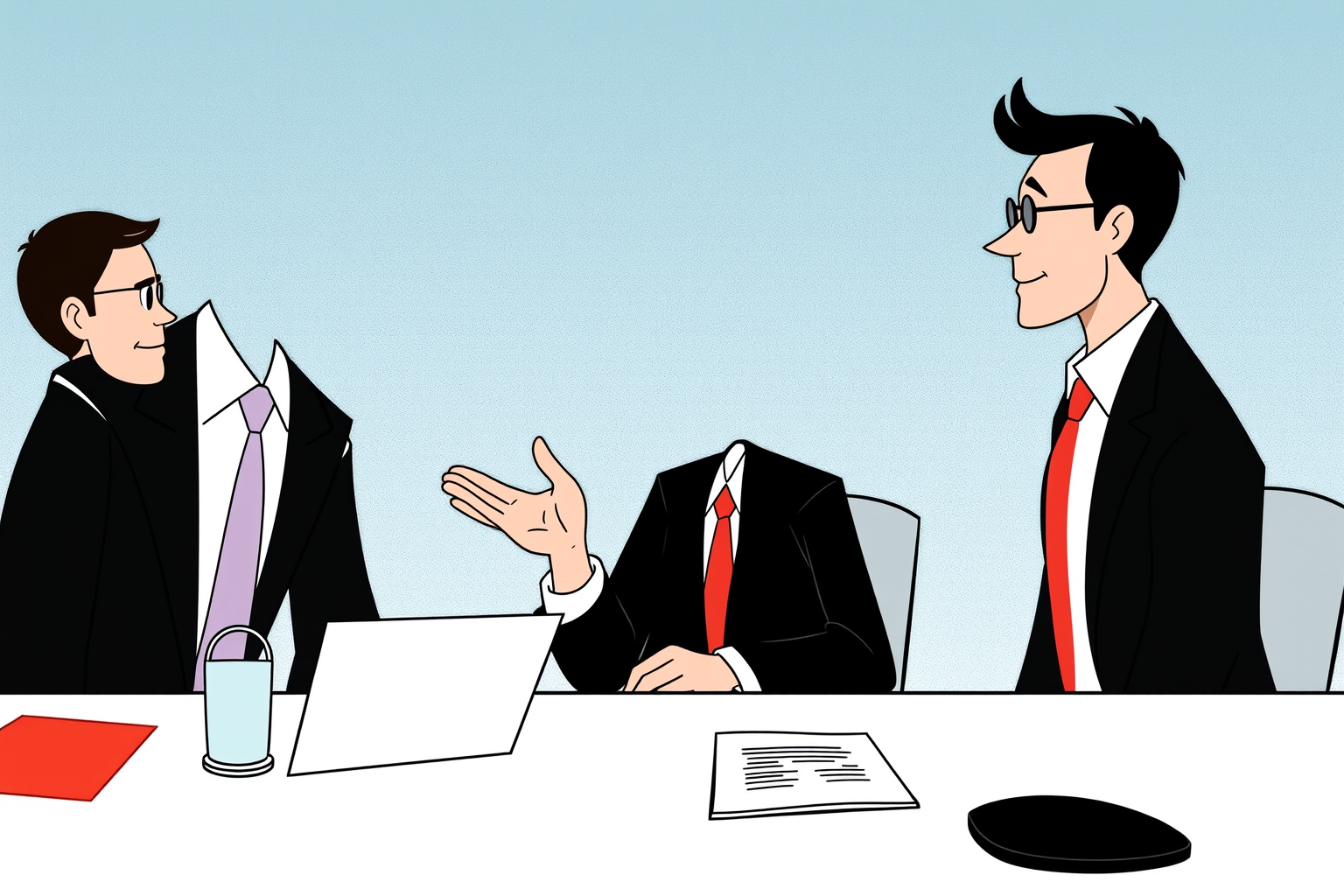
Chapek recalls his first joint interview with Iger, a CNBC appearance on February 25, 2020, after his appointment was announced. Both men, he notes, "unintentionally wore basically matching outfits — black suits with white button-downs," a scene he compares to the movie "Twins" with Arnold Schwarzenegger and Danny DeVito. Iger, he writes, "seemed intent on making sure people knew we weren't the same."
"In hindsight, I should have seen some clues that things were somewhat off," Chapek says. He describes Iger during the interview as uncomfortable and angry, with crossed arms — "not so much by the questions, but by Bob's demeanor. He didn't appear to be a man relieved of the responsibilities of one of the world's most influential companies."
"I did nothing wrong"
Chapek maintains that Iger was "the real reason" the board dismissed him.
"From the moment he announced my appointment, he clearly regretted it and seemed to initiate a relentless three-year campaign to push me out," he writes. "I'd never expected to endure a drawn-out, purposeful undoing of my leadership."
"My abrupt dismissal hurt my reputation, leaving those close to me, outsiders, and some within the kingdom trying to figure out what I did wrong," says Chapek. "The answer, again, is nothing. I have tried to live my life to leave an impeccable personal legacy. If I ran for political office — which I have no plans to, by the way — no one would find any scandals."
He writes that Iger "was having an incredibly difficult time with the idea of moving on" from the CEO role.
The "Don't Say Gay" blow-up
Chapek devotes extensive passages to Disney's response to the Florida Parental Rights in Education Act, known as "Don't Say Gay," which limited discussion of gender and sexual identity in state schools from kindergarten through third grade. While the board and Chapek were still debating a response in 2022, Iger tweeted: "I'm with the President [Biden] on this! If passed, this bill will put vulnerable, young LGBTQ people in jeopardy."
"That tweet made my job all the harder getting the Florida legislature to soften the bill. Instead, Governor DeSantis and his allies became even more entrenched," Chapek writes. He says he believed Disney should "stop short of making a political statement that could be misrepresented by the press, or by either side of the argument," and that an internal memo explained the company's belief that it would be more effective "working behind the scenes" with Governor DeSantis and the legislators.
Chapek claims Iger "likely smelled blood in the water" and continued reaching out to writers, animators, directors and actors to express regret over Disney's inaction. In a CNN interview in late March 2022, Iger said, "Sometimes it's just a matter of right and wrong."
"He was implying none of this would have happened on his watch, and all this was a simple and clear decision for the company," says Chapek.
Under mounting pressure, Chapek reversed course on March 11, 2022, opening Disney's shareholder meeting by acknowledging "how painful our silence was." The backlash was immediate. Critics portrayed him as weak for backtracking within 48 hours; Governor Ron DeSantis labeled Disney a "woke corporation."
"Meanwhile, Bob Iger receded into the background," Chapek asserts. "Even though his tweet heard 'round the world had sparked the firestorm, during the ensuing legal battle, which spanned months and cost the company tens of millions in legal fees, not to mention untold damage in PR among other demographics, he now remained publicly silent."
Park pricing, "Jafar" and a first meeting
Chapek also defends his record. After Iger promoted him to chairman of Walt Disney Parks and Resorts in 2015, he raised prices and restricted annual-pass access. When he announced the first round of increases, Disneyland had 1.1 million passholders; the number dropped to one million afterward, but revenue rose. "I considered that a huge win," he says.
He notes the irony in Iger's post-ouster remark that Disney's prices were "too aggressive": "In reality, over the following two years, he increased prices a number of times."
At the home video division in the 1990s, Chapek spearheaded the direct-to-video sequel "The Return of Jafar" (1994), which was panned — Pixar's John Lasseter called it "terrible" — but generated nearly $300 million in sales. Chapek attributes the criticism to the fact that "a bunch of upstart TV animators in their twenties had created something that generated five times the profits of a typical theatrical release."
The book also covers his 30-year arc at Disney: a first visit to Disney World in 1971, where Pirates of the Caribbean was his favorite attraction; his wife Cindy's leukemia diagnosis and recovery after a bone-marrow transplant; and an episode of what he calls "hazing" on his first day in 1993, when a staff member dropped his pants in Chapek's office. "Welcome to Hollywood," Chapek writes.
Reps for Disney and Iger have declined to comment. Disney insiders are said to view the book as a one-sided revisionist history. Iger, who stepped down as CEO in March, has published his own account of his career — leaving readers to weigh two competing versions of the same kingdom.
Original: x.com
Marcus Bennett
Show full bio
Staff writer covering industry trends and analytics at Arts & Voices.