Aigul Akhmetshina Makes a Triumphant Carnegie Hall Debut
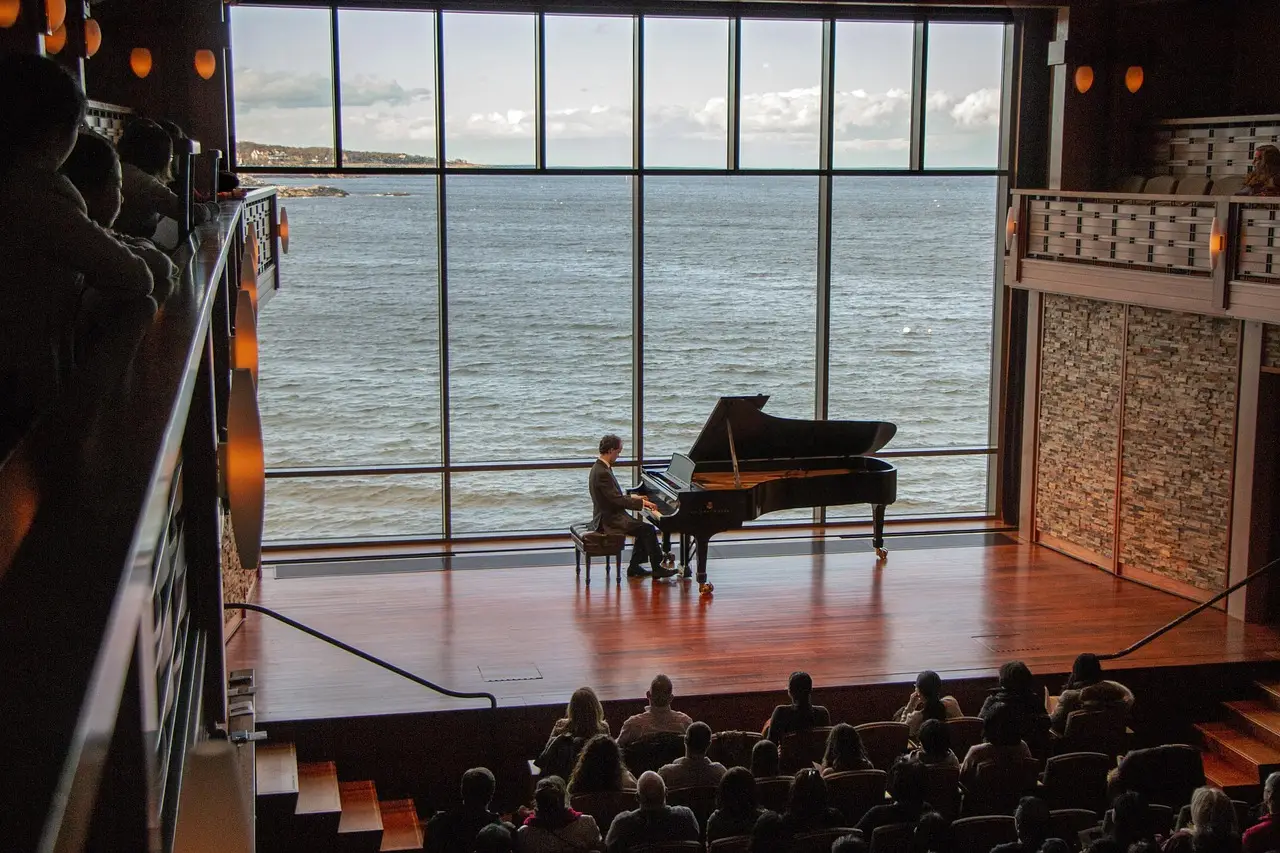
Mezzo-soprano Aigul Akhmetshina debuted at Carnegie Hall on Nov. 11, 2026, with pianist Jonathan Palmer Lakeland in a recital of love songs spanning Rachmaninoff to Piazzolla, plus a world premiere.
Programme
- Aigul Akhmetshina made her Carnegie Hall debut on Nov. 11, 2026.
- The recital, with pianist Jonathan Palmer Lakeland, was organized around the theme of love.
- The program included the world premiere of Lakeland's "The temple bell stops," set to a text by Matsuo Basho.
- Akhmetshina's Carmen at the Metropolitan Opera was a New York Times highlight of an otherwise-panned production.
- The duo performed three encores, one drawing on Akhmetshina's Bashkir heritage.
On Nov. 11, 2026, mezzo-soprano Aigul Akhmetshina made her Carnegie Hall debut in a recital of art songs, arias and jazz standards, all bound by a single theme: love in all its forms. Pianist Jonathan Palmer Lakeland joined her, offering what the reviewer called "a stunning compliment for the mezzo" plus flashes of virtuosity when he stepped forward himself.
The last few years have taken the Bashkir artist to prominent stages worldwide. Her title role in the Metropolitan Opera's "Carmen" was praised by The New York Times as one of the true highlights of an otherwise-panned production.
How the program was built
The first half traced a clear emotional arc. It opened with innocent, first love: Rachmaninoff's "Morning, Op. 4 No. 2," whose sunrise imagery frames dawn and day as lovers. Akhmetshina's command of her lower register let her energy rise slowly, like the sun, into warm, trailing phrases that connected naturally into "I wait for thee, Op. 14, No. 1." A poignant longing colored the repetitions of "I'm waiting for you!" Balakirev's "I Loved him" followed, its lapping chords building what the review termed "splendid urgency."
The second section turned to wounded, desperate love. Rimsky-Korsakov's "Enslaved by the rose, the nightingale (Eastern Song) Op. 2, No. 2" drew calm but charged pianissimos from the singer. Carlos Gustavino's "La rosa y el sauce" shifted the program into Spanish with poignant sostenuto (sustained, singing tone) phrasing.
Kurt Weill's "Je ne t'aime pas" produced the evening's most striking moment. The reviewer described a voice that "flowed from an entrancing misery, to a depleted, conversational register, to phrases where she seemed in the midst of breaking down entirely." Elena Roussanova's "Femme Fatale" swelled from introspection into urgency — "Love, please stay!" — before Astor Piazzolla's "Yo soy Maria" from "Maria de Bueno Aires" closed the half. There, Lakeland's playing was "nearly set aflame as he tore through the accompaniment with virtuosic flair."
What did the second half add?
The second half turned hopeful. Benjamin Britten's "Tell Me the Truth About Love" brought humor, with its comic questions — "Does it look like a pair of pyjamas or the ham in a temperance hotel?" — though the dense text occasionally blurred Akhmetshina's diction. The Gershwins' "The Man I Love" received a "gorgeous and elevated" reading, her rich tone coloring the portrait of an unknown but certain lover.
The program also included a world premiere: "The temple bell stops," composed by Lakeland to a text by Japanese poet Matsuo Basho. The work explored stillness and introspection through imagery of echoes, fragrances and touches of natural beauty, set against bright, open chords.
Two musical theater numbers closed the bill. "Somewhere" from Bernstein's "West Side Story" suited Akhmetshina's opulent voice, carrying its phrases of hopeful uncertainty to "truly stunning heights." "People," from Jule Styne's "Funny Girl," bloomed from conversational ease into classical beauty, distilling the evening's theme of love in its manifold forms. Three encores followed, one a charming tribute to Akhmetshina's Bashkir heritage.
The mix of established and newer works gave the love theme genuine shape rather than a loose excuse for a program. If this recital is any indication, the young mezzo-soprano will continue to build her international profile — and Carnegie Hall, one of America's most hallowed venues, has now heard exactly why.
Original: nytimes.com
More from Grace Kim
Show full bio
Correspondent covering technology and product news in arts in the broadest sense at Arts & Voices.
1,596 articles