Chile's First Anglican Church Becomes a Museum Under 50-Year Lease
St Paul's Cathedral in Valparaíso, Chile's first Anglican church, will become a museum of British immigration under a 50-year lease with Destino Valparaíso effective 30 November.
Programme
- St Paul's Cathedral in Valparaíso, Chile's first Anglican church, becomes a museum under a 50-year lease effective 30 November.
- Restoration of the roof, floors, pews and stained-glass windows is expected to last at least a year.
- The church was inaugurated in 1858 and built by English engineer William Henry Lloyd in a discreet Neo-Gothic style.
- The Queen Victoria Memorial Organ, installed in 1902, has hosted Sunday concerts for 35 years.
- Destino Valparaíso's Immigrant Museum, opened last year, is the most visited place in the Unesco World Heritage area.
St Paul's Cathedral in Valparaíso, the first Anglican church built in Chile and on the west coast of South America, will become a museum under a 50-year lease agreement that takes effect on 30 November.
The lease transfers management, restoration and conservation of the church to Destino Valparaíso, the neighbouring institution that houses the Immigrant Museum. The new museum will celebrate the influence of British immigration on the port city, which Unesco declared a World Heritage Site in 2003.
St Paul's will undergo restoration of its roof, floors, pews and stained-glass windows. The project is expected to last at least a year.
Who is behind the plan?
Eduardo Dib Maluk, the executive director at Destino Valparaíso, said the building's condition forced the issue. "The church was deteriorating and, as a historic monument, was in poor condition," he told The Art Newspaper. "We felt the need to restore it and develop a business model like the one we have at Destino Valparaíso."
The Dib family bought the building that now houses Destino Valparaíso in 2016. It was the former German School of Valparaíso, itself a historic monument, built by the local immigrant community. The school operated from 1870 until 1985, when an earthquake damaged the building and classes moved to the German school in neighbouring Viña del Mar. The family renovated the structure and converted most of its space into a museum telling the stories of British, German, Italian, Spanish, French and Arab immigrants who arrived in Valparaíso after Chile's independence from Spain in 1818.
Since the Immigrant Museum opened last year, it has been the most visited place in the World Heritage area. The museum recently added a space dedicated to sports that immigrants brought to Chile, including rugby, cricket, football, polo, tennis and cycling.
What will the new museum contain?
Dib plans to incorporate technology and design into the new museum spaces at St Paul's, as he has in the old German School building. He draws a clear line between the two institutions.
"It won't be an extension of the Immigrant Museum," he says. "It will highlight the milestones achieved by the British, who shaped the Valparaíso that was known until the 20th century."
The British role in the city was substantial. Valparaíso was a technological centre driving Chile's development in the 19th century, home to the country's first bank, observatory and stock exchange. The hill around St Paul's was one of the first areas settled by British and German immigrants after independence.
Why the building itself matters
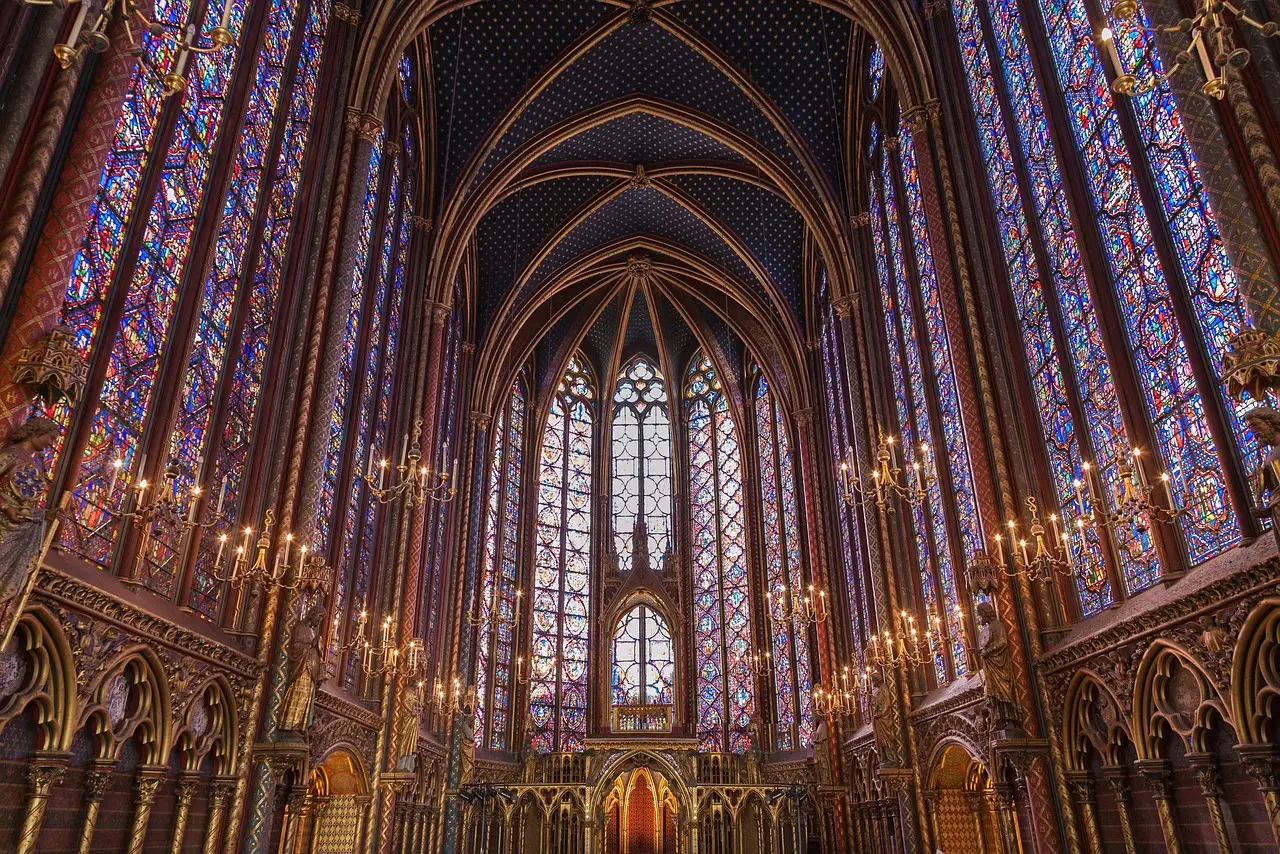
The English engineer William Henry Lloyd designed St Paul's. He had come to Chile to work on the construction of the Valparaíso-Santiago railway. The church was inaugurated in 1858, at a time of Catholic restrictions on other religions in the country. As a result, Lloyd built it in a discreet style, with small windows and without a main door, spire, cross or bell tower. The Neo-Gothic building, with a single nave and an adjacent hall, occupies a whole city block.
Inside, Lloyd used laminated Oregon pine beams attached with nails and screws to form the ceiling arches, an advanced technique at the time. The stained-glass windows, representative of the British Gothic Revival, include one by Morris & Co. The church's organ, made by Forster and Andrews in England, arrived in Valparaíso in 1902. An earthquake in 1906 damaged the massive instrument, and it was repaired four years later.
The Queen Victoria Memorial Organ, as the instrument is known, has kept the space active. Concerts have taken place every Sunday for the past 35 years.
What does this change for the church?
The congregation's decline drove the deal. Over time, the city's British community largely migrated to Viña del Mar or Santiago, reducing St Paul's sources of funding. Earthquakes compounded the strain on a building that demands constant care.
"This church requires a lot of maintenance and repairs because of the earthquakes," says Lynn Gray, a member of the board that manages the cathedral. "It's very reassuring to be able to keep its heritage alive."
Under the agreement, St Paul's will maintain its religious services. These include the ordination of pastors, weddings for members of the British community and the Remembrance Service in November. The restoration, expected to last at least a year, will begin after the lease takes effect on 30 November, giving the 166-year-old building its most sustained intervention in decades.
Source: theartnewspaper.com
More from Marcus Bennett
Show full bio
Staff writer covering people, launches and day-to-day practice in arts in the broadest sense at Arts & Voices.
1,725 articles