Frankfurt Rebuilds the Parthenon's Lost East Pediment — Without Athens
Frankfurt's Liebieghaus claims a full reconstruction of the Parthenon's east pediment, 80% of which is lost — after Greece withdrew loans over the Elgin Marbles dispute.
Programme
- The exhibition Athena, the Stage is Yours opens at the Liebieghaus, Frankfurt, on 18 November and runs to 25 July 2027.
- Around 80% of the Parthenon's east pediment is missing; the reconstruction relies on nine Roman sarcophagus reliefs that match surviving fragments 100%.
- Greece withdrew a loan of nine marble fragments because they would be shown alongside British Museum pieces taken by Lord Elgin.
- The British Museum, which has held the Parthenon Marbles since 1817, is still lending two fragments.
- Vinzenz Brinkmann has researched the pediment for 40 years, first examining it by rope at night in 1986.
By Grace Kim
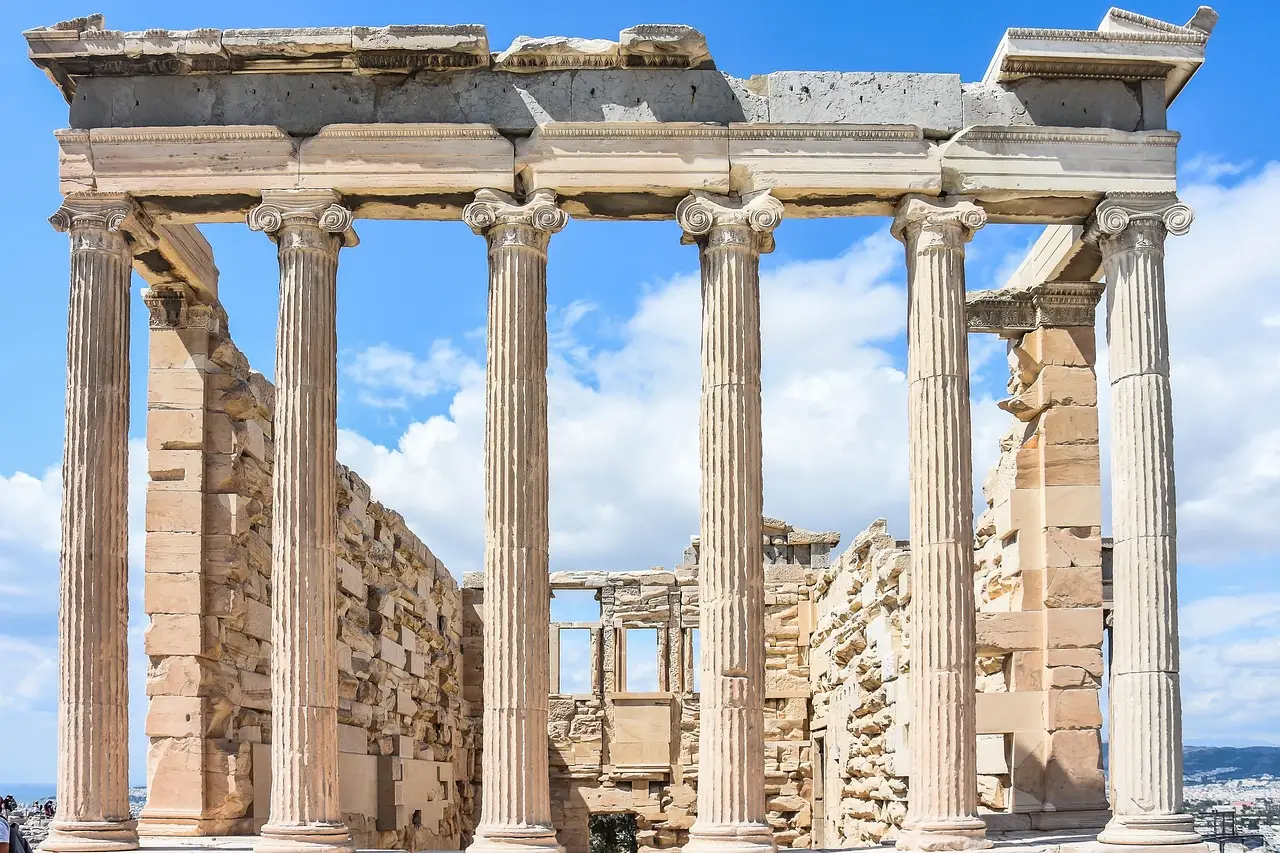
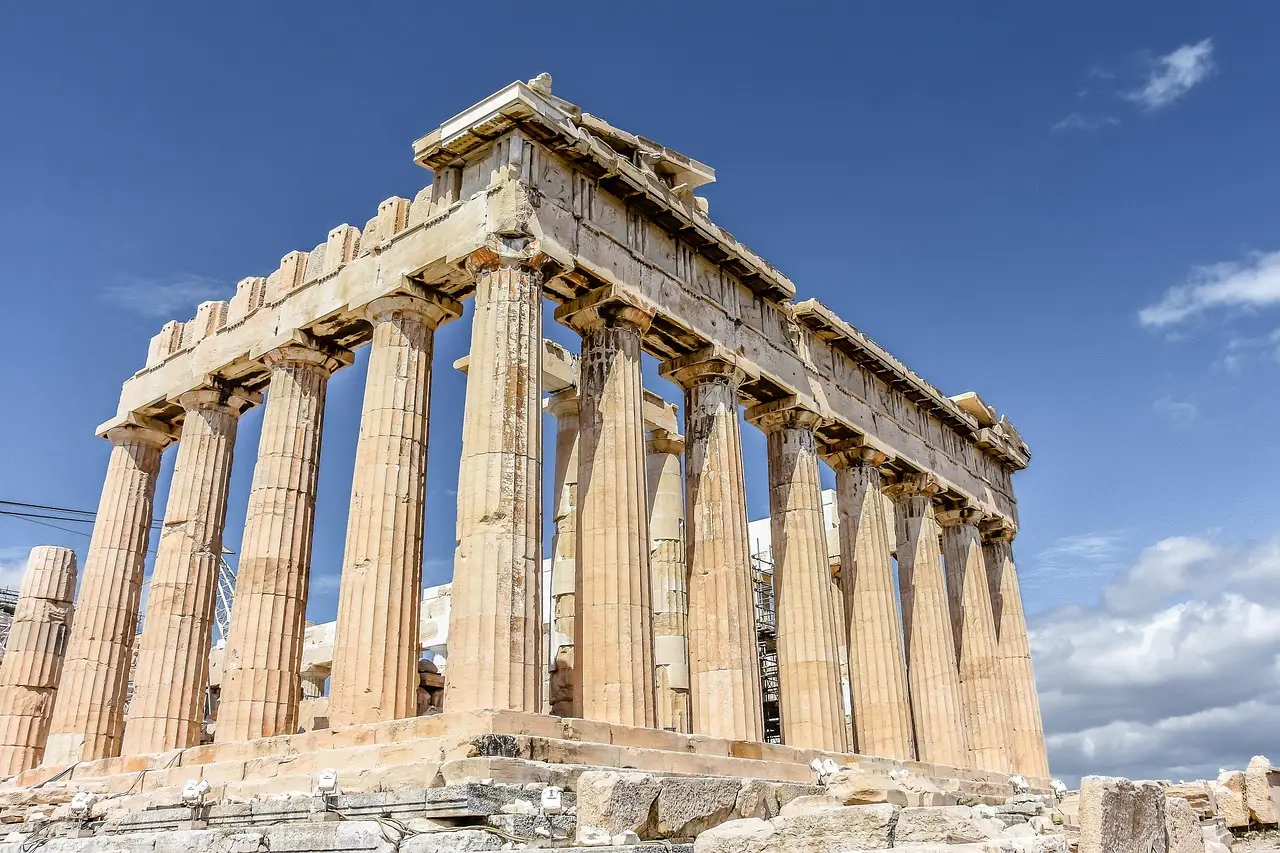
A team at Frankfurt's Liebieghaus Sculpture Collection says it has fully reconstructed the east pediment of the Parthenon — the sculpted scene of Athena's birth of which 80% has been lost. The results go on show in Athena, the Stage is Yours: the Parthenon Puzzle, opening 18 November and running to 25 July 2027.
The exhibition opens without nine marble fragments Greece had promised. According to Greek media reports, Greece's Central Archaeological Council rejected the loan because the pieces would appear alongside British Museum objects removed from the Acropolis by Lord Elgin. Greece has demanded the return of the Parthenon Marbles for decades; they have sat in the British Museum since 1817. The Greek culture ministry's press office did not respond to emailed requests for comment.
What does the withdrawal change for Frankfurt? Less than you'd think, says Elisabeth Pallentin, a Liebieghaus spokesperson: "The cancellation of the loans from Greece does not detract from the exhibition's concept, or its scholarly significance. The exhibition is based primarily on new findings resulting from many years of research at the Liebieghaus." The British Museum, which is lending two fragments, confirmed it "will still be loaning".
How do you rebuild a pediment that's 80% missing?
Vinzenz Brinkmann, the Liebieghaus's head of antiquities, has chased this problem for 40 years. In 1986 he scaled the Parthenon at night by rope, examining the pediment's base under lamps that only work without ambient light, hunting for traces of the 39 lost figures. "Nothing came of that," he says — apart from Athens rumours about ghosts on the Acropolis.
The destroyed pediment is probably "the most famous image of antiquity", Brinkmann says. Its centre held figures 3.5m tall. It collapsed at some point between the fifth century AD and 1670; nobody knows when or why. Until now, no one had fully reconstructed the central figures. "In the last 200 years, there have been a lot of proposals, but we saw that there were always gaps," Brinkmann says. The most serious prior attempt was Arthur Hamilton Smith's partial plaster-cast reconstruction, shown at the British Museum in 1908. "He did a fantastic job in preparing the way," Brinkmann says. "That was our basis."
What unlocked the puzzle?
The breakthrough came from Roman sarcophagi. During a 2014 visit to the Hermitage in St Petersburg, the team spotted a figural relief on a sarcophagus lid closely related to the pediment's composition. "It was really a chance discovery," Brinkmann says. Nine relevant sarcophagi turned up in total, mostly in the Vatican Museums and elsewhere in Rome. "They had been overlooked. But the Romans copied everything the Greeks did."
No single relief showed the whole ensemble — each depicted a different subset of the 39 figures. But computer analysis showed the surviving pediment fragments and the reliefs matched 100%. The Liebieghaus team recreated the missing pieces with scans and a 3D printer (a process that builds physical objects from digital models, layer by layer).
The reconstruction yielded surprises. The Dioscuri — the twin horsemen Castor and Pollux — were not previously known to appear on the pediment. They stand beside bucking horses, straining at the reins, anxious. That only makes sense at the moment of Athena's birth, Brinkmann argues: she burst from Zeus's forehead, and the Homeric hymns describe Olympus shaking, the earth shrieking and the sea raging. "The Dioscuri are heroic horsemen in mythology. They don't lose control of their horses," he says. "But the birth of Athena was a primordial cosmic event that unleashed a natural disaster. What we see are the consequences." Hermes, in the recreated ensemble, clutches his hat against the cataclysm.
Brinkmann is internationally known for his research into polychromy (the original painted colour of ancient sculpture); his touring show Gods in Color has appeared in the US, Athens, Oxford, Istanbul and the Vatican Museums. The new exhibition may travel too, he says — but evidently not with marbles from Athens, and with little sign of a lasting Greece–British Museum settlement on the horizon.
Source: theartnewspaper.com
More from Grace Kim
Show full bio
Correspondent covering technology and product news in arts in the broadest sense at Arts & Voices.
1,550 articles