Gabriella Smith’s Violin Concerto: How to Be a Bird premieres
Thomas Adès’s first Hallé outing as principal guest conductor brought Gabriella Smith’s world premiere, two Adès works and a fierce Stravinsky performance.
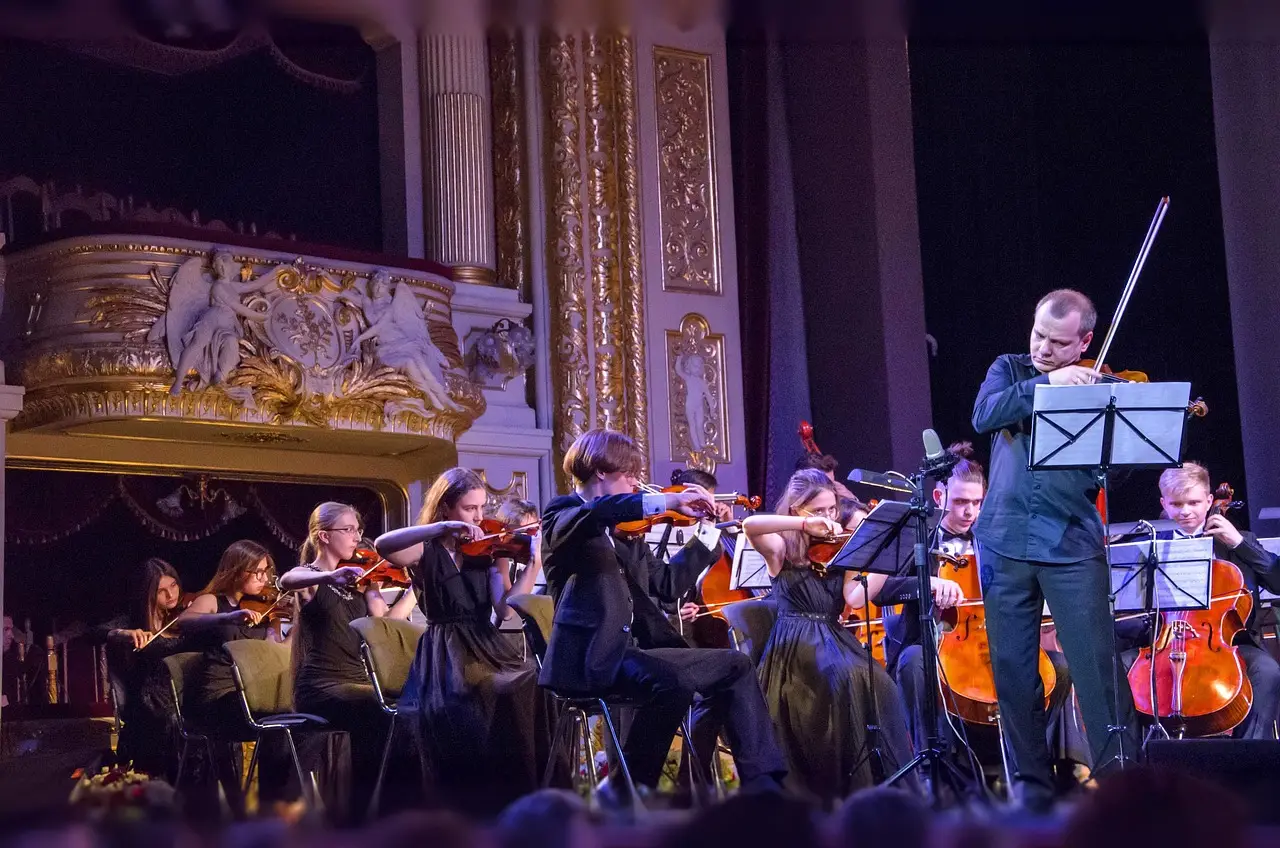
Programme
- Gabriella Smith, 34, premiered Violin Concerto: How to Be a Bird with Pekka Kuusisto and the Hallé.
- Thomas Adès made his first outing as the Hallé’s new principal guest conductor.
- The concert’s composers had an average age of about 30.
- Adès composed These Premises Are Alarmed for Bridgewater Hall’s 1996 inauguration at age 25; Asyla premiered when he was 26.
- Stravinsky revised Firebird Suite when he was 36.
By Grace Kim
Gabriella Smith, 34, premiered her Violin Concerto: How to Be a Bird with Pekka Kuusisto and the Hallé under Thomas Adès. It was also the evening’s clearest news: Adès was making his first outing as the orchestra’s new principal guest conductor.
Kim framed the program through a striking statistic: the composers’ average age hovered around 30. Classical music often celebrates youth through prodigy performers, while orchestral programming tends to favour the experienced, including the deceased.
An evening built around younger composers therefore offered something more bracing than novelty. The result, in Kim’s overall verdict, was youthful confidence, creative energy and moments of explosive swagger.
These Premises Are Alarmed, a miniature with maximalist ambitions, opened the concert. Adès composed it for the Hallé’s inauguration of Bridgewater Hall in 1996, when he was 25.
Kim heard it as noisy and knowing: the music barrels out of rattles and twitches, stretches briefly into a bold lyrical sweep, then fragments into high shrieks and slabs of low brass. The Hallé made those contrasts register as a single, tightly controlled argument.
Kim’s assessment left little room for qualification: “The Hallé’s performance was electrifying: every phrase held taut, every sharp edge made to matter.” That precision also made the extreme contrasts legible at full orchestral scale.
Adès and the orchestra had worked together for years, so his arrival did not introduce an unknown quantity. What was new was the job. This was his first outing as the Hallé’s new principal guest conductor.
The second Adès work supplied a different kind of force. Asyla, premiered when he was 26, marshalled an extravagant instrumental body, including a bass oboe, 10 double basses and a contrabass bassoon, through geological rumbles, raucous angularity and cool slow motion. The Hallé answered his gestures instantly, and details remained crystalline even in the wildest passages.
The world premiere of Smith’s Violin Concerto: How to Be a Bird offered a forensic study of colourful orchestral textures, driven by almost ubiquitous tremolo and trilling. Kuusisto’s lines were often silvered by harmonics or creaking under bow pressure, woven through the orchestral fabric. They only occasionally broke into figuration that might have been lifted from Bach or Vivaldi.
Kim was also precise about what the work lacked, noting odd moments of tonal blandness amid so much urgent exploration. As Kuusisto trilled into the stratosphere, absolute silence fell. That contrast, rather than virtuosity alone, gave the concerto its identity.
Most thrilling, in Kim’s ranking, was Stravinsky’s Firebird Suite, which the composer revised when he was 36. Some passages were achingly elegant, others gleefully unbuttoned, and many were fast.
At times, Adès held his baton in two hands to slice, as if playing in Wimbledon; the conducting itself became part of the piece’s volatility. Kim’s closing judgment captured the effect: “The result was a winning, fierce performance that sounded utterly fresh.”
Read as a program, the concert’s achievement rested on contrast rather than a shared sound. Adès made his 1996 miniature feel taut and dangerous, then drew subterranean weight from Asyla. Smith supplied restless textures and Bach- or Vivaldi-like figuration, while Stravinsky offered the speed that made Adès’s two-handed conducting so forceful.
The unifying mechanism was the Hallé’s responsiveness: youthful scores sounded assured because the orchestra controlled their edges, noise and silences. More importantly, youth did not mean immaturity; coordination, not novelty, produced the concert’s authority.
What does Adès’s first outing change for the Hallé?
Adès now arrives as principal guest conductor with a specific proposition: youthful works can share a program with Stravinsky without making either age the argument. Smith’s concerto showed the balance in practice, urgent but occasionally uneven, while Firebird showed how much space Adès can make within an established work.
What changes for the Hallé is the expectation for what comes next. Its new principal guest conductor has already turned youth into precision; the next outing will test whether that formula becomes an identity rather than a one-off success.
Source: theguardian.com
More from Grace Kim
Show full bio
Correspondent covering technology and product news in arts in the broadest sense at Arts & Voices.
1,754 articles