Medieval stones and Burle Marx gardens: inside Rio's Moreira Salles mansion
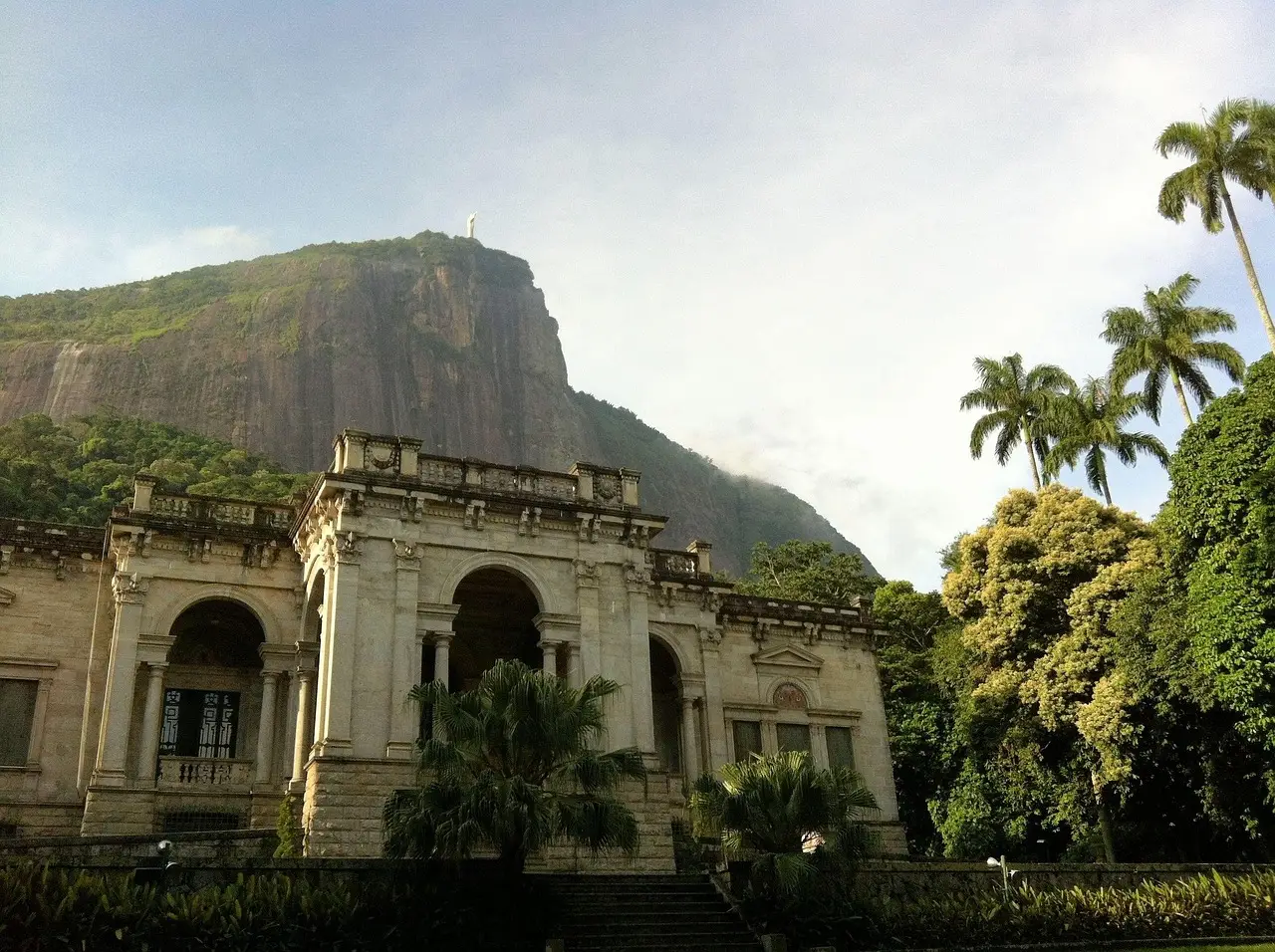
Rio's Moreira Salles mansion in Gávea, designed by Olavo Redig de Campos in 1948, hides medieval European ballast stones, Burle Marx gardens and an 18th-century tile room. Closed since March 2023, it awaits new galleries.
Programme
- The Gávea mansion was commissioned in 1948 by Walther Moreira Salles to architect Olavo Redig de Campos and inaugurated three years later.
- Its entrance stones arrived from Europe as ballast on a Swedish ship.
- The estate exceeds 10,000 square meters, is crossed by the Rainha river, and became IMS's Rio seat on October 1, 1999.
- It has been closed to visitors since March 2023 for modernization, adding exhibition rooms and an auditorium.
- Forbes lists Fernando Moreira Salles at R$ 50.3 billion and Pedro Moreira Salles at R$ 46.6 billion in 2026.
The Rio de Janeiro seat of the Instituto Moreira Salles (IMS), a 1948 mansion in Gávea built for banker and diplomat Walther Moreira Salles, still carries medieval European stones in its access ramp — rocks that crossed the Atlantic as ballast (weight cargo used to stabilize a ship) aboard a Swedish vessel.
Architect Olavo Redig de Campos received the commission in 1948. The house opened three years later, set in the vegetation of the Tijuca Forest on a plot of more than 10,000 square meters, crossed by the Rainha river.
The property has been closed to visitors since March 2023, undergoing modernization that will add new exhibition rooms and an auditorium. The building and its gardens are listed (tombado, legally protected) by the municipal heritage authority.
What does the house hold?
The details are personal to the point of eccentricity. The brass doorknobs were cast from a mold of Walther Moreira Salles's own hand. A reception room connected to the library preserves 18th-century Portuguese azulejos (glazed tiles), while the floors follow Venetian architectural influence. The project distributes the rooms across two levels, taking advantage of the natural slope of the terrain.
Outside, landscape architect Roberto Burle Marx — the Brazilian modernist who treated gardens as abstract paintings — gathered Australian and Caribbean palms alongside Asian plants. He also designed a tile panel in 1949, produced by the Osirarte workshop, depicting women washing clothes and fish. The garden later received a steel sculpture by Amilcar de Castro.
How did it become a cultural institute?
The family left the mansion in the 1980s. It became the IMS's Rio headquarters on October 1, 1999, and has served that function since — apart from the current closure.
The fortune behind it is tied to Unibanco, the bank merged with Itaú in 2008, and to the Companhia Brasileira de Metalurgia e Mineração (CBMM), the niobium producer. According to Forbes, Fernando Moreira Salles holds a fortune of R$ 50.3 billion in 2026, while Pedro Moreira Salles holds R$ 46.6 billion.
One may quibble with shipping castle stones as ship's ballast. It is, at least, a more durable form of wealth than most. The reopening, with its new galleries and auditorium, will decide whether the public finally gets a closer look at those doorknobs.
Source: brasilemfolhas.com
More from Daniel Okafor
Show full bio
News editor covering companies, deals and strategy in arts in the broadest sense at Arts & Voices.
1,765 articles