Rio's Casa de Rui Barbosa opens 6,000-square-metre historic garden free to the public
The Fundação Casa de Rui Barbosa opens its 6,000-square-metre Botafogo garden free daily, with lakes, waterfalls and a tree planted in 1930 by president Washington Luís.
Programme
- The garden covers 6,000 square metres and opens daily, 9am–5.30pm, with free entry.
- Rui Barbosa bought the 1850 mansion in 1893 for 60 contos de réis and lived there 30 years.
- The site opened on 13 August 1930 as Brazil's first public house museum and received Iphan protection in 1938.
- Rui Barbosa cultivated more than 300 rose varieties; a pau-brasil planted by Washington Luís in 1930 stands on the grounds.
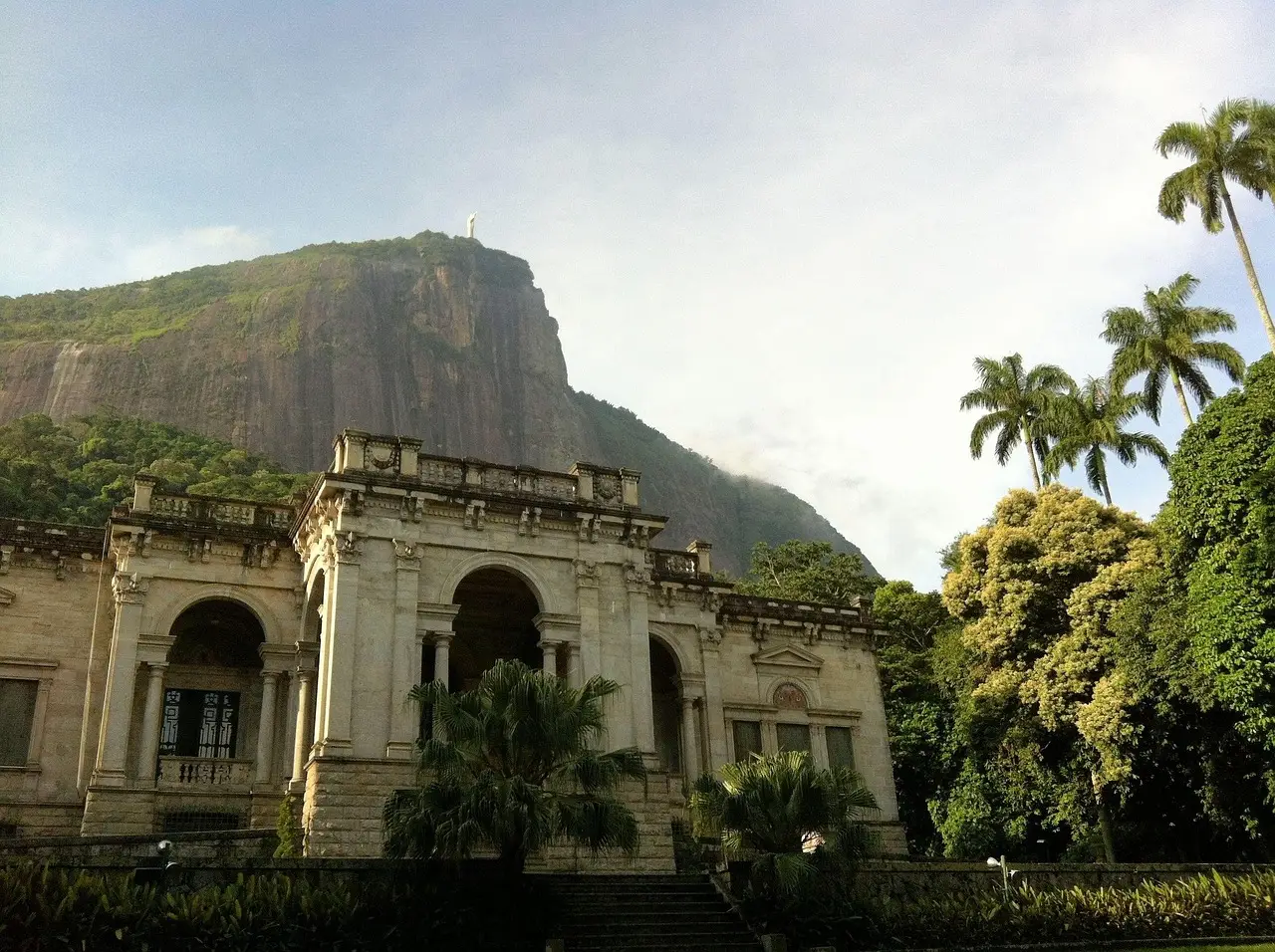
A 19th-century mansion in Botafogo, Rio de Janeiro's South Zone, keeps a 6,000-square-metre garden open to visitors at no charge. The Fundação Casa de Rui Barbosa administers the grounds, which contain artificial lakes, waterfalls, bridges and a small island with a kiosk.
The landscaping is divided into three areas. Its features resemble the work of Auguste François Marie Glaziou, the French architect who remodelled public spaces in Rio in the 19th century — though the source stops short of attributing the design to him. At the entrance, a winding lake ends in rock formations with a waterfall. At the rear, where the former owner's family sought privacy, a second lake holds the island and a 60-metre vine pergola.
Who lived here — and what grew?
Rui Barbosa, the jurist and diplomat, lived on the property for 30 years and worked the garden himself. He cultivated more than 300 varieties of roses. His wife, Maria Augusta, kept a glass greenhouse for orchids, ferns and maidenhair. A pau-brasil tree planted by former president Washington Luís in 1930 still stands on the grounds.
The house itself dates to 1850, built for Bernardo Casimiro de Freitas, the first Barão da Lagoa. Rui Barbosa and his wife bought it in 1893 for 60 contos de réis. The family moved in only in 1895, after a political exile in England. The federal government purchased the house and its collections in 1923, after the jurist's death.
What does the site's status mean for visitors?
The architectural complex opened on 13 August 1930 as Brazil's first public house museum. The Instituto do Patrimônio Histórico e Artístico Nacional (Iphan) placed it under protection in 1938. The address is Rua São Clemente, 134.
Practical details are plain. The garden opens daily, 9am to 5.30pm, with free entry. On weekends and public holidays the institution offers free parking. The museum's interior rooms open Tuesday to Friday, 10am to 5.30pm, with last admission at 5pm.
The garden, in short, is the more generous half of the estate: seven-day access, no ticket, no booking mentioned. The house museum keeps shorter hours — and the source says nothing about guided tours, accessibility, or whether the greenhouse and rose collections survive in anything like their historical form. Visitors hoping to see Maria Augusta's orchids or the 300 rose varieties should temper expectations; the record confirms only the lakes, cascades, bridges, island, pergola and the 1930 pau-brasil.
That caveat aside, the opening gives Rio a free daily green space with a documented pedigree. The Glaziou-like layout, the two lakes and the presidential tree make it one of the few historic gardens in the South Zone that charges nothing at the gate.
Source: brasilemfolhas.com
More from Tom Whitfield
Show full bio
Market editor covering people, launches and day-to-day practice in arts in the broadest sense at Arts & Voices.
1,808 articles