Miquel Navarro, Sculptor of Miniature Cities and Valencia's 'Pink Panther,' Dies at 81
Miquel Navarro, whose installations of miniature cities probed modernity, died at 81 in Mislata. Valencia's beloved 'Pink Panther' fountain stands among his public legacies.
Programme
- Miquel Navarro died on Sunday, November 1, at 81 in Mislata, Spain, after a long illness.
- His first 'City' sculpture, La ciutat, debuted in Valencia in 1973–74; the series ran for decades.
- He won Spain's Premio Nacional de Artes Plásticas in 1986 and represented Spain at the Venice Biennale the same year.
- Valencia's 75-foot Fuente Pública (1986) became known to citizens as La Pantera Rosa.
- He donated 530 works to IVAM in 2005 and over 400 to his foundation, whose Casa-Taller opened in June.
Miquel Navarro, the Spanish sculptor whose pared-down installations of cities interrogated the promises of modernity, died on Sunday at 81 in Mislata, Spain, after a long illness, El País reports. His hometown declared three days of official mourning from November 1–3.
Mislata, just outside València, anchored Navarro's entire career. "The city that inspired part of his imagery was also where he lived, worked, and developed much of his creative process," the Mislata City Council said in a statement announcing his death. "From his studio in the Morería neighborhood, the artist built a universal career without ever relinquishing his connection to the land where he grew up."
Navarro made his first "City" sculpture in 1973, two years before the Franco regime ended. The memory of approaching València as a child stayed with him. "In the fifties, I would approach the city on a tram, and the encounter with it was fascinating," he told El País in 2009.
What did the 'Cities' look like?
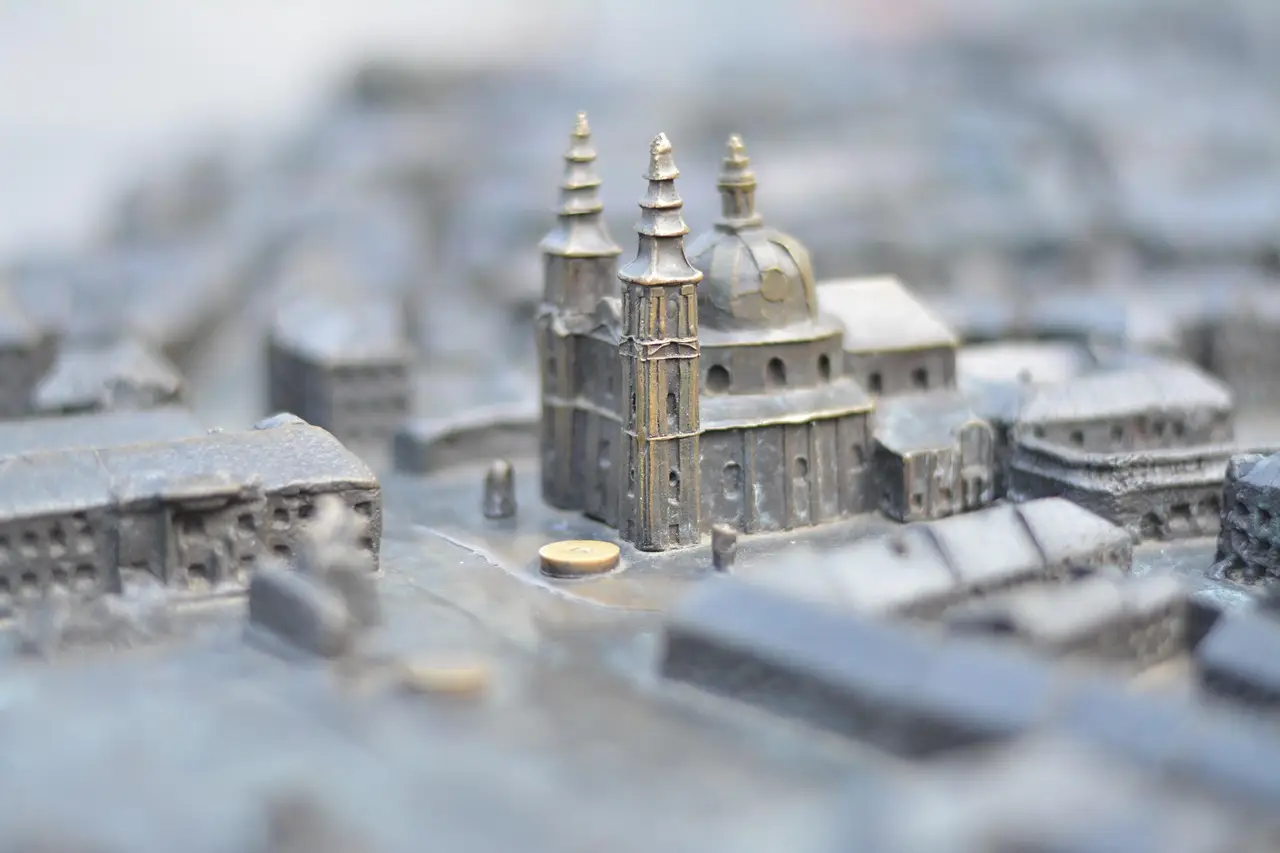
The installations were built to be walked around and through. They grew from dozens of elements to hundreds — cuboids and truncated pyramids standing for homes and factory campuses, cylinders and columns for skyscrapers.
The earliest works used dozens of clay pieces. Later, Navarro fabricated his cities from aluminum and iron. Order ruled some sections, evoking a city grid. Elsewhere elements lay strewn and toppled — a metaphor for the parts of the urban environment that resist organization.
"Even my most schematic sculptures, without entirely abandoning the figurative, always bear the marks of man," Navarro once said of the series.
The Guggenheim Museum acquired Wall City (1995–2000) for the Guggenheim Bilbao and showed it in 2004. "Navarro's cities generate arenas for the confrontation of ideas," the exhibition description read. "Throughout his career, he has continually proposed a revision of our notions of space, construction, place, and of our own bodies as a singular measure of the human and the city."
Eroticism, he argued, ran through the work too. "Eroticism is a very important part of my work," he told El Mundo in 2009. "On the one hand, it is represented by the totem pole, which is not only a human, phallic element, but a symbol of solitude and power, as is the case with skyscrapers."
How did his career unfold?
Miquel Navarro was born on September 29, 1945, in Mislata. He took up painting and drawing in 1964, studied fine arts at the Escuela Superior de Bellas Artes de San Carlos in Valencia, and dropped out in 1968 — the year he joined the group exhibition "Nuestro yo" at Círculo Universitario de Valencia.
His first solo show came in 1972. He turned to sculpture and debuted his first "City," La ciutat (1973–74), at the Galería Val i 30 in Valencia. He devoted himself exclusively to sculpture from 1974, according to a chronology by the Guggenheim Bilbao.
Key milestones followed:
- 1980: inclusion in "New Images from Spain" at the Guggenheim Museum in New York, which brought him international attention
- 1986: representation of Spain at the Venice Biennale alongside Ferran García Sevilla, José María Sicilia and Cristina Iglesias
- 1986: the Premio Nacional de Artes Plásticas, Spain's top artist award, given by the Ministry of Culture
- 1989: the 55-foot Minerva paranoica (Paranoid Minerva) installed in Madrid's Palacio de Cristal for a Reina Sofía exhibition
In 1986, Valencia installed his 75-foot painted-iron water fountain Fuente Pública, commemorating the transfer of water from the Júcar River to Valencia. Citizens came to call it La Pantera Rosa (The Pink Panther), for its pinkish hue and its resemblance to the cartoon character.
Further public commissions included Fraternitat (Fraternity, 1992) in Barcelona and three works in Mislata: Cabeza con luna menguante (Head with Waning Moon, 2001), L'Almassil (2010) and Caminante (Walker, 2022).
What is his legacy for the public?
Navarro gave away his work on a large scale. In 2005, he donated 530 works to the Institut Valencià d'Art Modern (IVAM). In 2020, he created the Fundació Miquel Navarro, seeded with more than 400 works, including several "Cities" installations.
The foundation is housed in his longtime studio, a 10,800-square-foot former warehouse he moved into in the 1980s. This past June, it opened the artist's Casa-Taller (House-Workshop) to the public to display part of the donation.
He lay in state there on November 2, surrounded by his creations. "Today Mislata has bid farewell not only to a universal artist, but also to a generous and humble friend, a person deeply connected to this city," Mislata mayor Carlos F. Bielsa said. "His House-Studio will always be the legacy and the greatest treasure we have to preserve and cherish his memory."
The council called him "one of the great figures of contemporary Spanish art, whose work has achieved international recognition and whose name will forever remain linked to the history, identity and collective memory of his hometown."
With the Casa-Taller now open and hundreds of works held at IVAM and the Guggenheim Bilbao, the cities Navarro built in miniature remain publicly accessible — the measure of a career that never left home.
Original: elpais.com
More from Marcus Bennett
Show full bio
Staff writer covering people, launches and day-to-day practice in arts in the broadest sense at Arts & Voices.
995 articles