Ursula von Rydingsvard, Monumental Sculptor, Dies at 84
Ursula von Rydingsvard died Tuesday at 84. The sculptor built towering cedar forms, later made public works in resin and bronze, and tested Minimalism.
Programme
- Von Rydingsvard died on Tuesday at her Manhattan home at age 84; the cause was Alzheimer's disease, confirmed by studio manager Courtney Childress.
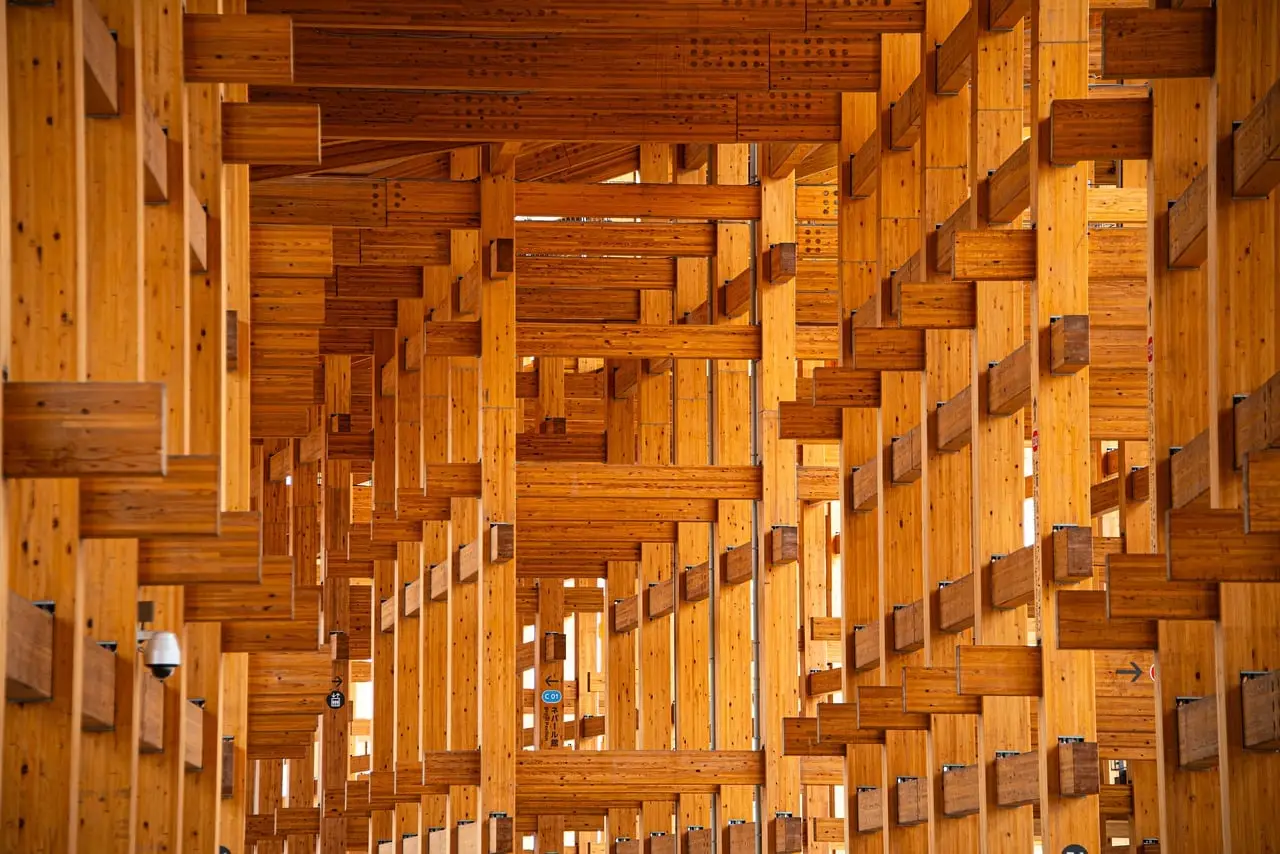
- Her defining medium was the four-by-four cedar beam, with hundreds used in a single monumental sculpture.
- Later in her career she made significant public sculptures in resin and bronze.
- Her repeated components placed the work within the Minimalism of the 1960s and '70s.
- She often linked the sculptures to the wooden barracks of displaced-persons camps, where she spent her early childhood.
By Elena Vasquez
Ursula von Rydingsvard died on Tuesday at her home in Manhattan. She was 84.
Courtney Childress, Ms. von Rydingsvard's studio manager, confirmed the death and said the cause was Alzheimer's disease.
The sculptor built monumental forms from hundreds of cedar beams. Each beam measured four by four inches. That standard timber connected her to Minimalism, and to what she called its "inhuman austerity."
How did she build the cedar works?
Von Rydingsvard marked the beams with pencils before cutting them. She and a team of assistants distressed the wood with circular saws. They assembled the pieces like bricks into enormous, undulating structures. Many spread outward as they rose. Some surfaces carried stains of graphite powder and marks of chalk.
Each finished work rested on one assembly method, which turned identical beams into structural matter, textured surface, monumental architecture and evocative landscape at once.
In plain words: off-the-shelf lumber became the building blocks of monumental sculpture.
What did the finished forms evoke?
The completed sculptures suggested cave walls, frozen waves, seashells, ancient trees and the folds of a giant's brain. Those images did not arrive through the direct carving of a single block, but through the accumulation of standardized timber, marked, cut and assembled in the studio.
She experimented with other materials across her career. Later, she made significant public sculptures in resin and bronze. The four-by-four cedar beam nevertheless remained her defining medium.
In plain words: the timber works set the scale and vocabulary for everything she built afterward.
Where does the work sit in postwar sculpture?
Her use of repeated, off-the-rack components placed the sculptures within the Minimalism of the 1960s and '70s. The organic shapes she carved into those units answered what she saw as the movement's "inhuman austerity."
Her pieces also entered a conversation with the openly biomorphic and sexual work of Louise Bourgeois and Eva Hesse. Yet the sculptures kept a distinct ambiguity. They were never quite so revealing as the work of those two artists.
Her career therefore occupies a narrow, productive gap: industrial repetition at its base, biological suggestion at its surface and unresolved feeling in between.
In plain words: she adopted Minimalism's logic of repetition and rejected its coldness without surrendering mystery.
What did the sculptures mean to her?
Some critics read the works as concerned with labor, catharsis or memory. Von Rydingsvard herself often connected them to "the wooden barracks of the displaced-persons camps" where she spent her early childhood.
In that reading, the material carries its own argument, because hundreds of beams and the assistants who cut them make labor visible in the finished surface.
The barracks reference gives the scale of the beams a personal history. It also ties the work to displacement rather than to any single abstract theme.
In plain words: the forms carried a private history of displacement as well as a theory of how sculpture is made.
Her later resin and bronze commissions now carry the public side of a career defined by cedar. Their standing will be measured against hundreds of standard beams, and against the mystery those beams produced.
Source: NYT Arts
More from Elena Vasquez
Show full bio
Senior reporter covering technology and product news in arts in the broadest sense at Arts & Voices.
919 articles