Dance
Seaweed Sisters Bring First Full-Length Show WEED OH NO! to LA
The Seaweed Sisters—Megan Lawson, Jillian Meyers, and Dana Wilson—stage their first full-length show, WEED OH NO!, June 5–14 at the Los Angeles Theatre Center, treating comedy as craft.
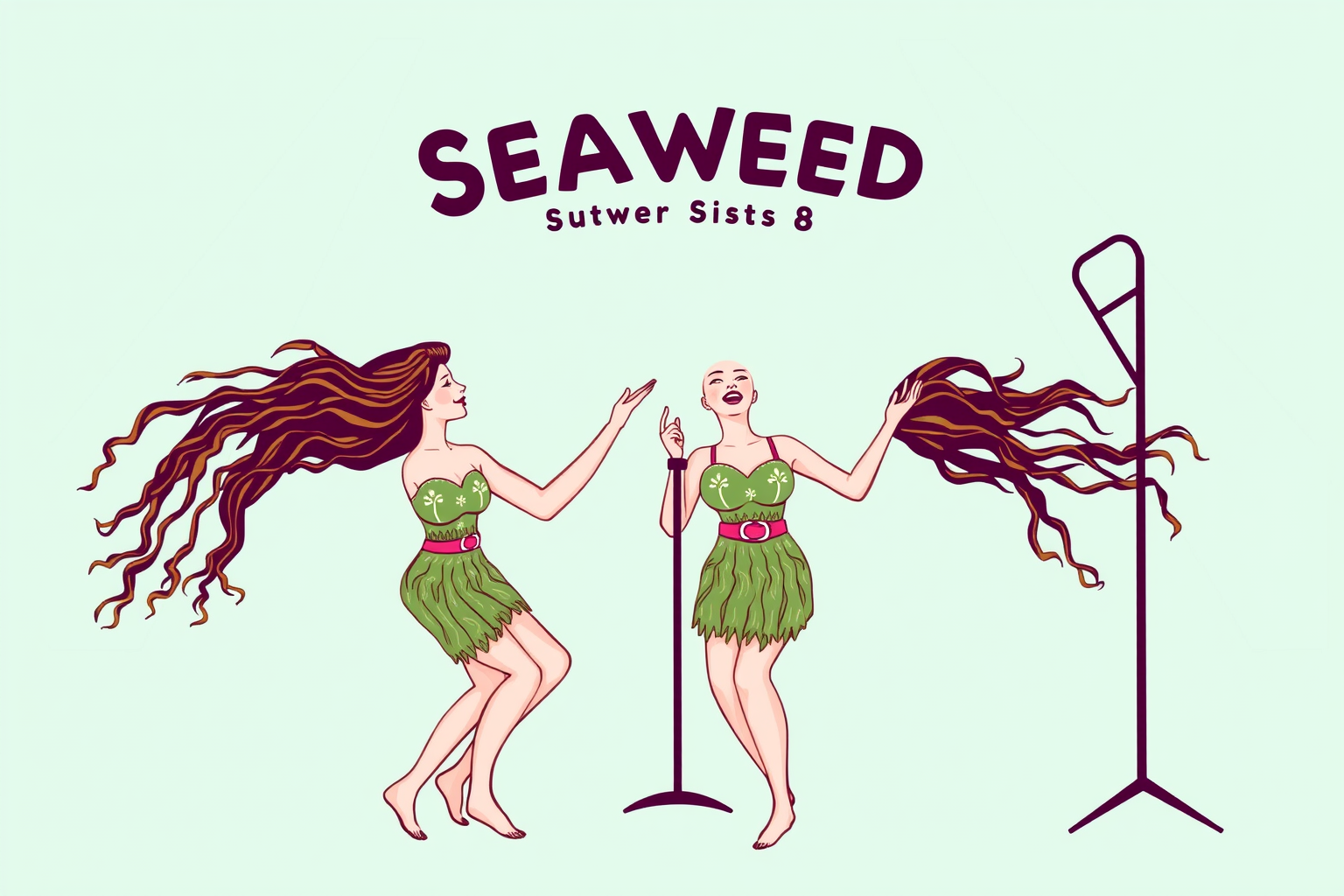
The Seaweed Sisters will stage their first full-length live production, WEED OH NO!, co-produced by The Center for Provocative Thought, running June 5–14 at the Los Angeles Theatre Center.
The trio—Megan Lawson, Jillian Meyers, and Dana Wilson—has built a devoted following since 2013, when a five-minute performance started it all. Annual videos and occasional live appearances followed, during which they developed their blend of dance, theater, comedy, and clowning. Between collaborations, each has pursued an independent career as a dance artist, working with Madonna, Olivia Rodrigo, Janet Jackson, and Justin Timberlake, as well as on TV shows and films. When the three reunite, they "sib up," as Wilson puts it, and create together.
So what are the Seaweed Sisters? "I usually say it's a trio with two of my best friends," Meyers says. "We try to make some sweet funnies with some good moves." Wilson offers the fantastical origin story: "We were three peas born in a tiny pod traded in somebody's lunch for Cheetos." For Lawson, the core is simpler: "We love to dance together. We love each other. What's most precious is the friendship. We're continuing to explore what [the trio] is all the time. Hence the name of our show. WEED OH NO!: We don't know."
Each sister performs in a distinct color. Lawson's pink persona is "a born leader, very bossy," she says—"a lot of false confidence, so not always having the right answer, but taking charge." Meyers' green is "nervous, but excited, and has confidence, but questions it. Also confused sometimes." Wilson's blue "loves to perform, loves an audience, loves to win. But certainly the dumbest of the three. Zero ideas about what to do next. Happy to be here, as long as I have a great outfit."
The trio insists that their comedy is crafted, not casual. "When we're making and one of us will do something, if we all laugh, it's like, 'Okay, yes, that's staying,' and then investigating why that was funny," Meyers explains. Some of the jokes are aimed squarely at dancers: "when we do it the way we've been trained to not do it, but we do it exactly the same, and in sync, with really syncopated, beautiful timing."
Wilson frames the project as a challenge to industry norms. "We see in the entertainment and commercial industries that sex sells. Or in the concert world where contemplative and metaphor are king. We're like, 'What if it's nonsense, but executed at the same level?'" Lawson adds a gendered dimension: "As three ladies, we also observe that it's difficult to lean into the funny, or maybe less desirable or attractive. It feels like a worthy pursuit for our own joy [and] levity, but also as examples for other young dance-lings. It doesn't have to be just two lanes."
The show itself, the three say, functions as a playdate with the audience as guests. "We are the co-hosts," Lawson says. Meyers compares it to "a little kid that's like, 'Hey, you want to come see my room?'" Wilson notes that while most of their past work reads as "bright, happy, bubbly, fun—which this is also—in a 75-minute work, we're getting to unturn other rocks and go a little deeper."
The visual world is deliberately handmade. "Have you ever built a fort with cushions?" Wilson asks. "Dial that up vertically and lengthwise by about 16 feet and you have our backdrop, more or less." Meyers describes "a place that has things that are recognizable, but they don't behave in a way that you know them to." Lawson promises the space is "alive with color and sound. We're tickling all of the senses."
The timing, they argue, is no accident. "Because it's essential for survival," Wilson says of sharing play and joy now. "It's essential to laugh, to move your body, to invite community around those things." Meyers points outward: "Looking in the news, it's easy to forget that joy is also a choice, play is also a choice, [being] with other people is a choice. The magic of being in the moment with people you don't know and laughing is another great reminder that we can all feel these things, even if we don't agree on everything."
Wilson closes with the trio's thesis: "It's the most resilient thing in the world to be joyful in times of great pressure. It's not an accident that our show is funny, because comedy is about building pressure and release. Joy is resistance." For a company twelve years in the making, WEED OH NO! marks their first chance to test whether a five-minute joke can sustain a full evening—and whether audiences will take silliness as seriously as they do.
Original: theseaweedsisters.com
Marcus Bennett
Show full bio
Staff writer covering industry trends and analytics at Arts & Voices.