3D Artist Luke Renoe Builds Dark Fantasy Worlds in Blender, No AI
Luke Renoe's dark fantasy 3D environments — fog-bound castles, ruins, crimson-lit forests — are built in Blender and Photoshop, with no generative AI involved.
Programme
- 3D artist Luke Renoe creates dark fantasy environments using Blender and Photoshop
- He creates his artwork without generative AI, using conventional 3D techniques and digital editing
- His scenes feature ancient stone stairways, ruins, fortresses and forests lit with crimson and violet light
- He shares his work and creative process on Instagram
- The work was featured in a gallery published by Design You Trust
3D artist Luke Renoe builds atmospheric dark fantasy environments — ancient stone stairways, mysterious ruins, lonely fortresses and dense forests — using Blender and Photoshop, and he does it entirely without generative AI.
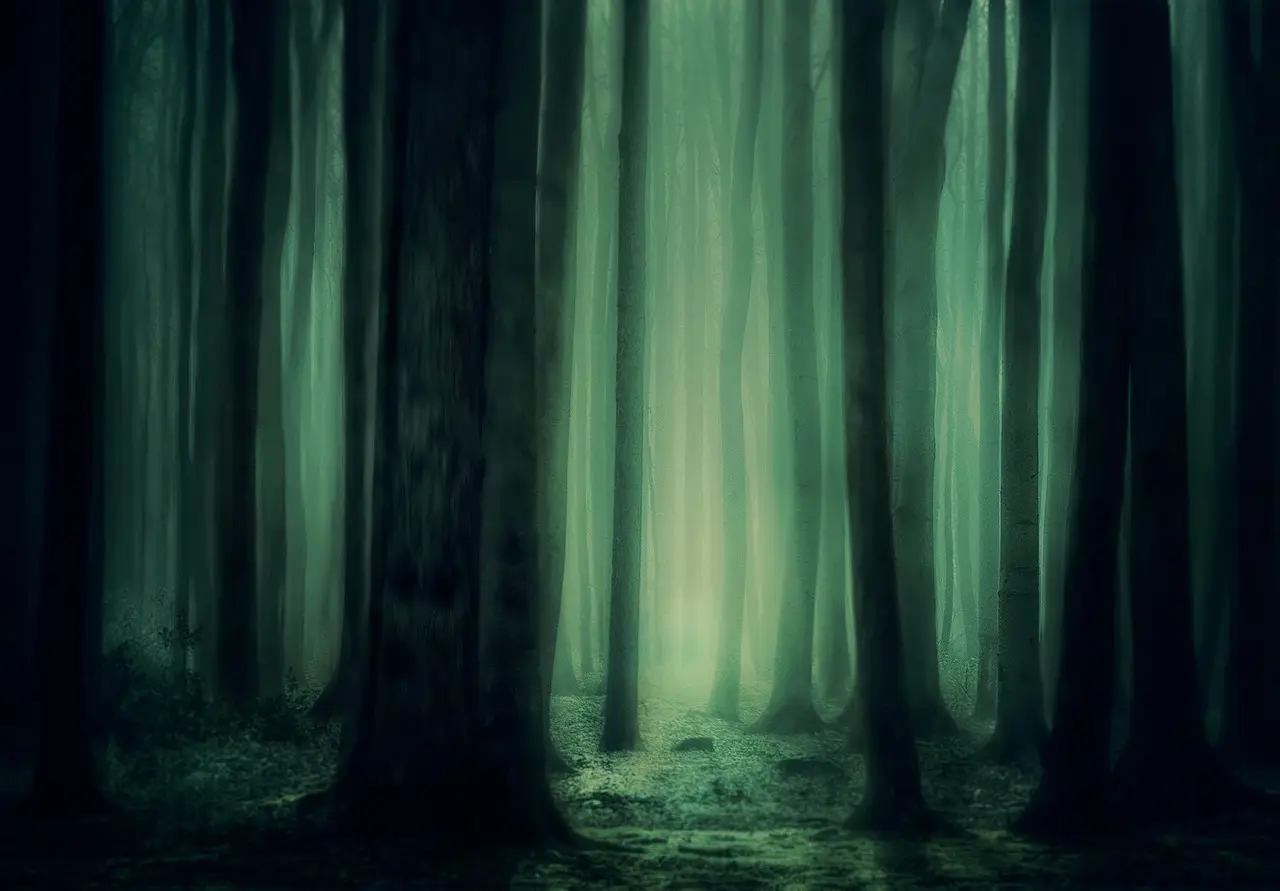
The American designer's work, shared on his Instagram account, looks like concept art lifted from an elaborate fantasy game. Castles sit half-hidden in fog. Forests glow with unsettling flashes of crimson and violet. Everything feels discovered rather than staged — places you'd stumble across somewhere beyond the last village, where the road disappears into the mist.
Design You Trust, which published a gallery of the work, frames it plainly: "Somewhere beyond the last village, where the forest grows darker and the road disappears into the mist, there's probably a castle you were never meant to find."
How does he build these worlds?
Renoe works with Blender, the free open-source 3D modeling suite, and finishes his images in Photoshop. According to the Design You Trust feature, he focuses on three things:
- Environmental storytelling — the scene implies a history rather than showing one outright
- Dramatic lighting — red and violet glows that suggest something happening just out of view
- The relationship between architecture and nature — ruins overtaken by forest, stairways swallowed by undergrowth
His method is notable for what it withholds. Rather than overwhelming viewers with endless visual detail, Renoe lets darkness and fog conceal much of the scene. A distant castle becomes little more than a silhouette against a blue night sky. A red glow deep within the trees hints at events beyond the frame.
That restraint is the mechanism. Concealment forces the viewer's imagination to fill the gaps, which is why the images feel simultaneously inviting and unsettling — the atmosphere of gothic fantasy and dreamlike horror the feature identifies as his register.
Why does the no-AI detail matter?
The Design You Trust piece makes a point of noting that Renoe creates his artwork without generative AI, relying on conventional 3D techniques and digital editing. In a field where AI image generators can produce plausible fantasy scenery in seconds, that's now a distinguishing credential rather than a technical footnote.
It also explains the specificity of the work. Hand-built environments carry deliberate modeling decisions — where a ruin sits, how light enters a forest, what stays hidden — and Renoe shares glimpses of that creative process publicly, revealing the modeling and artistic choices behind the finished images.
What does this change for viewers?
Not much in practical terms — you can't walk through these places. The gallery's closing line captures the appeal: the images depict "beautifully ominous places that seem to be waiting for someone brave, or perhaps foolish, enough to explore them."
What they offer instead is world-building as a viewing experience: complete, coherent spaces that behave like game locations, down to the implied danger. For anyone who follows 3D art, Renoe's Instagram feed doubles as a case study in how atmosphere and withheld information can do more narrative work than detail ever could.
Source: designyoutrust.com
More from Grace Kim
Show full bio
Correspondent covering technology and product news in arts in the broadest sense at Arts & Voices.
1,596 articles