Ars Minerva Gives Ziani's 1714 'Andromeda' Its Modern World Premiere
Ziani's 1714 Viennese court opera 'Andromeda' received its modern world premiere from Ars Minerva in San Francisco, directed by Céline Ricci with a local cast.
Programme
- Marc'Antonio Ziani's 'Andromeda' received its modern world premiere this weekend from Ars Minerva in San Francisco.
- The opera was first produced at the imperial court in Vienna on November 4, 1714, for the name-day of Emperor Charles VI.
- Ars Minerva has staged one forgotten Baroque opera per year since 2015, with one year off for the pandemic.
- The cast includes Aura Veruni, Sara Couden, Maxwell Ary, Sidney Ragland and Kindra Scharich.
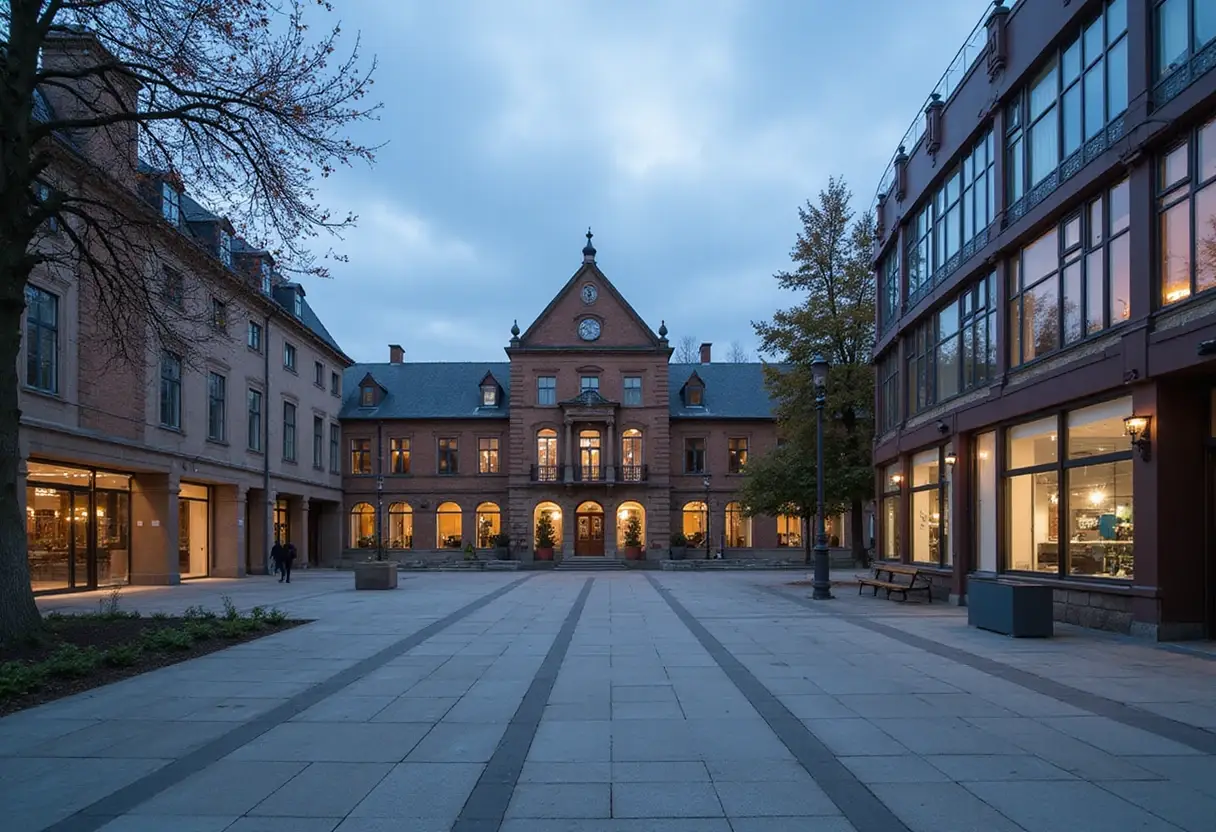
- The production runs at the Creativity Theater at Yerba Buena Gardens, a new venue for the company.
By Elena Vasquez
Marc'Antonio Ziani's chamber opera Andromeda received its modern world premiere this weekend in San Francisco, staged by Ars Minerva more than 300 years after its first performance at the imperial court in Vienna on November 4, 1714. Director Céline Ricci led a sparkling production at the Creativity Theater at Yerba Buena Gardens, a new venue for the company.
Ars Minerva specializes in staging Baroque operas that have languished unheard for centuries. The San Francisco-based company has produced one such revival per year since 2015, with a single year off for the pandemic. The venues are small, the cast is local for the most part, and, according to the source review, the band is excellent. Ziani's score, now transcribed by Ars Minerva into a modern performance edition, is full of dramatic interest and wonderful music.
What is the story behind the opera?
The myth runs as follows. Andromeda's mother Cassiopeia — described in the source as a proper fool — brags that she is more beautiful than Juno. The angry goddess sends an even angrier sea monster to ravage the land. Andromeda's father consults an oracle, which demands that he tie his daughter to the cliffs to be devoured. Perseus, son of Zeus, happens to pass by carrying the head of Medusa, which instantly fossilizes anything that looks its way. He turns the monster to stone and wins the heroine's hand.
In early 18th-century Vienna, centering a chamber opera on Andromeda meant doing something imperial with it. The opera was first produced to celebrate the name-day of Holy Roman Emperor Charles VI. At the end of the work, the victorious Perseus gracefully transfers his heroic legacy to the "real hero" — the Emperor himself. The libretto by court poet Pietro Pariati is, in the reviewer's judgment, both precise and succinct.
Who sings what?
- Aura Veruni (soprano, Andromeda): a crystalline voice with a mixture of snarky exasperation and steely resolve; her lament "Tu la mia vita sei" movingly animates Ziani's expressive music.
- Sara Couden (contralto, Perseus): vocally stunning, with beautiful clarity on her melismas.
- Maxwell Ary (tenor, Agenor): a nicely comic performance as the rival lover with pretensions to heroism; he shines in his serious aria about the cruelty of fate.
- Sidney Ragland (tenor, Andromeda's father): appropriately regal as a ruler trying hard to make everything work out in the face of disaster.
- Kindra Scharich (mezzo-soprano, Cassiopeia): sings with a voice as stellar and scintillating as the constellation named for her character.
The Viennese court, the review notes, clearly had a topnotch resident composer in Ziani — not exactly a household name now, but one whose music is consistently loaded with melody and musical surprise.
How does the production look and sound?
The sets are simple, but projection design by the single-named artist Entropy supplies plenty of visual splendor: great palaces, storm-tossed sea-cliffs, and a depiction of Juno, a goddess you don't want to tangle with. Marina Polakoff's costumes use starry tones of gray and silver, including splendid wigs for all.
The new venue has drawbacks. The dry acoustic doesn't give the singers much support, and the stage area is inconveniently shallow and wide — a little like putting on an opera on a bocce court, the reviewer writes.
The orchestra is, as usual, brilliant. The two violin and viola treble section, led by concertmaster Cynthia Keiko Black, cedes the bulk of the playing to the excellent continuo section: JungHae Kim leading from the harpsichord, Adam Cockerham on theorbo, and Gretchen Claassen on cello and gamba.
With Ricci's inventive staging and excellent casting in those hands, Ars Minerva has brought another forgotten work back to light — and, at its steady pace of roughly one revival per year, the company's next exhumation is already worth anticipating.
Source: sfcv.org
More from Elena Vasquez
Show full bio
Senior reporter covering technology and product news in arts in the broadest sense at Arts & Voices.
1,246 articles