Athens reopens the Old Acropolis Museum after 18 years
The 1874 Old Acropolis Museum reopened Monday after 18 years, with rotating artefacts, a digital Parthenon frieze, and Michael Rakowitz's brick installation on migration.
Programme
- The Old Acropolis Museum, founded in 1874, reopened on Monday after being closed to the public since 2007.
- The Greek state rejected plans to convert the building into offices and storage in 2019.
- The opening exhibition is Athens City Idea; the first contemporary commission is Michael Rakowitz's What You Leave Behind Is Not What is Engraved (2026).
- Rakowitz's work addresses the population exchanges in which Greece and Turkey each forced around 1.5 million inhabitants to leave.
- The Rakowitz work is the final project of Neon, the foundation of Dimitris Daskalopoulos, which is closing after 14 years.
The Old Acropolis Museum in Athens reopened on Monday for the first time since 2007, ending nearly two decades of public inaccessibility for the first Greek museum built in modern times. Greek prime minister Kyriakos Mitsotakis and culture minister Lina Mendoni spoke at the opening ceremony.
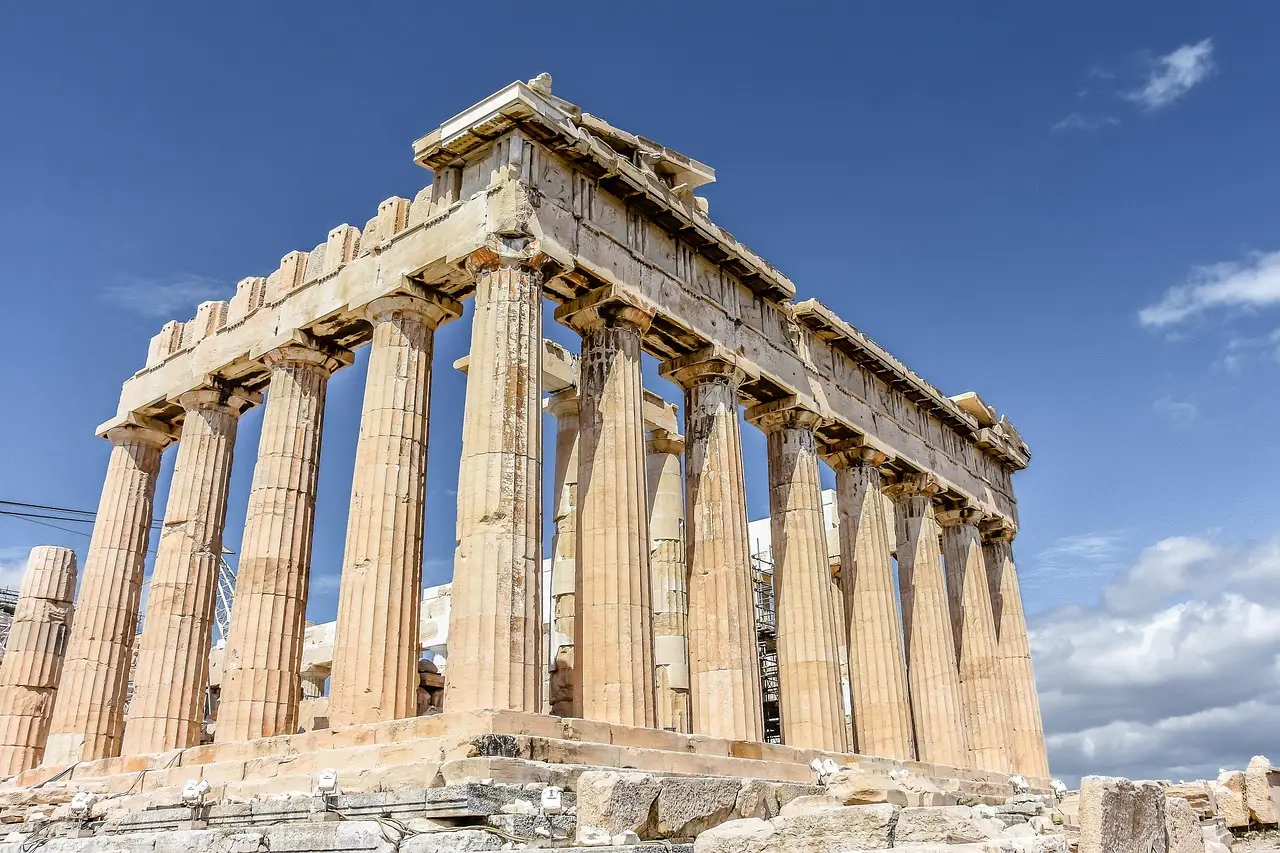
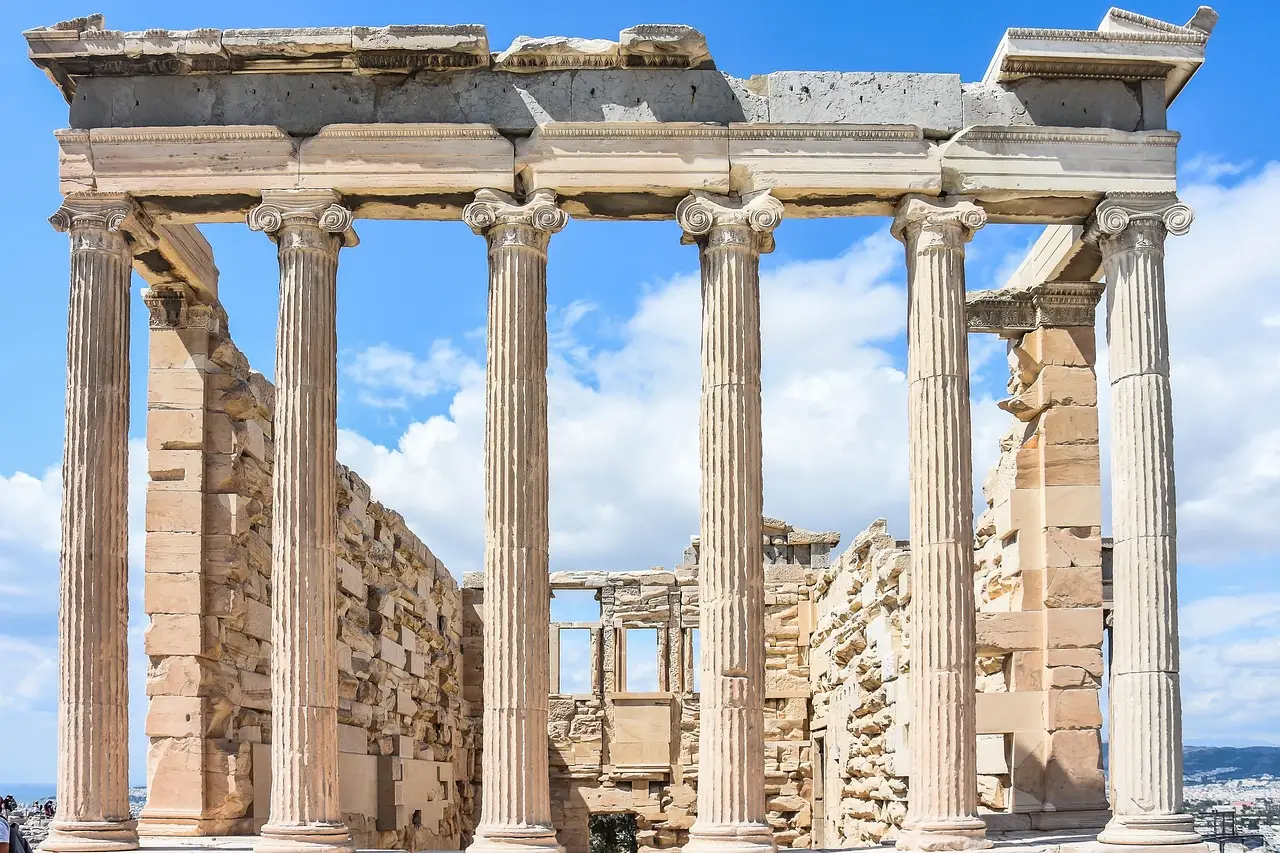
The museum, founded in 1874 and built into the rock of the Acropolis hill, was left empty after 2009, when Athens opened a newer Acropolis Museum 300 yards down the hill. The new building offered larger, state-of-the-art space for antiquities from the Parthenon and other Greek sites, including a viewing room designed for the Elgin Marbles — currently showing casts, with the idea that the museum might one day welcome the real items. The old building became, simply, the "Old Acropolis Museum."
Plans to convert the vacated building into storage and administrative spaces circulated for years. The Greek state definitively rejected them in 2019.
What does the reopening change for the building?
"For us, it was inconceivable, almost an affront, that this historic building, with its unique location, should be converted into offices and storage facilities," Mendoni said during her opening speech. "We therefore decided that the museum should reopen in accordance with its original purpose. However, it was not to become just another conventional museum, but rather a museum and exhibition space hosting exhibitions on the history, archaeology and culture of Athens, as well as contemporary art exhibitions inspired by Greek civilisation and innovative programmes incorporating cutting-edge technology."
The institution now combines a rotating selection of artefacts with a contemporary art programme. The first exhibition, Athens City Idea, examines Athens as a social, political and economic entity through tragic masks, statues, coins and amphorae held in storage elsewhere across the city, plus recent discoveries. A digital art component animates the Parthenon's friezes and the history of the Acropolis Hill.
The temporary-exhibition model is meant to keep the museum's displays current, a commitment reinforced by its contemporary art strand. That strand opens with the last of a trilogy of works commissioned for Athens from the American artist Michael Rakowitz — also the final project of Neon, the roving art foundation created by collector Dimitris Daskalopoulos, which funded art and exhibitions across the city for 14 years and announced its closure earlier this year.
Daskalopoulos, who also supported the museum's refurbishment — funded by both private and public money — put the pairing in historical terms. "You could say that the first contemporary work here was Phidias's statue of Athena in the 5th century BCE," he said. "But encouraging the coexistence of antiquity with the contemporary is a challenge we have embraced many times throughout our work at Neon."
What does Rakowitz's installation do?
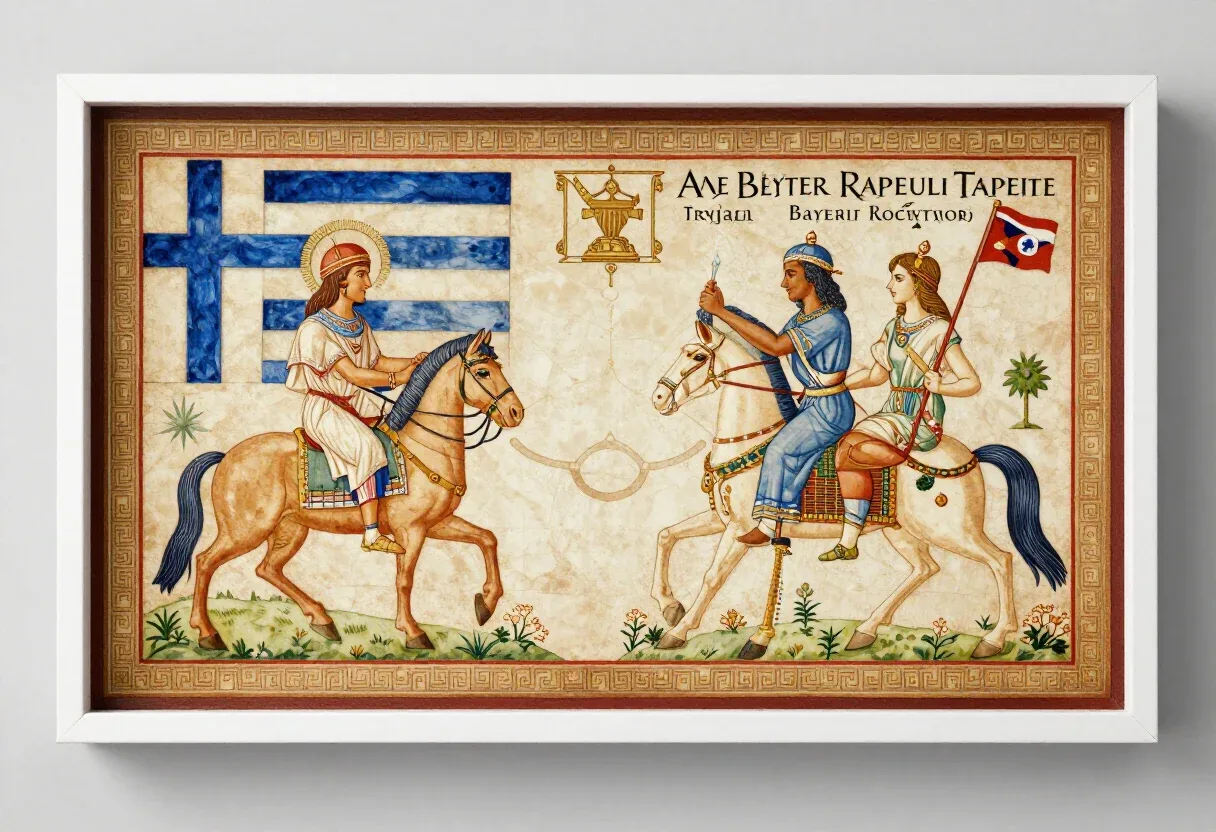
Rakowitz's What You Leave Behind Is Not What is Engraved (2026), commissioned by Neon, comprises a kiln and newly fired bricks. It looks at a lesser-known episode in the Acropolis's history.
"I realised that you could only tell the whole story of the site if you look through the lens of migration," the artist told The Art Newspaper. He studied the population exchanges during the collapse of the Ottoman Empire, when Greece and Turkey each forced around 1.5 million inhabitants to leave — Christian Turks to Greece and Muslim Greeks to Turkey. Turkish refugees arriving in Athens set up tents and encampments at the base of the Acropolis hill.
"Thinking about a ruin as being something that can renew itself to a population and become once again a shelter excited me," Rakowitz said. "When I found out about the tradition of the Asia Minor refugees who were able to go back to Turkey after some years, and then the Muslims who were uprooted from Greece, when those populations were able to visit their departed homelands, they found oftentimes their buildings or towns in a state of ruin, and they would take a brick from that place and bring it back as a memento."
Rakowitz incorporated those original bricks alongside newly made ones bearing inscriptions and stamps that witness more recent histories of displacement. For the new bricks he worked with survivors of the 1920s population transfers and with women in the Melissa Network, a nonprofit organisation supporting migrant women in Greece.
"I wanted these bricks to become a foundation for a new kind of city that welcomes strangers and doesn't push them back at sea," he said.
The question now is whether a museum-cum-exhibition-space carved into the Acropolis rock can sustain both an antiquities rotation and a contemporary programme — the model is untested, and Mendoni's speech offered no operating details. The answer will arrive, or fail to, in the coming exhibition cycles.
Source: theartnewspaper.com
More from Tom Whitfield
Show full bio
Market editor covering people, launches and day-to-day practice in arts in the broadest sense at Arts & Voices.
1,802 articles