Chris Bray's decade of Christmas Island's red crab migration, in pictures
Wildlife photographer Chris Bray has documented Christmas Island's red crab migration for a decade — 100 million crabs, road closures, and a 'living red tide' of billions of hatchlings.
Programme
- About 100 million red crabs migrate to the coast each year between October and December, out of roughly 190 million on Christmas Island.
- Chris Bray has photographed the migration for over 10 years and moved to Christmas Island permanently in 2017.
- Some female crabs carry up to 100,000 eggs and spawn synchronised with the moon's last quarter.
- Australia Post used Bray's drone shot of Waterfall Bay as a stamp background.
- Park rangers use leaf-blowers to move baby crabs off roads because they are too small to rake.
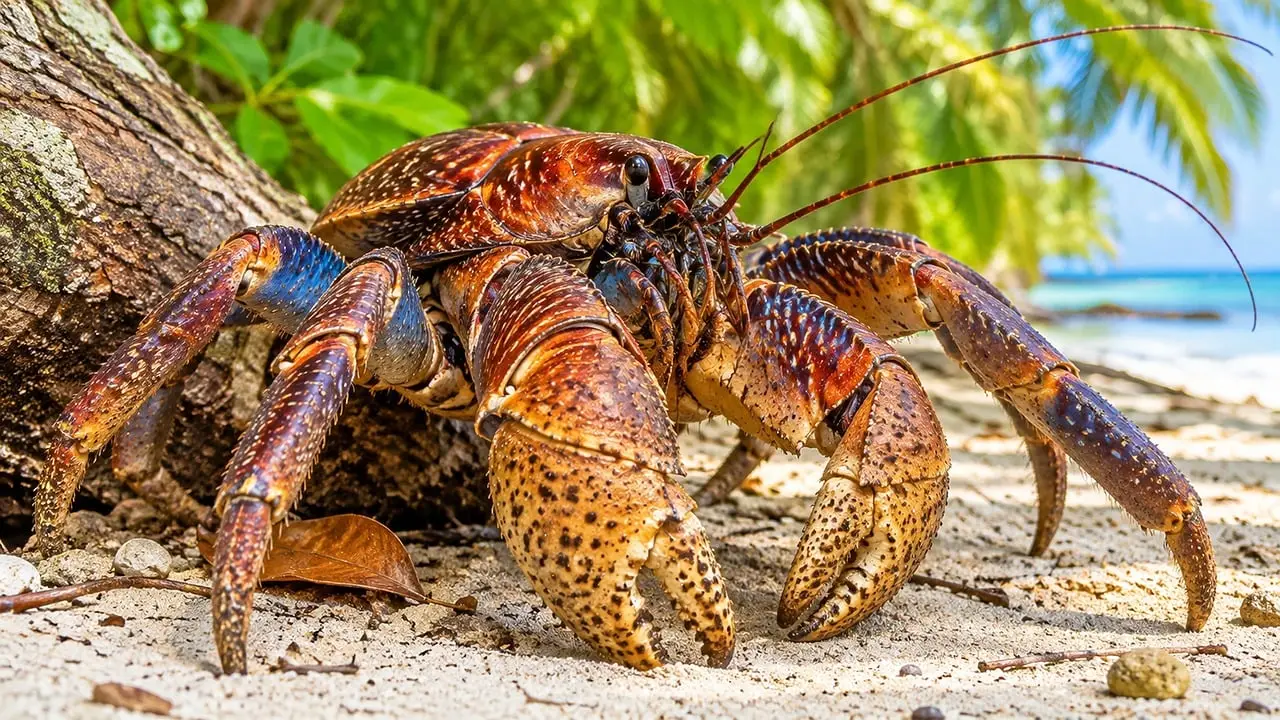
Wildlife photographer Chris Bray has spent more than ten years documenting the annual red crab migration on Christmas Island, after moving there permanently in 2017. His images chart one of the largest animal migrations on Earth — roughly 100 million crabs marching from jungle burrows to the coast each wet season.
The numbers are, frankly, absurd. Christmas Island hosts around 190 million red crabs. Their carapaces (the hard upper shell) reach up to 12cm across. Despite the size, Bray notes they are docile and reluctant to pinch: "you can gently slide them out of your way in bare feet."
What does the migration actually look like?
Each year between October and December, the wet season triggers the march. Males dig seaside burrows, lure in females, then return to the forest. The females stay below ground for nearly two weeks, developing fertilised eggs. Some carry up to 100,000 eggs slung beneath their bodies.
Then comes the synchronised exit. As the moon enters its last quarter, the females emerge together and cram the coastline. Just before dawn, as the high tide turns, the first female scampers toward the waves — and the rest follow en masse. Bray describes the moment as a rush of thousands of egg-laden crabs hitting the water at once.
The babies hatch instantly in the sea. Then, oddly, they vanish.
Where do the hatchlings go?
Nobody knows. "All we know is that most years they are never seen again," Bray writes. But every couple of years the conditions align, and a month after spawning the island wakes to a "living red tide" of billions of tiny crabs emerging from the sea. In special years like 2016, the entire coastline is inundated.
For their first month, the babies are free-swimming, plankton-like creatures called megalopes. Only after clambering ashore do they shed their shells and become proper little crabs.
A drone shot of Waterfall Bay shows the rocks stained red with hatchlings. Australia Post used the image as a stamp background.
How does an island cope with 100 million crabs?
Logistics dominate. Some roads close for months during the migration. On those that must stay open, the parks service has installed tiny crab fencing that funnels the crabs into safe underpasses and dedicated crab bridges.
A parks staff member works crab duty with a rake, clearing them from vehicles' paths. Bray calls it tireless work: once a car passes, new crabs spill across the road behind it. The results are grimmer elsewhere. Brightly coloured crab "jigsaw puzzles" on the roads are, he writes, a common sight.
Bray engineered his own fix. Because the road to Swell Lodge closes unpredictably for months, he designed and built "crab safe vehicle attachments" so cars could pass without affecting the crabs.
The babies pose a different problem. Too small to rake, they get moved off roads by park rangers armed with leaf-blowers. Returning hatchlings also treat buildings as obstacles, washing past people's houses in red waves that smother everything in their path.
What keeps a photographer coming back?
Bray, an award-winning wildlife photographer, runs photography tours on the island and worldwide, teaching wildlife photography. He crouches at the same spot every year, watching not just tourists stare in amazement but locals enjoying the spectacle too.
His favourite shot is intimate rather than epic: a baby red crab perched on his finger. "Surely even Pixar couldn't make them any cuter?" he writes. "This lucky shot is my favourite - these guys never stay still."
There is dry comedy in his captions. One late female, her spawning calendar 28 days behind schedule, wades through a rising carpet of returning babies. Bray wonders what the adult is thinking: "Thoughts of contraception, perhaps?"
Paradise has its price, and Bray names it. Photographed by Lisa Preston amid spawning crabs, with the water black with eggs, he says: "The novelty does wear off sometimes. Like when I have to repeatedly get out of the car in the rain to rake crabs off the road every 30 seconds - but it's a small 'paradise tax' to live on such such a beautiful tropical island." (The quote appears verbatim in the source; the repeated word is Bray's own.)
The series earns its place in the wildlife photography canon through restraint and access rather than spectacle alone. Ten years of residency buys a photographer patience, drone permits and the odd stamp commission. The next wet season, and the next hundred million marchers, are only months away.
Source: theguardian.com
More from Daniel Okafor
Show full bio
News editor covering companies, deals and strategy in arts in the broadest sense at Arts & Voices.
1,751 articles