Hana Jakrlová’s “Porno Para Ricardo” charts Gorki Águila’s exile
Hana Jakrlová’s 12-year documentary follows Gorki Águila, the banned Cuban punk leader forced into exile, from covert rehearsals to an awaited U.S. visa that could reunite his family in Florida.
Programme
- The 12-year feature screened recently at the Ji.hlava International Documentary Film Festival.
- Filming began in 2014; Jakrlová made 10 trips to Cuba and spent almost one year there.
- Gorki Águila spent three years in prison and now resides in Mexico.
- The Cuban regime gave Gorki an ultimatum to leave the country or go to prison.
- A U.S. visa decision could reunite Gorki with his wife, daughter and five-year-old grandson in Florida.
By Elena Vasquez
Hana Jakrlová, a Czech documentarian and photographer, said she spent 12 years producing “Porno Para Ricardo,” her feature documentary debut about Cuban punk musician and dissident Gorki Águila. Jakrlová said the film screened recently at the Ji.hlava International Documentary Film Festival.
She said the project began as photography about Cuban anti-regime artists. Jakrlová then concentrated on Gorki and his band, Porno para Ricardo.
“After talking to him and attending a Porno para Ricardo rehearsal (at Gorki’s house – the band had been completely driven underground by the Cuban regime and could no longer perform in public), I realized I wanted to make a project about this guy,” she said.
She said something was missing from her photographs of a punk band. So she began filming, first with her own camera and later with a director of photography.
Jakrlová said her repeated visits included:
- 2014: She began filming Gorki and Porno para Ricardo.
- 10 trips: She said she had returned to Cuba 10 times.
- Nearly one year: She said she had spent almost one year there in total.
She said one continuing mystery was how the Cuban establishment kept letting her back in. Jakrlová also filmed herself and used archival material shot by “the brilliant Cuban documentary filmmaker and dissident Claudio Fuentes.” She brought in respected Czech cinematographer Adam Ol’ha to capture the film’s striking visuals. Some local sound workers and other crew members faced serious repercussions for their courage, she said.
In Jakrlová’s account, a photography project became a feature assembled through repeated visits.
Why did Cuba feel familiar?
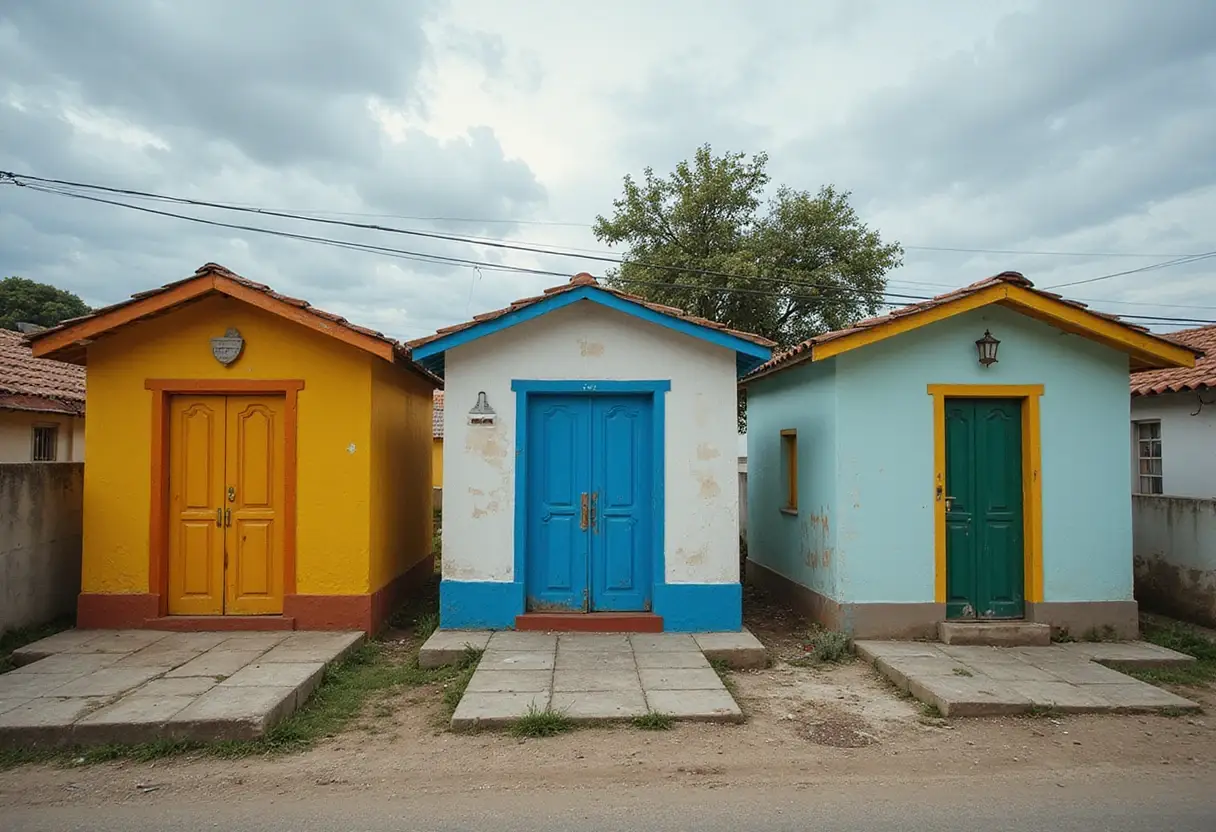
Jakrlová said Cuba’s crumbling streets brought a strange sense of déjà vu after she met Gorki. “I was living in New York at the time,” she recalled, “and Obama had just begun the process of warming relations with Cuba. All my friends in New York were worried about Cuba changing and McDonald’s popping up on every corner.”
She said that Cuba also recalled her first 20 years in communist Czechoslovakia. “I had spent the first 20 years of my life in communist Czechoslovakia, and being in Cuba felt like stepping back into my youth, only in a Caribbean setting. Everything was familiar: the hopelessness, the absurdity, the propaganda, the misery – both economic and, above all, spiritual.”
Jakrlová’s memory of life under communism gave the documentary its personal point of entry.
What risks shaped the production?
Jakrlová said police harassed and threatened her while she filmed Gorki. Crew members also feared that he could die in a mysterious car accident, as had happened to several Cuban dissidents.
She said the regime’s concern about its image abroad helped explain why the authorities did not arrest the crew during the shoot. The team remained under constant surveillance, she said, and the pattern became apparent during Gorki’s subsequent arrest.
“I wanted to show the struggle of a free spirit trapped in a cage,” Jakrlová said. She added that Gorki had dedicated his entire life to fighting a totalitarian regime, spent three years in prison and faced persecution and oppression every day.
She also wanted to show a man torn between his love for his country and his love for his family.
For Jakrlová, surveillance and coercive power were central facts, not background color.
Why did the film become about exile?
“The regime gave him a clear ultimatum: Either he leaves the country or he goes to prison,” Jakrlová said. She filmed his “dramatic departure into forced exile.”
Jakrlová said that change turned “Porno Para Ricardo” into more than a punk essay on freedom. The film also became a film about exile.
Her account added a family cost. Gorki’s five-year-old grandson lives in exile with Gorki’s daughter, and Gorki has never seen him.
The exile changed both Gorki’s life and the film’s central question.
What drives Gorki, and what comes next?
Jakrlová said Gorki remained passionate about his message. Introducing an anti-regime song, he yelled, “This is for the bitch Raul Castro.”
She said she and Gorki shared a commitment to freedom. Unlike Gorki, Jakrlová saw communism fall toward the end of her adolescence and never had to learn whether she would resist it.
“What motivates Gorki is his love of freedom, his need for freedom, and also his sense of responsibility,” she said.
Jakrlová said Gorki shared a common cause with Václav Havel, Oswaldo Payá and Nelson Mandela, whom she described as courageous and truly inspirational. “I feel incredibly lucky to have met two of them: Gorki Águila and Václav Havel,” she said.
She said the greatest challenge was the deep daily dysfunction of Cuban society. “Being a director is challenging, especially in a country where nothing works and nobody expects anything to work,” she said.
“The only thing that worked 100% was Gorki. He is the most responsible person I know, always ready to work,” she said. She added that he risked his life by waiting for the film crew to arrive after the regime threatened him and issued the ultimatum.
Gorki now resides in Mexico, Jakrlová said, and awaits a U.S. visa decision that could reunite him with his wife, daughter and five-year-old grandson in Florida. The pending decision will determine whether Gorki can rejoin the family he left.
Source: Variety Film
More from Elena Vasquez
Show full bio
Senior reporter covering technology and product news in arts in the broadest sense at Arts & Voices.
1,571 articles